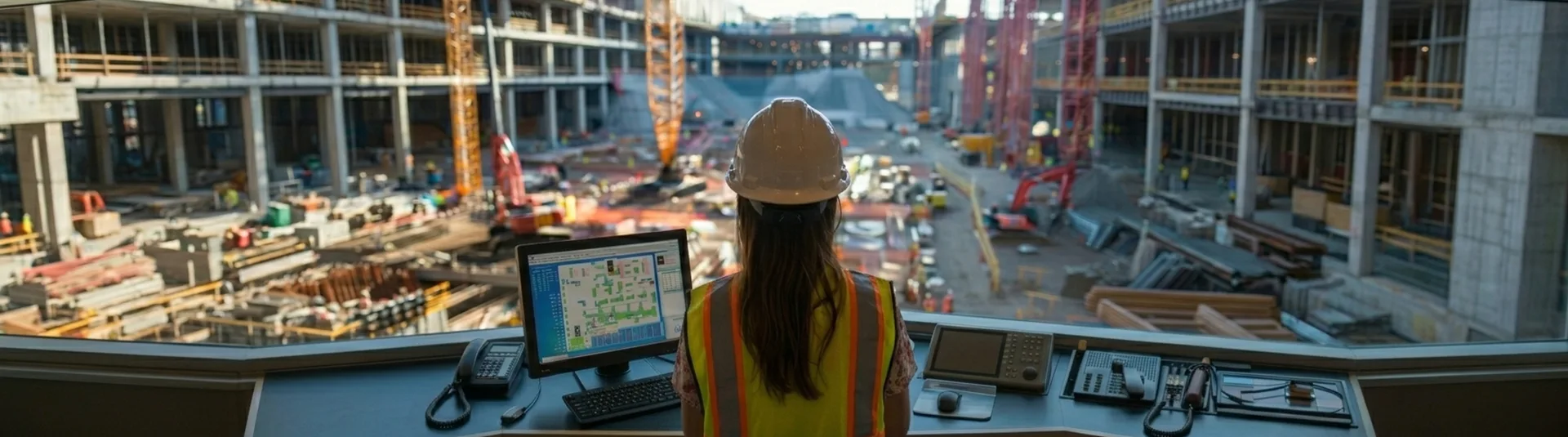
The client was a mid-sized construction company with headquarters in the UAE. The company deals in commercial, residential, and infrastructure projects across the Gulf region with a strong focus on large-scale development.
The construction firm used to manage multiple construction sites using supplier emails, spreadsheets, and on-site paper logs. However, as the volume scaled, the firm witnessed inefficiencies in vendor coordination, material planning, and on-site inventory control. These inefficiencies often led to budget and timeline overflow.
The traditional and manual workflow often caused procurement delays. Material requisitions have to move via calls, emails, and physical approvals, which are consumed within 5-7 days. At the same time, visibility into the stock level was too low, which led to 20-25% material wastage on every project.
Disconnected vendor management was another challenge as 80+ suppliers were managed through a spreadsheet without any centralized records of pricing, performance, and lead time. Site engineers had not structured a way to tally the actual used and recorded inventory volume, which caused discrepancies.
The NineHertz developed a centralized construction material management platform that connects different stakeholders to share mutual insights and decisions.

Our team developed a configurable workflow that digitizes tasks like approvals, material requisitions, and purchase order generation. The procurement cycle was reduced from 7 days to 2 days.

The new platform was equipped with a barcode-based tracking system that enables procurement managers across the sites to check real-time inventory levels.

We centralized a huge volume of data consisting of structured records around pricing, delivery accuracy, pricing records, and quality rating. Thus, the procurement team can compare the vendors.

Our team integrated artificial intelligence into construction material management software that analyzes historic consumption, BOQ data, and project schedules to plan the procurement in advance with accuracy.
Measurable results were visible within a year of new platform deployment, showcasing significant gains.
The procurement process, which used to take at least 7 days, is now completed in 2 days while ensuring uninterrupted site activity.
AI-powered demand forecasting enhanced the real-time visibility into inventory, fostering better planning of stocking, ultimately driving 35% reduced material waste.
The availability of centralized data now allows firms to compare vendors and negotiate smarter. The new feature has already lowered the procurement cost by 30%.
All the stakeholders, including project managers, site engineers, and project heads, rely on a single interface that accelerates approvals while bestowing vendor coordination.