OpenAI Consulting and Use-Case Discovery
Prioritize use cases by value and risk, choose the right GPT model tier and platform, and leave with a production roadmap.
Build beyond AI experimentation with a frontier AI engineering partner. As an OpenAI partner, NineHertz combines advanced GPT capabilities, agentic AI engineering and Forward Deployed Engineering to transform business workflows, accelerate product innovation and take intelligent systems from concept to production.
Building with OpenAI requires more than API integration. It requires the engineering expertise to translate frontier AI capabilities into intelligent products, connected enterprise systems and autonomous business workflows.
At NineHertz, we combine advanced OpenAI models with AI-Native Engineering practices, agentic architectures and enterprise-grade integrations to develop solutions that are secure, scalable and built around measurable business outcomes.
From embedding AI into existing products to orchestrating multi-agent systems across enterprise environments, we take AI initiatives beyond experimentation and into production.
We start from a measurable workflow, such as claims, support or code modernization, not from a model demo.
GPT models run through the platform your security team already approves, with access controls, logging and evaluation built in.
We use OpenAI where it is the best fit, and say so when another model or no model is the better answer.
Our OpenAI solutions cover the full lifecycle, from OpenAI consulting and use-case discovery to integration, deployment and operations. Each engagement is staffed by OpenAI developers who build on the current platform, not on interfaces OpenAI has retired.
Prioritize use cases by value and risk, choose the right GPT model tier and platform, and leave with a production roadmap.
Document intelligence, retrieval-augmented generation, research assistants and customer-facing experiences built on the Responses API.
Agents built with the OpenAI Agents SDK and tool use that plan, act in your systems and route decisions to people where policy requires it.
MCP servers and connectors that link GPT models to ERP, CRM, data warehouses and internal APIs with scoped permissions.
Roll out Codex across engineering teams with secure configuration, review guardrails, shared workflows and adoption metrics.
Evaluation suites you own, migration off retired OpenAI interfaces, model tiering, prompt caching and the Batch API, so quality and unit cost are measured, not assumed.
Deploy through the OpenAI API, Microsoft Foundry, Amazon Bedrock or Google Cloud, matched to your data, procurement and compliance needs.
Monitoring, regression testing, access control and audit trails for GPT models in production.
Senior engineers embedded with your business teams to take priority OpenAI use cases into production quickly.
OpenAI’s reach is now as much an enterprise story as a consumer one.
weekly active users across OpenAI’s products, reported by OpenAI in August 2026.
businesses using OpenAI, twice the count of a year earlier; enterprise now brings in the majority of OpenAI’s revenue.
Adoption is no longer the hard part. The gap is between a working prototype and a governed system that security, legal and finance will sign off, on a platform that keeps changing: OpenAI retired the Assistants API on August 26, 2026, and is shutting down Agent Builder and the Evals platform on November 30, 2026. That is the work our OpenAI development services are built for.
Every engagement in our OpenAI development services starts by matching the deployment platform to your security, data residency and procurement requirements.
| Best fit | What we set up | |
|---|---|---|
| OpenAI API (OpenAI) | Fastest access to new GPT models and platform tools | Projects, API keys and access policy, usage limits, data retention settings, logging |
| Microsoft Foundry (Azure OpenAI) | Microsoft-centric enterprises using Azure governance | Entra ID access, network isolation, Azure Monitor |
| Amazon Bedrock | AWS-first enterprises; generally available since June 2026 | IAM roles, VPC endpoints, guardrails, CloudWatch monitoring |
| Google Cloud Vertex AI | Google Cloud organizations; preview announced October 2026 | Service accounts, VPC Service Controls, Cloud Logging |
OpenAI models can also be purchased through Oracle Cloud commitments. Platform availability as of October 2026.
Enterprise AI Architecture
The best strategy is to hire a forward-deployed engineering pod, get the system in production, and move to an ODC once the scope is stable. See staff augmentation, ODC and BOT compared.
A practice matters only if it changes outcomes. Here is what our OpenAI developers bring to your program:
Our engineers work with modern OpenAI capabilities, including the Responses API, Agents SDK, MCP integrations and Codex-enabled workflows.
We engineer for reliability, scalability, integration, security and long-term maintainability rather than limiting delivery to functional prototypes.
We connect AI capabilities with existing business applications, enterprise data environments and operational workflows.
We evaluate OpenAI alongside other leading models to recommend architectures based on business requirements, performance, cost and security.
We deliver maintainable solutions with documented architecture, evaluation assets, integrations and code ownership within agreed engagement terms.
Four stages take an OpenAI use case from idea to governed production, with a decision point at every step.
Assess use cases, data readiness and risk, ideally through the fixed-fee, two-week AI Delivery Readiness Diagnostic.
Build a working slice on your data and define the evaluation set that decides whether it is ready for production.
Engineer agents, MCP integrations, security controls and user experience, with bi-weekly demos to business owners.
Launch with monitoring, regression tests, cost dashboards and ContinuumAI™ controls, then improve release by release.
We engineer OpenAI-powered solutions that address real business challenges across product innovation, enterprise operations and industry-specific workflows.
Claims, contracts, underwriting files and medical records read, summarized and routed with citations back to source.
Agents that resolve requests across your knowledge base and systems, and hand off to people with full context.
Legacy code analysis, test generation and migration support with Codex, reviewed by senior engineers.
Secure assistants over internal documents and data with permission-aware retrieval.
Multi-step back-office processes with approvals, audit trails and exception handling.
Healthcare, financial services and public-sector workflows designed around privacy, explainability and human review.
AI transformation requires more than development resources. It requires engineers who understand your business, work alongside your teams and translate real-world challenges into intelligent solutions. NineHertz’s Forward Deployed Engineering model brings engineering expertise closer to business operations, accelerating experimentation, implementation and production adoption.
Work with business stakeholders to identify high-impact AI opportunities, understand workflows and prioritize implementation requirements.
Design and develop intelligent solutions using frontier AI models, agentic architectures and enterprise integrations.
Integrate AI-powered systems into existing applications, business workflows and enterprise infrastructure.
Continuously evaluate, optimize and scale solutions based on business outcomes and operational performance.
Start with a focused Forward Deployed Engineering pod and scale into dedicated engineering teams or Offshore Development Centers as your AI roadmap evolves.

ContinuumAI™ is the NineHertz governance framework applied to every OpenAI release. It builds on OpenAI’s own business data commitments: by default, OpenAI does not use API inputs or outputs to train its models, and qualifying organizations can configure data retention, including zero data retention.
Data minimization, permission-aware retrieval, retention settings and data residency choices that keep sensitive data inside approved boundaries.
Task-specific evaluation sets kept in your own repositories, prompt-injection testing and output checks run before every release.
Clear approval points for high-impact actions, with logs that show what the agent did and why.
Model tiering, prompt caching, the Batch API and usage dashboards, so leaders see unit cost per workflow, not just a monthly bill.
Choosing an AI engineering partner requires more than technical implementation capabilities. It requires the right combination of frontier AI expertise, product engineering, enterprise integration and business-focused execution.
Leverage our OpenAI partnership and engineering expertise across leading AI ecosystems to accelerate enterprise AI adoption.
Engineers who work with the Responses API, Agents SDK and Codex, and plan for OpenAI platform changes before they break production.
Bring engineering teams closer to business challenges to accelerate discovery, implementation and production adoption.
ContinuumAI™ controls for data, quality and AI risk on every OpenAI release.
Scale through Forward Deployed Engineering pods, dedicated engineering teams and Offshore Development Centers.
Prompts, evaluation sets, integrations and code delivered in your repositories with full IP ownership.
Digital solutions delivered
AI & software engineers
Client retention
Start with a fixed-fee, two-week AI Delivery Readiness Diagnostic, or talk to an OpenAI architect about a use case you are ready to build.

Answers to the questions teams ask before they start building.
An OpenAI development company designs, builds and operates software that uses OpenAI’s GPT models. That includes choosing use cases, integrating models with business systems, building agents, setting up evaluation and security controls, and running the system in production.
Our OpenAI development services include OpenAI consulting and use-case discovery, application development on the Responses API, agent development with the Agents SDK, OpenAI integration with enterprise systems through APIs and MCP, Codex adoption, evaluation and migration, secure deployment, and ongoing operations and governance.
Yes, in most cases. OpenAI models are available directly through the OpenAI API, through Microsoft Foundry on Azure, and through Amazon Bedrock, where they have been generally available since June 2026. OpenAI and Google Cloud announced OpenAI models for Vertex AI Model Garden in October 2026, initially in preview, and OpenAI models can also be purchased through Oracle Cloud commitments.
OpenAI shut down the Assistants API on August 26, 2026, and recommends the Responses API with the Conversations API instead. Agent Builder, the Evals platform and the v1/prompts API are scheduled to shut down on November 30, 2026, with existing evals becoming read-only on October 31, 2026. If any production workload depends on these, it needs a migration plan now.
We start from OpenAI’s business data commitments: by default, OpenAI does not use API inputs or outputs to train its models, and qualifying organizations can configure retention, including zero data retention, and choose data residency. We add permission-aware retrieval, access controls, logging, prompt-injection testing and ContinuumAI™ governance on top.
Choose the model that performs best on your own evaluation set at an acceptable cost and risk. We test OpenAI models against alternatives such as Claude on your real tasks, and recommend OpenAI only where it is the best fit for the workflow.
Most programs start with our fixed-fee, two-week AI Delivery Readiness Diagnostic, which assesses use cases, data readiness and risk. The diagnostic produces a production roadmap with a realistic timeline for your scope, so you know the plan before committing to a full build.
Perspectives on AI, engineering, and the future of software development

Key Takeaways The best CRM software depends on your size, sales process…

Key Takeaways Setting up an offshore development center (ODC) in India is…

The landscape for IT and software development activity is changing faster than…

Key Takeaways Offshore mobile app development refers to hiring a team from…
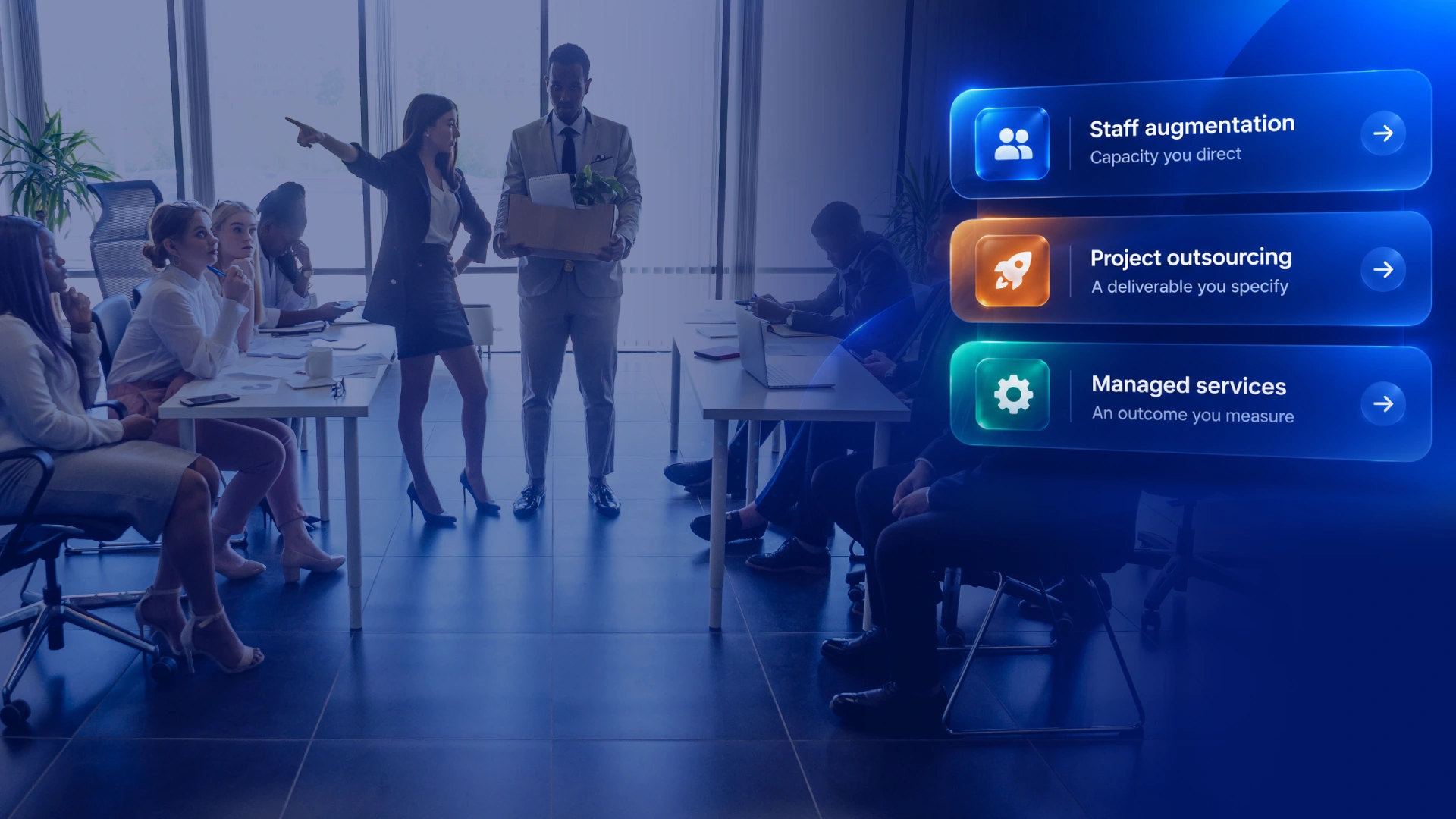
Key Takeaways Staff augmentation buys capacity that you direct. Project outsourcing buys…
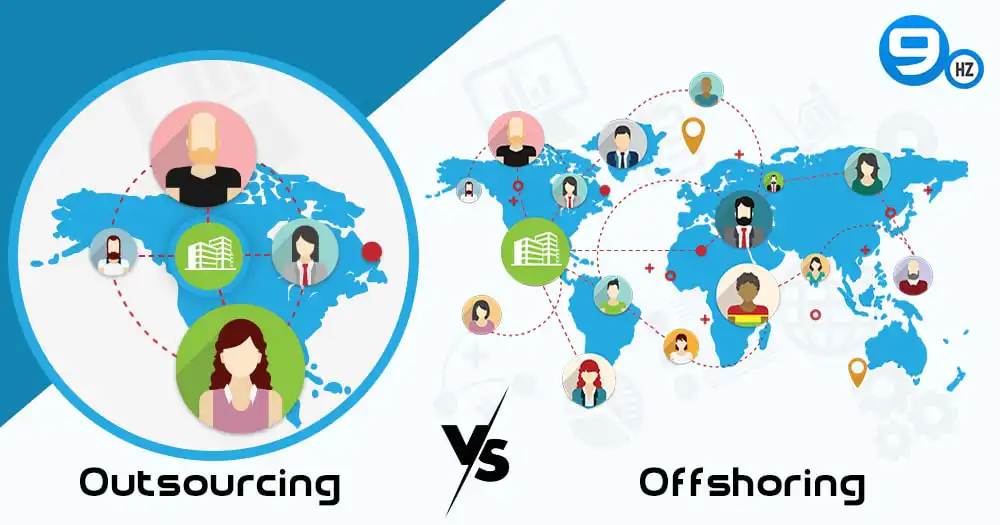
Outsourcing VS Offshoring | The Industrial Revolution fundamentally altered the way businesses…