OpenAI’s ChatGPT Wallet Lets AI Agents Make Purchases, With User Approval

News Editor at The NineHertz, covering the latest developments in artificial intelligence,…
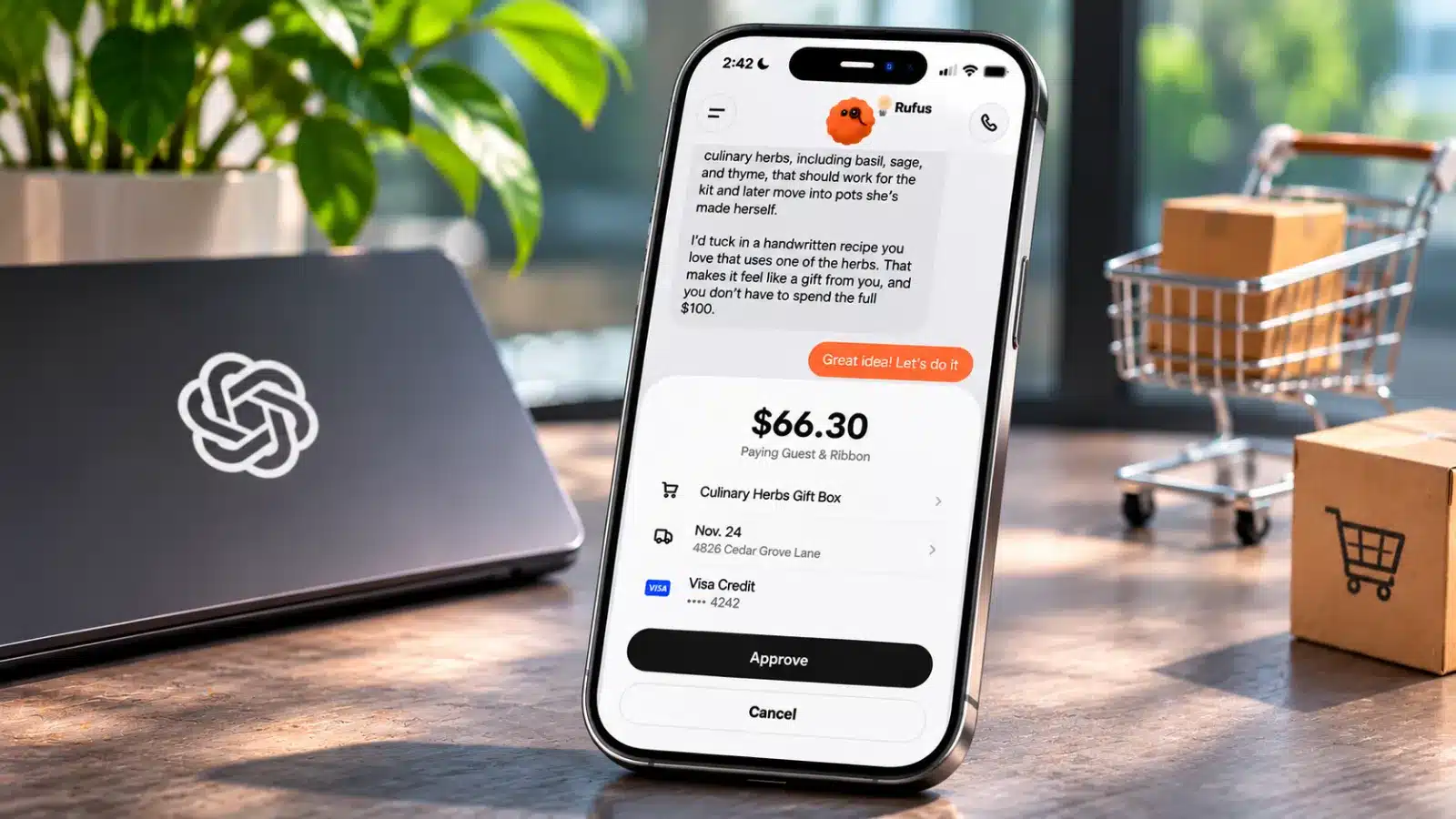
OpenAI’s dots agents can now complete checkout on merchant websites using a saved card, a transaction-specific payment token and a Face ID or fingerprint check. The launch is limited to US ChatGPT Pro subscribers, but the guidance OpenAI published for retailers applies to any online store.
OpenAI’s AI agents can now pay for things. On November 13, the company launched ChatGPT Wallet, which lets its dots agents complete checkout on a merchant’s website using a card the user has saved, built with American Express, Mastercard and Visa.
The agent never receives the user’s actual card number or security code. Each purchase runs on a transaction-specific payment token, and in the current rollout nothing goes through until the user approves it with Face ID or a fingerprint. For now, the feature is limited to ChatGPT Pro subscribers in the US.
OpenAI’s reasoning is about scale. The company says 1.2 billion people use ChatGPT each week, and many already use it to research and compare products before leaving to buy elsewhere. Wallet is its attempt to keep the final step inside the conversation. The instructions it published for retailers on the same day matter just as much, because they describe how any online store’s checkout, firewall and fraud tools should treat a shopper that is software.
What Happens When a Dot Buys Something
Dots are the always-on personal agents OpenAI introduced in September. Like other systems built on how agentic AI plans and acts, they can browse the web and work through multistep tasks; Wallet adds the step they could not take on their own, which is paying. OpenAI’s announcement presents Wallet as a payment layer for agents in ChatGPT Work and Codex too, but its Help Center says that at launch Wallet works only in dot conversations. It is not available in regular ChatGPT chats, ChatGPT Work or standalone Codex threads.
Setup happens once. The user asks their dot to add a card, then enters it through a secure form rather than typing it into the conversation. OpenAI’s Wallet terms explicitly warn against pasting a card number into a chat. Chase cards take an extra step: the connection is approved in the Chase mobile app, and only the primary cardholder can add the card. Authorized users cannot.
After that, a purchase moves through a fixed sequence:
- The user describes what they want, say a winter jacket under $200 or a hotel in Chicago for next weekend.
- The dot gathers options from the web, merchant product feeds or connected plugins, and the user picks one.
- Wallet displays the merchant, the items and quantities, the card to be charged, and either the total or a maximum price that includes known taxes, fees and shipping.
- The user confirms with a biometric check on a supported device, or follows a link or QR code to approve on one.
- The dot completes the merchant’s own checkout with the payment token in place of the card number.
Approving a purchase is not the same as placing an order. OpenAI’s Help Center says a purchase marked ready to check out only means the user signed off; the merchant can still reject it. Users should look for the store’s own confirmation email before assuming anything shipped.
What the Token Protects, and What It Doesn’t
Tokenization is the core of the design. Once the user approves, the card network supplies a stand-in credential with its own number, security code and expiry date. According to OpenAI’s Help Center, the card is then charged without the real details ever reaching the business or the agent.
OpenAI’s developer documentation adds a constraint retailers will care about. The credential covers only the transaction the customer approved and must not be reused or saved for a separate purchase. A Payment Account Reference lets merchants link it to the underlying card account.
The protection covers the card number, not the purchase itself. The merchant still receives the shipping address and contact details it needs to deliver the order, and OpenAI keeps its own records. Its Wallet privacy notice lists the merchant, amount, items, quantities, taxes, fees, shipping and delivery details for each purchase, along with order status through to refunds and chargebacks. It also covers device and approximate location signals and the result of each authentication. Anyone weighing convenience against privacy should know that their shopping history now sits with OpenAI as well as the store.
In the current rollout, the biometric check adds an explicit authorization step before every purchase and creates a record of what the user approved, which matters if a charge is disputed later. OpenAI says existing card rewards and protections for eligible disputes still apply.
The approval step resembles Apple Pay, and the security model is similar to most mobile wallet apps: a tokenized card plus a biometric check. The difference is who fills the basket. With Apple Pay, the shopper picks the item and pays; with Wallet, an agent chooses the product and works through the merchant’s checkout, and the shopper approves the finished order.
When something does go wrong, OpenAI’s Help Center routes it to one of three places:
| Problem | Who resolves it |
|---|---|
| Order status, returns, refunds, recurring charges | The merchant |
| Declined, pending or disputed charges | The card issuer |
| Wallet errors, account takeover, or a purchase that differs from what was approved | OpenAI Support |
Removing a card from Wallet stops future agent purchases, but it does not cancel orders or recurring charges already placed. Those go back to the merchant like any other online order.
That split leaves one scenario murky. Suppose a dot misreads a request, the user approves the screen without spotting the error, and the wrong item ships. OpenAI’s Wallet terms say the company assumes no liability for purchases or orders made through Wallet and point users to their card issuer, payment network or merchant instead.
American Express has signaled it may address part of that gap. Its Agent Purchase Protection, announced in April and still in development, is meant to protect eligible card members from charges caused by AI agent errors. It applies only when a registered agent sends Amex the cardholder’s authenticated purchase intent, and neither company has said whether Wallet purchases will qualify once it launches. Visa and Mastercard have not announced an equivalent for Wallet purchases.
Who Can Use ChatGPT Wallet Today
Very few people, for now. Wallet is rolling out gradually to US ChatGPT Pro subscribers aged 18 or older who hold an eligible US-issued American Express, Chase, Mastercard or Visa credit card. OpenAI’s Help Center says debit cards and virtual cards are not supported at launch, and a company card works only if the employer allows it to be stored. Even within that group, OpenAI says some users will not see it yet. There is no timeline for other ChatGPT plans or for any market outside the US.
Retailers set the other limit. OpenAI concedes that some websites may block Wallet purchases without meaning to, and some large retailers block outside shopping agents on purpose.
Why OpenAI Changed Course on Shopping
Wallet is OpenAI’s second attempt to close the sale, and it reverses the first. Instant Checkout, launched in September 2025, let users complete purchases inside the chat, with merchants paying a fee on completed orders. In March 2026, OpenAI said that first version had not offered the flexibility it wanted and shifted its focus to product discovery and to checkout on merchants’ own sites and apps.
The new model hands checkout back to the store. Merchants keep control of pricing, fulfillment, returns and customer service, and they make their own fraud decisions through their existing payment processor. OpenAI has said it is not taking a cut of Wallet purchases at launch.
The card networks had been preparing for months. In June, Visa announced a strategic collaboration with OpenAI to supply its network, tokenization and risk tools for agent payments, with transactions confined to permissions the user sets; neither company gave a launch date at the time. In April, American Express released its Agentic Commerce Experiences developer kit, which covers agent registration, capture of the cardholder’s purchase intent, tokenized credentials and cart details for dispute checks. OpenAI’s launch post names Wallet as the first integration of that kit.
Our read: the shift away from Instant Checkout suggests retailers were unwilling to hand over checkout, or a commission, to a chatbot. Wallet asks for neither. Most AI in ecommerce so far has meant better search and recommendations; agents that pay change who, or what, a store’s checkout has to serve. Whether a commission returns once agent traffic is significant is an open question.
What Changes for Online Retailers
Accepting the payment itself requires no new integration. OpenAI’s Commerce Partner Playbook says Wallet works with existing checkout pages, and the token is processed like any other card payment. Subscriptions are allowed if the checkout already supports recurring billing and the customer consents to repeat charges. The harder part sits around the checkout.
Security tools are the first obstacle. Bot defenses built to stop scrapers and card-testing attacks can easily mistake ChatGPT’s cloud browser for one of them. OpenAI’s agents sign their requests using Web Bot Auth, and the company asks merchants to configure their CDN or firewall to recognize those signatures.
Fraud scoring comes next. Risk models lean on IP addresses and device fingerprints, and agent purchases arrive from OpenAI’s cloud infrastructure rather than the shopper’s phone. OpenAI is rolling out support for relaying signals about the real user through the standard HTTP Forwarded header, including an estimated country, locale, time zone, a masked IP range and browser or app details. Its documentation notes that the signals merchants receive may vary by site during the rollout. OpenAI’s announcement also says it is working with fraud vendors Forter, Riskified, Sardine and Signifyd and with payment providers Adyen, Checkout.com and Stripe on recognizing agent purchases.
For most ecommerce development teams, the first job is therefore an audit rather than a build: confirm verified agent traffic is not blocked, and ask the fraud provider whether it reads the Forwarded header yet.
Retailers that want more control have further options. They can claim a business profile in ChatGPT and submit a product feed with live prices and stock. Stores that require an account at checkout can add Sign in with ChatGPT. And they can build a plugin on the Model Context Protocol, or add WebMCP tools to their site, so agents can check availability and manage carts directly. That last step raises the same AI integration questions as any outside system that touches inventory and orders.
A practical sequence: fix access and fraud signals first, measure how many agent-driven orders actually arrive, and only then decide whether a plugin is worth the engineering time.
What OpenAI Hasn’t Answered Yet
OpenAI’s next stated step is delegation: letting users pre-approve purchases within spending caps, product categories or time windows, so a dot can buy without a prompt each time. Those are the same guardrails any team doing AI agent development has to design before an agent touches money. The Wallet terms already allow a user to grant ChatGPT authority to approve purchases in advance, but the Help Center documents only per-purchase biometric approval, and OpenAI has not said when delegation will arrive. Several other questions remain open:
- When Wallet reaches ChatGPT Work, Codex, other ChatGPT plans, or any country outside the US
- Whether OpenAI will charge merchants or users once volumes grow
- Whether Wallet purchases will qualify for Amex’s planned protection, and whether Visa and Mastercard will offer something similar
- Which large retailers will allow agent checkout, given that some currently block it
What This Means for Decision-Makers
For consumers, ChatGPT Wallet is a careful first version: useful for Pro subscribers who already shop through a dot, and in its current form unable to spend without a fingerprint or Face ID check. For retailers, it is an early signal rather than an emergency. Checkouts do not need rebuilding, but bot rules and fraud models written for a world without legitimate agent shoppers will start turning some of them away.
Businesses deciding how far to open their stores to AI agents can talk to The NineHertz about agentic AI development for commerce workflows.
News Editor at The NineHertz, covering the latest developments in artificial intelligence, emerging technologies and global industry trends, with a focus on innovations shaping enterprise technology and the future of business.