Fleet operations have transitioned from managing fleets of vehicles using spreadsheet files and paper logbooks to a data-based approach. According to MarketsandMarkets, the global fleet management market will exceed $52 billion by 2027 as demand for real-time visibility continues to increase due to high fuel costs and increased pressure to comply with regulations.
IoT fleet management software can’t be thought of as a tracking solution. Modern fleet management software enables fleets to operate more efficiently by using predictive maintenance, fuel optimization, real-time analytic capability, and AI predictive capabilities, making it possible for fleets to function at an optimal level.
Fleets that adopt and utilize the best fleet management software will reduce their operating costs while simultaneously improving their safety habits, increasing their efficiency, and achieving smarter, scalable growth.
IoT fleet management software is no longer a tracking tool; it is a strategic profit engine. Businesses that invest in modern software for fleet management gain more than operational control.

Even small amounts of fuel wasted due to improper use, inefficient routing, or long idling times can result in significant annual losses. This problem can be solved with IoT fleet management software. It monitors fuel in real-time and quickly identifies fuel misuse.
Risks, such as accidents, regulatory fines, or cargo damage, are inherently involved in fleet operation. The use of Internet of Things (IoT) systems alerts for speeding and flags unpredictable driver behavior, enforcing accountability and facilitating a culture of safety.
Operational visibility shifts fleet operations from a reactive cost-based function to a proactive strategy-based function. Modern software for fleet management enables management to quickly make decisions based on real-time data versus relying on gut instincts.
Creating strong IoT fleet management software requires more than merely tracking vehicles. This requires a full solution that integrates intelligence, automation, and operational control. Below are the minimum requirements for a modern fleet program’s software platform:
The ability to access GPS-based live tracking of vehicles allows organizations to track the position, speed, and traveling history of their vehicles in real time. By using geofencing in these systems, organizations can control their vehicles by receiving notifications when they leave a particular location or enter a new one. It also aids in improving the overall safety of the vehicle, routing, and the monitoring of deliveries.
A functional fleet management software platform must collect and process telematics data from an OBD device, a CAN bus system, fuel sensors, and temperature sensors. By enforcing sound data-collection methodology, an organization gains accurate insights into engine performance, driver behaviors, and operational performance.
Integrated fuel monitoring allows an organization to identify improper use of fuel, inefficient driver behavior, and sudden drops in fuel. In addition, using detailed fuel consumption reports assists an organization in reducing fuel consumption through waste prevention and theft through tracking fuel purchases more effectively.
Automated maintenance scheduling tracks service intervals based on the number of miles or engine-hours travelled in the truck. Utilizing predictive maintenance through sensor data allows for potential repair needs to be identified prior to a breakdown occurring. This helps to reduce downtime and increase the life expectancy of the truck.
Harsh braking, rapid acceleration, speeding, and idling are examples used to evaluate performance. Driver safety scoring systems assist with safe driving behavior, reducing claims risk and lowering annual insurance premiums.
Optimized route planning reduces distance and fuel consumption. The dispatch management function enables the most efficient vehicle assignments; ETAs provide the accuracy drivers can depend on to ensure customer satisfaction.
Driver mobile apps provide trip status updates, navigation, and digital logs. Manager mobile applications provide real-time visibility, notifications, and tools for making decisions on the go.
Custom dashboards show users’ KPIs in real time. Automated alerts notify managers of significant events occurring, and detailed reporting enables data-driven decision-making.
Effective IoT software Development utilizes a strong hardware and integration layer as the foundation. Dashboards and analytics provide insight on fleet operations. However, the accuracy of insights is based on the quality of the connected devices and the capability of transmitting data to the cloud via a seamless process.

Selecting the right device is crucial to building a reliable fleet management solution. The Telematics Control Unit (TCU) is the primary physical component of the in-vehicle telematics system. They provide all GPS location, engine diagnostics, speed, and driver behavior information to the fleet manager.
OBD dongles are plug-and-play devices that allow for quick and easy installation, which makes them an excellent solution for small and medium-sized fleets. It connects directly into the onboard diagnostic port and gives fleets access to engine fault codes and vehicle performance data.
Fuel sensors can be used in addition to OBD dongles and telematics control units to provide real-time fuel level, detection of fuel theft, and fuel consumption measurement. Properly integrating these devices allows fleets to deploy the best fleet management software available with accurate operational visibility.
Connectivity determines the efficiency and speed at which data flows from the vehicles to the cloud. Real-time fleet tracking and high-bandwidth transmission of data are typically facilitated using cellular networks (4G/5G). For low-power, long-distance communications, LoRaWAN may be the best option where coverage is limited or there are remote locations.
NB-IoT is designed for energy efficiency, as it provides connectivity to IoT devices with purpose-built technology, meaning they perform consistently and with a low overall power consumption. Bluetooth is often used to authenticate drivers and connect to external devices at short range.
In many cases, the architecture of the application influences the overall performance of fleet management software that incorporates IoT technologies. As it relates to dashboarding real-time data and alerts for fuel consumption and route optimization solutions, your choice of technology stack heavily influences how fast your IoT fleet management software performs.

This is where the data originates. There are many devices that gather real-time vehicle data, including GPS tracking devices, On-Board Diagnostics (OBD) devices, CAN Bus integrations, fuel sensors, and temperature sensors.
Data received from each of these would include location, speed, engine health, and fuel levels. An edge computing solution helps filter and compress data to minimize the amount of bandwidth, allowing for faster real-time data processing.
Vehicle data is sent through either a GSM network, a 4G/5G Network, an NB-IoT network, or a satellite network. To facilitate secure and lightweight communication between devices and cloud servers, several communication protocols include MQTT and HTTPS. This layer must provide for secure encrypted transmission and reliable connectivity, including in remote areas.
The cloud and backend layer utilize multiple software technology platforms, including Node.js, Python with FastAPI or Django, or Java with Spring Boot as the backend framework. The Backend layer will be responsible for:
Cloud platforms like Amazon Web Services (AWS), Microsoft Azure, and Google Cloud are all examples of cloud platforms that allow for auto-scaling and high availability.
Typical databases used in most systems are:
Real-time processing uses tools like Kafka or Redis to process large volumes of data in real time. AI and analytics tools generate insights such as predictive maintenance alerts, scoring drivers, and finding fuel economy patterns.
Web dashboards (React or Angular) and mobile applications (Flutter or React Native) give the user the ability to:
End-to-end encryption, role-based access control, containerization (Docker), CI/CD pipelines, and monitoring tools ensure system reliability and secure operations.
The modern IoT fleet management software goes beyond the one-size-fits-all approach. As different industries are managed differently, there are numerous regulations and requirements to adhere to. Advanced fleet management software includes specialized modules specifically designed for each type of fleet.
Truck fleet management software is intended for freight and logistics companies that operate extensive networks of vehicles. This type of software focuses on route optimization, load management, fuel efficiency tracking, and driver compliance. When paired with telematics, real-time GPS tracking can be used to reduce fuel costs, prevent route deviations, and improve on-time delivery, which is essential in a competitive logistics industry.
Construction environments are considered to be dynamic and very unsafe environments. Construction fleet management software allows users to monitor heavy equipment, such as bulldozers, cranes, backhoe loaders, and dump trucks. Its monitoring capabilities include engine hours, equipment utilization, idle time management, and geofencing to buildings.
Vehicle fleet management software is for any type of business, whether it is an employee who drives a company car or a service van or an employee who drives many different types of vehicles. It is designed to provide businesses with solutions to monitor their employees, track fuel usage, track employees’ trip histories, and provide notification alerts for maintenance.
Using EV fleet management software enables companies to manage their EV fleets by utilizing solutions for monitoring battery health, tracking charging stations, analyzing energy consumption, and optimizing vehicle range. Businesses can track charging cycles for the batteries, the degradation of batteries, and the cost of energy consumption. This allows companies to operate their EV fleets as efficiently as possible to meet sustainable goals.
Time-sensitive industries require precision. Ambulance fleet management software enables real-time dispatch, fastest-route navigation, emergency priority tracking, and vehicle readiness monitoring. It ensures that response times are minimized and vehicle availability is constantly monitored where operational efficiency directly impacts lives.
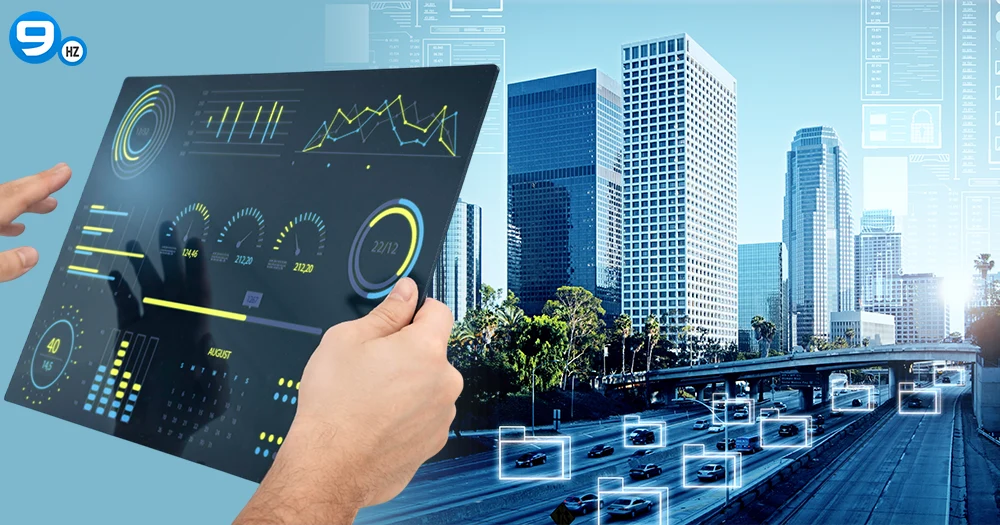
Modern IoT fleet-management software has outgrown its original limitation as only a means of tracking vehicle movement. Fleet managers can manage their fleets more responsibly and predict future vehicle failures due to the implementation of real-time data from connected vehicles via telematics and advanced algorithms.
AI models can analyze breakdown patterns of vehicles by analyzing things like engine diagnostics, shifts in engine operating temperatures, brake usage patterns, battery condition, and mileage patterns. This helps businesses prepare prior to those breakdowns.
The ability to use telematics data to measure idle time, harsh acceleration or deceleration, route efficiency, average speed of travel, and engine load results in improved operational efficiencies for fleet management. With the enhancement of AI models, fleet managers get actionable and reliable insights to assist in the reduction of fuel consumption in their fleet operations.
Without clear information, data is useless. This is why sophisticated software for fleet management is designed to give fleet operators access to:
Modern IoT-powered dashboards provide:
Fleet managers can:

The development process based on objectives is simply defined with clarity as follows:
The development process begins with a methodology to understand your fleet size, vehicles, regulations, operational problems, and necessary integrations with the fleet. Identify the KPIs for your fleet based on the goals of fuel efficiency, vehicle uptime, driver behavior, and routing efficiencies.
The architecture of the fleet management application must be clearly defined. This includes integrating into the telematics, defining the telematics back-end infrastructure, identifying the cloud environment to use, and writing the APIs. A scalable, cloud-native architecture also helps to build the best fleet management software according to future business needs.
The core modules like GPS tracking, analytical dashboards, predictive maintenance engines, and fuel usage dashboards are developed during this phase of the project. The integration of IoT sensors and telematic hardware is designed to facilitate real-time transfer of data. The structure of the data pipeline is pre-established to provide for advanced analytics and AI-driven insights.
A comprehensive test of all modules is conducted to determine device compatibility, data accuracy, data protection, cybersecurity, and overall system performance. Optimization ensures that the deployment of a fully functional fleet management system can go smoothly, regardless of the number of vehicles in the fleet being served.
Fleet management solutions are rolled out using a phased-in approach. Both fleet managers and drivers receive training on their technologies. Continuous monitoring offers opportunities to enhance the fleet management system so that it stays competitive in today’s rapidly changing marketplace.
Choosing the right IoT fleet management software partner is not just a procurement decision; it’s a long-term operational strategy. The right system becomes the digital backbone of your fleet; the wrong one becomes an expensive burden.
Assess the problem you will be solving with fleet management software. For example: fuel theft, driver safety, route optimization, or cold-chain monitoring. Choose software for fleet management that matches your business model, not just the longest feature list.
Fleet operational processes are complicated. The provider of your IoT fleet management system must understand every facet of the logistics chain, including workflow, procedural compliance, and how the vehicle operates in the real world.
True IoT capability requires reliable hardware, secure connectivity, and scalable cloud software operating collaboratively. Ask whether the partner manages device firmware updates, SIM connectivity, and sensor integration. Fragmented responsibility often leads to operational gaps.
Fleet data is an important resource, and you can access it whenever you’d like. Your devices and communications should adhere to security standards, use encryption (TLS), and authenticate users.
Check the following:
Modern cloud-based IoT fleet management software should easily fit into the existing architecture of your digital business ecosystem.
Don’t just consider the monthly cost of your subscription when evaluating pricing. Consider other areas such as hardware, installation, support costs, and long-term scalability. More importantly, consider how your potential fuel, maintenance, and downtime savings will impact your overall ROI.
The NineHertz is a leading tech company that provides IoT fleet management software development services and provides end-to-end IoT-based ecosystem development along with world-class services for delivering robust, future-ready fleet management applications.
We not only develop dashboard applications but also present complete integrated ecosystems of IoT solutions. It integrates GPS devices, cloud-based telematics, data analytics, and mobile applications into one seamless IoT solution.
The NineHertz has proven 15 years of industry expertise in software development across industries.
The NineHertz builds its solutions leveraging the latest cloud-based technology that is scalable and free of issues affecting the overall performance. Additionally, the solution includes a high level of data security features, which protect sensitive fleet information in compliance with all relevant laws and regulations.
The NineHertz has established working documents and has created structured pricing models that demonstrate that any technology developed will meet your business objectives.
Q1. What are the 5 pillars of fleet management?
Fleet Management’s Five Pillars Include:
1. Vehicle Tracking
2. Fuel Management
3. Driver Management
4. Maintenance Management
5. Compliance Control.
Q2. What technology is used in fleet management?
The devices that can be used to track performance in fleet management are GPS systems, IoT sensors, telematic systems (OBD/CAN), and artificial intelligence analytics. Some of these technologies send data over GSM, 4G, and 5G networks to be processed using cloud-based computing services (e.g., Amazon Web Services or Microsoft Azure).
Q3. What is ERP in fleet management?
ERP in fleet management refers to integrating fleet operations with various business functions (e.g., finance, HR, procurement, and inventory). Business process improvements possible through the integration of truck fleet management software and enterprise resource planning (ERP) systems allow businesses to automate several functions, including billing for fuel purchases and payroll, as well as tracking fleet assets.
Q4: What are the four major components of a fleet management system?
Fleet management systems are composed of four distinct parts:
Collectively, these components work in succession to gather data related to vehicle performance. It transmits data to users in near real-time, conducts intelligent processing, and generates actionable insights for the user to improve fleet operations.

Imagine a city where you can see everything happening on the streets in real-time. In this city, you can find…
The Internet of Things (IoT) is changing industries by connecting everyday devices to the Internet, enabling real-time data collection, monitoring,…

Merging Artificial Intelligence (AI) with IoT is one of the groundbreaking approaches in the technology domain. On one side, IoT…