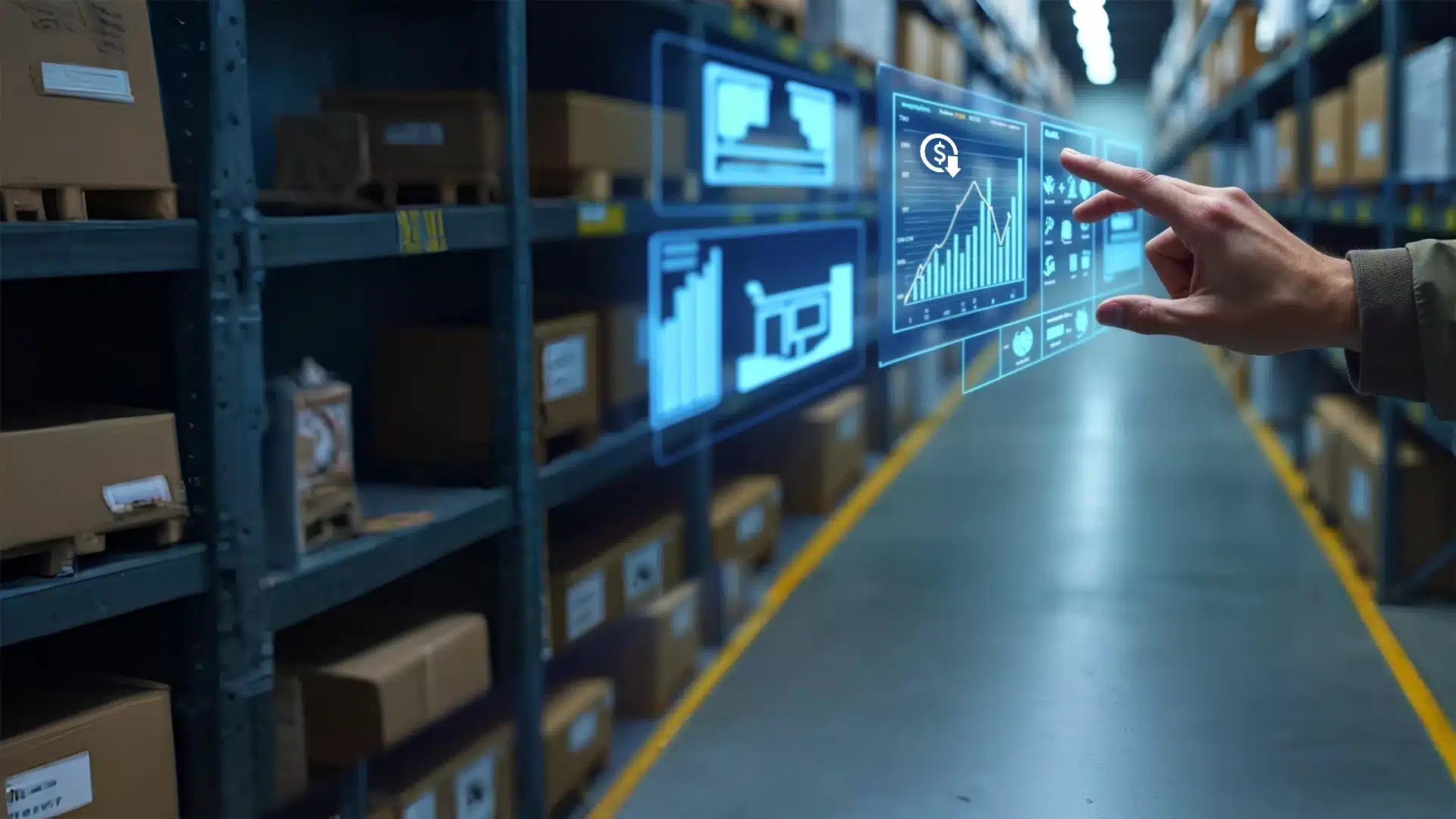
Logistics expenditures have reached all-time highs, making them one of the top three P&L items. According to the CSCMP State of Logistics Report, USA businesses’ logistics costs is $2.3 trillion, which accounts for 8.7% of GDP. Before COVID, the average was 7.4% to 7.8%, so this is a substantial jump. It is likely to stay high because of inflation and structural labor issues. Leaders can no longer consider logistics as a background cost because it impacts profit margin and customer experience, making logistics cost reduction strategies more critical than ever.
Every day, decision-makers have to deal with problems including increased freight charges, high volumes of safety stock, and turmoil at the final mile. This waste is generally caused by poor visibility and manual planning, which makes it hard to see all the facts and make decisions ahead of time.
Implementing effective logistics cost reduction strategies requires more than just traditional tools. At The NineHertz, we make sure that software addresses real-world problems by combining process improvement with actionable data.
In this blog, we give a realistic overview of the most important cost levers and show you exactly where automation pays off so you can turn logistics from a cost into a competitive advantage.
Before managing the supply chain, it is essential to understand how logistics costs are structured and how they interact. Logistics costs are made up of five main parts: transportation (moving goods), warehousing (storing them), inventory carrying (the money tied up in stock), last-mile delivery, and overhead, which includes the planning, administration, and IT needed to keep things running.
Pain points are growing the most in three categories right now:
The most significant corporate objective in 2026 is the reduction of logistics costs, which changed from a routine objective. This is due to the necessity of safeguarding their profit margins in a global economy that is unpredictable, and the costs of doing business are increasing.
In order to maintain a competitive pricing strategy and enhance their financial stability, supply chains must adopt robust logistics cost reduction strategies. The reason is that inflation is a persistent issue, petroleum prices are fluctuating, and labor costs are increasing.
The aim for 2026 shifted from just building infrastructure to upgrading “sweating assets” to prevent inflation.

To employ effective ways to minimize logistics costs, businesses need to stop putting out fires and start using data to cut down on waste at every step, from the first port to the final mile. Evaluating logistics software development cost also helps organizations invest in the right digital tools that automate processes, improve visibility, and prevent long-term operational losses.
To reduce transportation costs, you need to not only drive fewer miles but also more efficiently. Businesses using route optimization software are estimated to reduce fuel and idle time by approximately 20%. The advanced algorithms used for route optimization will consider real-time traffic, delivery windows, and vehicle capacity to operate at their maximum density and minimum empty backhauling. This is one of the most impactful logistics cost reduction strategies for transportation-heavy operations.
Too much stock is a quiet destroyer of margins. Modern tactics use AI-driven demand forecasting to make sure that procurement matches real changes in the market, which significantly cuts down on the costs of holding inventory.
Companies can free up working capital that is stuck by optimizing reorder points and safety stock levels. This way, they can avoid the problems of expensive stockouts or having to heavily discount old, slow-moving commodities that are taking up space in high-rent facilities.
Also have a look – Inaccurate Demand Forecasting in Supply Chain : Causes, Costs, and AI-Based Solutions
The key elements for creating effective processes in the four walls of a warehouse are flow and accuracy. A Warehouse Management System (WMS) maximizes picking efficiency by providing optimal routing for pickers, automating put-away logic, and minimizing labor hours to reduce the chance of an error when making a picking choice. High-performance warehouses are aided by digital twins of their operations, allowing on-the-fly identification of bottlenecks for warehouse managers to quickly reposition staff.
Reducing your shipping costs requires more than just aggressive negotiation; it requires better data. Automated freight audits, along with a comprehensive understanding of market indices, enable companies to identify billing discrepancies and compare their rates to current market conditions.
Digital bidding platforms help diversify your carrier for competitive pricing and reduce the chance of being overly dependent on a single vendor. This also safeguards against sudden regional supply chain disruptions or localized rate increases.
The final mile of shipping represents the largest proportion of overall shipping cost, accounting for as much as 53% of the total cost to fulfill an order. Companies have adopted “click-and-collect” strategies, opened micro-fulfillment centers, and implemented automated delivery updates to reduce last-mile shipping costs through strategic logistics cost reduction strategies.

Software automation is a key driver of modern efficiency. It turns static supply chains into dynamic networks that find and fix financial leaks before they hurt the bottom line. Working with a specialized logistics software development company can help businesses implement these automation solutions effectively.
Automation replaces the manual operations of your business with an automated workflow that scales as the business expands. With the large number of companies automating their administrative processes, such as order entry, billing, and checking documents, human error elimates and cost reduces.
It also eliminates the need to feed the same information on multiple forms while allowing teams to invest their time in the strategic exceptions. Therefore, your operational capacity will be increasing without the need to employ additional personnel or raise overhead expenses.
AI is like the brain of a lean supply chain. It finds patterns in huge data sets that human planners would not see. Predictive analytics helps reduce rush shipping fees by identifying potential demand increases or transit delays in advance. Companies may go from reacting to problems to predicting costs by using Big Data solutions.
A strong TMS is a good way to keep an eye on freight costs. These platforms bring together all shipping processes, giving you the visibility to combine orders and make the most of vehicle space. A contemporary TMS does more than just route shipments. It also automatically chooses carriers based on cost and performance indicators. The freight audit capabilities make sure you only pay the rates you agreed to, which can save you thousands of dollars a year in billing mistakes.
By automating inventory control and labor management, WMS technology makes “four-wall” efficiency possible. The program cuts down on pickers’ travel time by optimizing slotting and putting high-velocity products in the easiest-to-reach places. This lowers the labor cost per order. Real-time inventory tracking reduces the reliance on costly physical counts and helps eliminate overstocking. This means that warehouse space, which is now in short supply, may be used to make the most money instead of sitting about with stock.

Walmart has implemented route optimization for its delivery system. This new delivery network uses AI and takes into account traffic flow, weather conditions, and fuel efficiency of all vehicles, resulting in a total decrease of 30 million unnecessary miles and avoiding 94 million pounds of CO₂ emissions.
The practice not only resulted in reduced fuel expenses but also reduced wear and tear on vehicles and driver overtime payments. Walmart’s transportation division was positively transformed from being a chaotic and costly center to a well-organized and proper, data-supported operating department with a measurable ROI within the first six months of implementation.
To reduce the risk of mistakes related to manual processes, Polaris Industries automated its logistics and customs activities. An AI-based freight rating engine assesses thousands of carrier invoices daily by comparing them to existing contracts, allowing for real-time validation.
It improved the accuracy of freight rates (8 million) as well as an increase in staff efficiency. Additionally, departments have been able to redirect the majority of their time away from performing manual checks to performing strategic vendor negotiations and long-term cost savings.
To combat rising labor costs, Amazon implemented a WMS that utilized smart slotting and automated picking logic. Inventory management systems are programmed to experiment with inventory locations regularly, using data about demand rates and peak seasons.
Talk to our Experts
Request A Free Quote
This strategy is intended to ensure that high-volume items are stored near the packing area of the warehouse to minimize travel time for pickers and to improve order processing. Therefore, Amazon fulfills orders in large amounts during the peak season without adding significant labor costs.
It’s not about finding the platform with the most features; it’s about finding the best way to fix your specific financial leak. A lot of companies fail because they start with a product demo instead of a real-time solution. To avoid this, you need to follow a set rule: don’t start with features; start with cost levers and limits when evaluating logistics cost reduction strategies.
| Cost Problem | Relevant Tool(2025) | Typical Impact Range | Data Needed |
|---|---|---|---|
| High Freight Spend | TMS / Freight Auditing | 5% – 12% Savings | Carrier rates, lane history |
| Labor Inefficiency | WMS / Labor Mgmt | 15% – 25% Productivity | Picking logs, layout data |
| Excessive Stock | Demand Forecasting | 10% – 20% Carrying Cost | Historical sales, lead times |
| Last-Mile Chaos | Route Optimization | 10% – 15% Fuel/Miles | GPS data, delivery windows |

Cost-cutting is a precise process; a “slash-and-burn” method typically results in service failures that outweigh the initial cost advantages. In order to secure the expected benefits, you must avoid these strategic mistakes when implementing logistics cost reduction strategies.
If you focus too much on aggressive negotiations, you might win for a short time, but you won’t see the structural waste in your network. Price discounts cannot compensate for inefficient transportation routes or slow loading and unloading operations.
Instead, focus on making the route better and increasing the load density. By making operations more efficient, you permanently cut the overall cost to serve. It makes firms more stable irrespective of the present-time navigation and freight availability.
Buying technology without understanding your present “cost-per-order” or “cost-per-mile” makes it impossible to prove ROI. You can’t tell if the software is really adding value without a starting point.
Before you sign a software contract, set strict logistical KPIs and compare your historical data to present-time gains. This gives you a clear way to measure performance improvements.
This provides a clear framework to measure performance improvements and hold technology providers accountable for their commitments.
If you cut down on shipments to save money on shipping, you can end up with more inventory carrying costs since warehouses fill up with safety stock. When you optimize one department on its own, the costs usually move to another department.
Instead, use a total cost of ownership (TCO) method. This big-picture view makes sure that savings in transportation don’t turn into higher costs in warehousing. This lets you spread the spending over the whole supply chain network for the best results.
The most modern software is meaningless if dispatchers and drivers don’t understand it and go back to doing things manually. The main reason why high-potential logistics technology projects don’t save money is that core people are unable to use them.
Instead, get end users involved early in the decision process and spend money on full training sessions. Teams are more likely to use the system and help you get the efficiency benefits you want when they know how the tool makes their work easier.
AI and analytics tools won’t work—or worse, they’ll give you wrong information—if they get incomplete data from old systems. To provide useful recommendations for saving money, complex algorithms need inputs that are high-quality and consistent.
Talk to our Experts
Request A Free Quote
Instead, make sure to focus on a data hygiene step to clean up and standardize the inputs in your ERP and WMS. If you want your automation layers to provide you with accurate results instead of merely speeding up mistakes that are already happening, you need to have a strong data foundation.
The next step in making logistics more efficient is to move toward proactive, self-healing networks. Several solid, high-impact changes will shape future tactics for lowering logistics costs:
Using a purpose-built automation stack along with systematic logistics cost reduction strategies can potentially cut your total logistics costs by 2–10% or more while also raising service levels. The most important thing is to prevent “analysis paralysis.” Start small by optimizing one high-volume lane, one regional warehouse, or a certain delivery zone to show the ROI.
At The NineHertz, we know how to turn these cost-cutting concepts into software that works and long-term operating capabilities. As a trusted logistics software development service provider, we assist you in connecting the dots between where your data is now and where it needs to be in order to be more efficient.

Key Takeaways The logistics analytics dashboard can transform raw data into actionable insights, so that businesses can keep tabs on…

Implementing a logistic management system is in vogue of late as it helps businesses transform their delivery system smoothly and…

It is impressive that C.H. Robinson is using AI for logistics task automation. The global logistics company receives 11,000 emails…