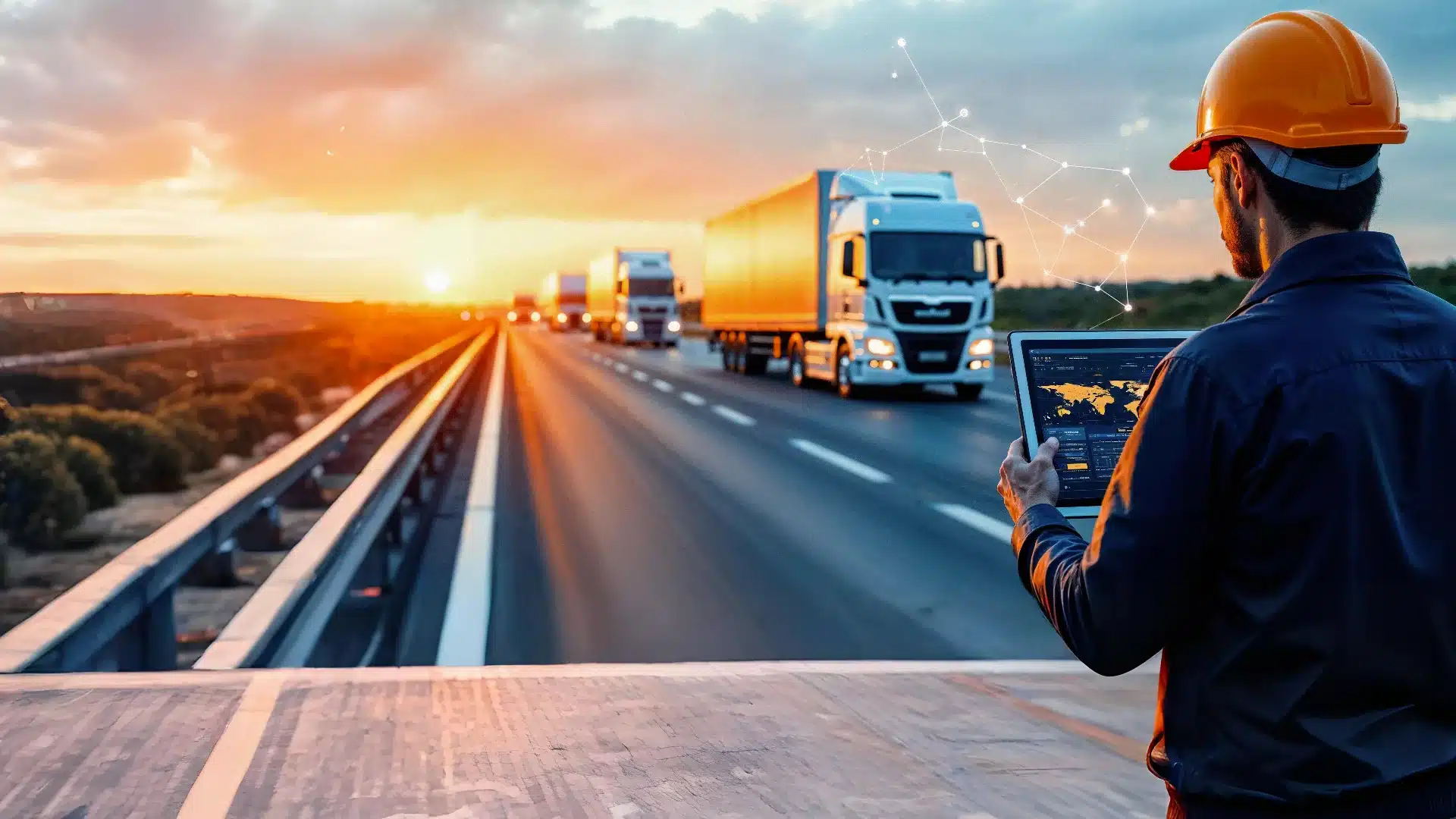
In 2026, logistics is not just about delivering the goods. The companies are fighting for survival amid high volatility and rising customer demand for a better experience. The logistics industry is under heavy pressure of green compliance, driver shortage, Amazon effect (B2B and B2C customers now demand “hyper-transparency), rising operational fragility, security, and cargo theft. Now, conventional methods are ineffective, and this is where logistics route optimization software comes into the scene.
Using a customized software solution, you can streamline operations, adhere to compliance, optimize your resources, and provide personalized end-customer experiences. Most of the modern businesses are looking for AI-driven logistics and shipping solutions.
With the increasing demand, the global logistics software market size is projected to reach USD 31.74 billion by 2034, at a CAGR of 7.75% (2026-2034). North America leads with a 36.78% share. Additionally, McKinsey also revealed in their research that AI in logistics could generate $1.3 trillion to $2 trillion economic value by 2030.
Considering all the facts, there is a bright scope for route optimization software where better route planning, reduced fuel cost, and customer satisfaction are key benefits. This guide explores all the key aspects that’ll help you to adopt an innovative solution for your logistics business.
Let’s go deeper into this article and start with the basics!

To understand the definition, it’s crucial to understand the process. Route optimization is the process of planning the best and cost-effective route that makes deliveries possible in the least time.
Therefore, logistics route optimization software refers to an AI-driven digital solution that calculates, suggests, and organizes the delivery routes, helping technicians, drivers, and delivery staff to move the goods efficiently from source to destination.
Comparing basic route planning vs optimization, the digital route planning solution goes beyond expectations. It considers a myriad of variables such as real-time traffic data, weather data, vehicle capacity, delivery schedules, and available resources. Based on these, it suggests an ideal route that is cost-efficient and effective by all means.
Still, you might have a question- How does route optimization software work?
Thus, the key role player is an advanced algorithm that evaluates multiple variables, schedules resources, performs dynamic re-routing, and multi-day optimization(ensuring consistency and efficiency across longer or large-scale projects).

With the increasing demand for impactful supply chain and logistics services, challenges are multiplying. The traditional techniques are just about to collapse. Thus, before you adopt logistics route optimization software for your business, it’s crucial to understand the challenges companies face without it.
The key challenges include:
Thus, how does logistics route optimization software solve these pain points?

Logistics route optimisation software is the best way to cut costs, save fuel, make better use of resources, and give customers personalised service. The benefits that supply chain and logistics companies will get:
Routes are selected using real traffic data, not on assumptions. The system avoids unnecessary routes, cuts empty miles, and balances loads across vehicles. This leads to steadier fuel usage and more predictable operating costs.
Delivery schedules adjust to traffic, weather, and order changes. When routes adapt during the day, drivers reach stops within planned windows more often. This improves service consistency without pushing drivers to rush or overtime workhours.
Vehicles are assigned depending on load & storage capacity, location, and delivery priority. Using the software, managers can schedule the vehicle to correspond with the needs, such as size and load of a consignment. This helps managers get more value from assets already in use.
What once took hours can be done in minutes. Dispatch teams generate daily routes quickly, even when orders change late. This shortens planning time and keeps operations moving without last-minute chaos.
Automation handles routine planning, re-routing, and scheduling tasks. Dispatchers spend less time fixing routes and more time managing exceptions, drivers, and customer issues that need human judgment.
There are a variety of solutions in the market. But sometimes businesses struggle with feature selection. Therefore, here are some advanced features you should consider for your business when selecting modern logistics route optimization software.
AI-driven route optimization is one of the significant features of advanced logistics route optimization software. This feature considers a myriad of constraints, including vehicle capacity, traffic patterns, weather conditions, and more. By performing multidimensional analysis, the advanced route planning feature helps find fuel-efficient routes, achieve substantial cost savings, and improve delivery operations.
The modern delivery route planning software provides comprehensive reporting tools. You can view real-time information about your shipment with a click. Through reports, you can observe key components such as route history, order tracking, and customer satisfaction. As a result, you’ll have benefits like high visibility across operations, identify bottlenecks, and plan routes optimally.
Talk to our Experts
Request A Free Quote
In real-time delivery, it does not happen by the book. The conditions can be changed, and any event on the road can happen. Here, the dynamic routing feature helps logistics firms. This feature acts when a system receives an update. Based on it, sense the condition, analyze the previous schedule, and then re-route the deliveries aligned with the specific needs.
Manually, it’s a challenge for delivery managers to keep track of vehicles and drivers. Although not with an advanced logistics route optimization software. The real-time visibility and tracking feature provides around-the-clock visibility and helps improve accuracy, logistics cost reduction, and resource optimization.
The DPM aka. Driver Performance Management capabilities help companies to monitor driver activities and performance in real-time. From preventing driver burnouts to the mitigation of high-risk behaviors, DPM features help to spot problems before they occur.
Manual communicating delivery plans with drivers can create errors, and important points may slip through the cracks. This will bring only disaster to the delivery. The transport dispatch feature eliminates all chances of errors. This feature connects you to the driver directly, and you can push all crucial details to the driver’s screen, such as delivery route, customer details, address, and essential instructions.
Every trip generates valuable data that you can utilize for better operational and business management. The AI-powered data and analytics features help logistics businesses to make informed decisions and improve delivery performance by analyzing a vast amount of operational data.

For a better understanding of logistics route optimization software, here are some real-world use cases that show how logistics teams use route optimization to manage daily operations and reduce planning friction.
For e-commerce and retail brands, last-mile delivery is a critical operation, and here logistics route planning software helps with dynamic rerouting, smart parcel sequencing, and time window compliance.
Manual planning creates complexity for third-party logistics(3PL) providers and distributors. On the other hand, using software, the companies can make multi-stop route planning, route clustering, multi-depot coordination, and load balancing easy.
For the delivery of perishable goods such as food, pharmaceuticals, and vaccines, time matters a lot. The advanced route planning helps logistics companies with priority routing based on the shelf-life and refrigerated load optimization to ensure cold-chain vehicles are not overloaded.
The biggest bottleneck for companies providing on-site services through technicians and service vehicles is the travel gap. A route optimization software bridges the gap with appointment sequencing and service level monitoring. Here, routing is for reducing the travel gap and spending more time on-site instead of the road.
Delivery of sensitive and hazardous material, such as oil, gas, or industrial wastes, requires critical care and adherence to safety compliance. The companies are utilizing AI-powered logistics route optimization software for restricted route avoidance and compliance documentation to adhere to the regulations.
Quick commerce is trending dynamically, and the companies are using AI algorithms to find out the fastest route of delivery and micro-fulfillment optimization.
In addition to the above, some real-life examples are UPS, which is using the ORION system, which involves billions of data points to save 100 million miles and 10 million gallons of fuel. Amazon is using AI-driven route optimization for fast delivery. FedEx uses an AI-enabled control tower to monitor the network in real-time and proactively reroute shipments. Fortune-10, a pharma distributor, achieved 70% reduction in customer queries using last-mile TMS.
Did you know that route optimization can save you total delivery costs by 20% to 40%? Yes, it’s true. It minimizes operational costs, fuel costs, and labor expenses, minimizes vehicle maintenance, and decreases driver burnout. Plus, improved customer satisfaction is a win-win condition.
Here is how route optimization software delivers ROI for logistics companies.
The software identifies the fuel-efficient route, which means fewer driven miles and fuel consumption. Various studies show that AI-driven route planning reduces fuel consumption by ~30%. An optimized route also results in lower vehicle maintenance expenses.
An optimized or shorter route results in increased deliveries, and drivers can handle more deliveries without overtime. This helps logistics companies to significantly reduce labor hours, costs, and improve productivity for their delivery team, from drivers to managers.
The best way to improve customer satisfaction is to deliver goods on time. Thus, logistics route optimization software works tremendously for this purpose, as it helps optimize routes, predict traffic conditions, reduce failed deliveries, and provide accurate ETAs for real-time delivery.
In the delivery tasks, the whole team gets involved, and every effort from individuals makes on-time deliveries happen. Manually, it creates a burden, but not with the smart logistics route planning software. The whole team remains in sync and improves administrative and operational efficiency.
Comprehensive reporting is one of the key features of an advanced logistics route optimization software. Using it, managers can identify the gaps (such as excess fuel expense, overtime, labor expenses, etc.), analyze KPIs, and make data-driven strategic decisions for real-time improvements.

In today’s world, using AI for route optimization is the only solution to mitigate the challenges that come with manual planning, such as operational inefficiencies, higher fuel costs, and delays. AI-driven automation automatically schedules the routes, analyzing factors such as weather conditions, traffic patterns, vehicle performance, human resources availability, and delivery windows.
Thus, here is how AI and automation are shaping the future of logistics.
Compared to manual methods, AI makes dynamic adjustments based on traffic conditions such as congestion, diversion, and accidents, and adjusts the route to ensure that vehicles take a fuel-efficient route for fast delivery.
Routes are built around order volume, urgency, and delivery patterns. High-demand areas get better coverage, while low-load routes are rebalanced. This keeps fleets evenly used instead of stretched in one area.
When traffic, breakdowns, or missed stops occur, routes update on their own. Drivers receive specific instructions without waiting for changes. This reduces downtime and keeps schedules on time.
AI and machine learning help with predictive analytics. The system analyzes historical data to forecast the demand and reduce delays. This helps logistics companies with better resource allocation and route optimization. In other words, systems learns from delivery outcomes and adjust accordingly.
AI and automation in logistics help optimize complex and multi-stop deliveries that reduce fuel consumption and make last-mile deliveries fast.
Talk to our Experts
Request A Free Quote
With smart route optimization backed by AI, the logistics companies can adhere to the complaints by lowering emissions through short routes and making green logistics seamless.
The right choice of logistics route optimization software can bring the best and desired outcomes for your business. However, most of the businesses struggle to find suitable ones when there are a multitude of choices available. Here are some key steps that can make your work easy.
The first step is to define your needs, such as operating under strict SLAs, needing multi-day route optimization, requiring skilled technician routing, or anything else.
Enquiring about the pricing models is essential. Thus, check for the pricing structure, such as per driver, vehicle, or route, especially when you are looking for subscription-based plans.
Pro-Tip: Although you may find pre-built solutions at a lower price, using custom software is a smart decision. An experienced logistics software development company can help you to develop it aligned to your specific needs. It will ensure better outcomes.
While making a selection, evaluate key factors such as whether the software is capable of:
Check for effective customer support. In case of any emergency or technical issues, the software development company must be able to provide you with prompt support.
The software must adhere to the security and compliance guidelines based on international and local regions to avoid any legal conflict, such as GDPR, the EU’s CSRD, SOC 2, and others.
Once satisfied with all the factors, it’s time to adopt the software for your logistics business.

Myths are everywhere, and logistics route optimization software is not an exception. Before you make any decision, it’s crucial to clear some common myths.
One of the most common myths is that route planning and optimization software is only for large-scale companies. But that’s not true. The SMEs face more challenges and pressure, such as tight delivery windows, mixed vehicle types, or frequent order changes. Another challenge for small businesses is having fewer resources, but they need to fulfill the orders.
Thus, not only large businesses, but also small logistics businesses can have advantages (as we have discussed earlier in this blog) with the logistics route optimization software.
Another myth is that implementation is too complex. Yes, it can be complex when you don’t have experts on board. With the help of experienced logistics software developers, you can make the task easier. The experts can develop it considering all your requirements, while you can focus on your core business activities.
Logistics companies are under pressure due to high demand from industries and customers. In the current scenario, manual planning is not good enough at all. However, human planners know their routes well. The problem is not skill, but volume and variability. Traffic shifts, order changes, and delivery constraints change too fast for manual updates. As stops increase, trade-offs become harder to track. Software handles these moving parts together, without fatigue or missed details.
Preparing logistics businesses for 2026 and beyond requires shifting from existing practices to the smarter and more innovative ones. Building an intelligent, resilient, and sustainable logistics and supply chain network is the current need to achieve future goals.
For this purpose, adopting technologies such as AI, Machine Learning, and Automation is perfect. The latest technologies will help logistics businesses achieve higher operational efficiency, reduce fuel costs, allocate resources better, improve business performance, and increase customer satisfaction.
The only thing you need is a logistics route optimization software driven by innovation and powered by AI, IoT, and Machine Learning. Being an experienced and trusted logistics software development services provider, The NineHertz, we provide smart solutions to the global logistics businesses.
We develop AI-powered logistics software solutions that are capable of predicting delays, automating routes, and streamlining inventory management, helping businesses achieve better performance and cost savings. Our compliance and security expertise make us the right choice for developing your next futuristic logistics route planning software.
AI is transforming logistics by enabling predictive route planning, real-time traffic analysis, automated dispatching, and dynamic rerouting. In 2026, businesses are increasingly adopting AI-powered logistics route optimization software to reduce fuel costs, improve delivery speed, and enhance customer satisfaction.
Modern consumers expect faster and more transparent deliveries. Real-time route optimization software helps logistics companies adjust routes instantly based on traffic, weather, delays, or delivery changes. This trend is helping businesses improve on-time delivery rates and operational efficiency.
Automation is becoming a major trend in logistics because it reduces manual planning efforts and improves fleet productivity. Automated route planning, smart scheduling, and AI-driven analytics help companies minimize human errors, lower operational costs, and manage complex multi-stop deliveries more efficiently.
Yes, route optimization software is no longer limited to large enterprises. Small and mid-sized logistics companies are increasingly adopting cloud-based and AI-powered solutions to manage delivery pressure, optimize fuel usage, and compete with larger logistics providers in the evolving market.

Key Takeaways The logistics analytics dashboard can transform raw data into actionable insights, so that businesses can keep tabs on…

Implementing a logistic management system is in vogue of late as it helps businesses transform their delivery system smoothly and…

It is impressive that C.H. Robinson is using AI for logistics task automation. The global logistics company receives 11,000 emails…