Operating a construction business requires significant time and effort, from managing multiple projects to final billing and securing new projects.
Now the question is: How do you balance multiple construction projects to avoid waste and cost?
Good construction software, with the right technology stack, might solve the problem here.
With the market flooded with various types of construction software, choosing one that meets your needs is crucial!
Whether you want to streamline your day-to-day operations, track expenses, manage orders, or improve cash flow, a modern, relevant technology stack is essential!
And therefore, it’s no secret why many businesses are aggressively adopting such software to keep inefficiencies at bay.
Did you know?
The global construction and design software market size is expected to hit USD 19,116.7 million by 2030. (Source: Grand View Research).
But before we dive into the best construction software, ask yourself;
In this blog post, we’ll discuss various types of construction software, tailored to the project’s challenges and demands.
Simply put, construction management software is a single platform for contractors, businesses, and workers to access, share, and manage information in real time. Irrespective of the project size and complexity, dedicated software helps construction companies to plan, execute, and track projects from start to finish.
Let’s say you have a project underway! With a centralised software system, you’ll have all the tools to coordinate work, including a messaging app, a calendar with all teams’ tasks, a blueprint, and cloud storage for documents.
Even if your projects grow larger or their frequency gets doubled, it keeps everything in sync.
Did you know?
According to Dodge Data & Analytics, around 60% of construction company professionals say that using construction software improves their productivity and collaboration.
As digital solutions gain significant traction in the construction industry, firms are hiring a trusted construction software development company to build a custom tech stack, thereby reducing inefficiencies and improving project outcomes.
Each construction firm has its own requirements, and an appropriate construction software is the ideal solution to avoid high upfront costs. Let’s have a quick look at the different types of construction software.
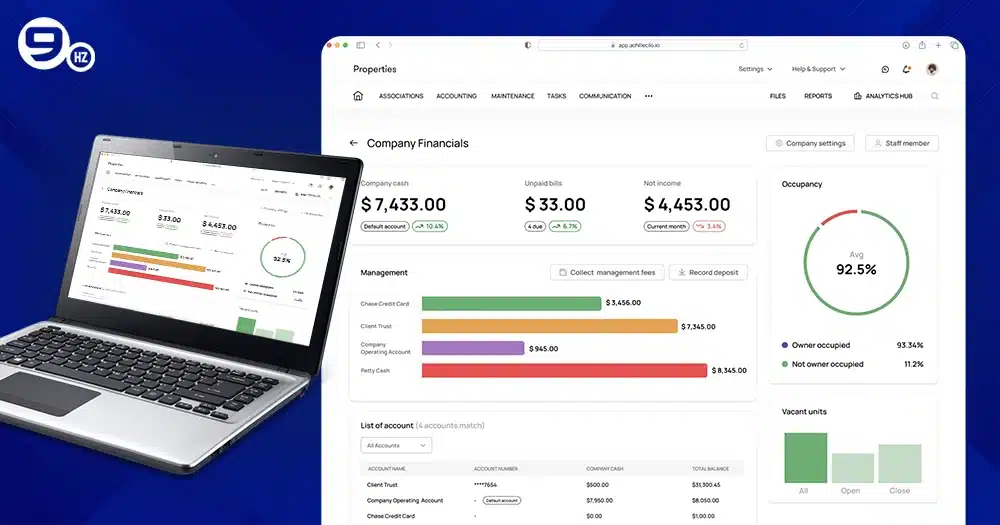
Construction accounting software helps contractors track project costs, payroll, and invoices while remaining tax-compliant. It includes tools for expense tracking, job-based budgeting, progress billing, and financial reporting. The most important aspect is that financial clarity is there. General contractors and any construction company that manages multiple projects and needs accurate cost control should own the accounting software. In addition, construction accounting software gives you the assurance of controlling and handling the financial side of construction projects.
| Key Features | Pros |
|---|---|
| Job cost tracking by project, phase, and task | Improves financial visibility across all projects |
| Payroll management for hourly, salaried, and union workers | Reduces billing errors and missed expenses |
| Budget forecasting and cost variance reporting | Helps teams track profitability in real time |
| Accounts payable and receivable management | Simplifies payroll and compliance requirements |
| Tax compliance and financial reporting |
Who Is This For?
This software works best for contractors, subcontractors, and construction firms that manage complex budgets, multiple jobs, and detailed cost tracking.
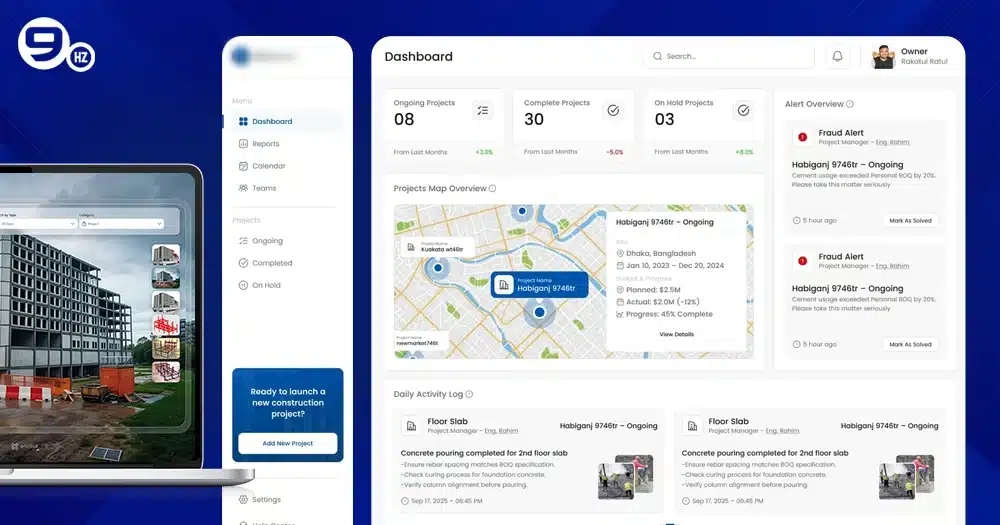
The construction management software is one of the most popular types of construction software that ties together teams, tasks, schedules, and documents. It provides a way to map timelines, assign responsibilities, follow up, manage RFIs, and record drawings or contracts. People work faster when they share the same updated information as their counterparts. This is one of the major benefits of improved coordination. Managers avoid miscommunication and respond quickly to on-site problems. The software also increases accountability by recording who completes what and when.
| Key Features | Pros |
|---|---|
| Project scheduling and task assignments | Helps teams stay in sync and accountable |
| Preliminary information on the scheduled tasks | Reduces stress and anxiety |
| Tools for team collaboration and communication | Reduces delays caused by miscommunication |
| Progress tracking and reporting dashboards | Increases visibility of projects for managers and clients |
| Resource and equipment management | Improves project timeliness |
| Increases accountability and the speed of process improvement | |
| One place for all project data |
Who Is This For?
This software is most valuable to project managers, general contractors, and construction firms that handle multiple jobs and teams.
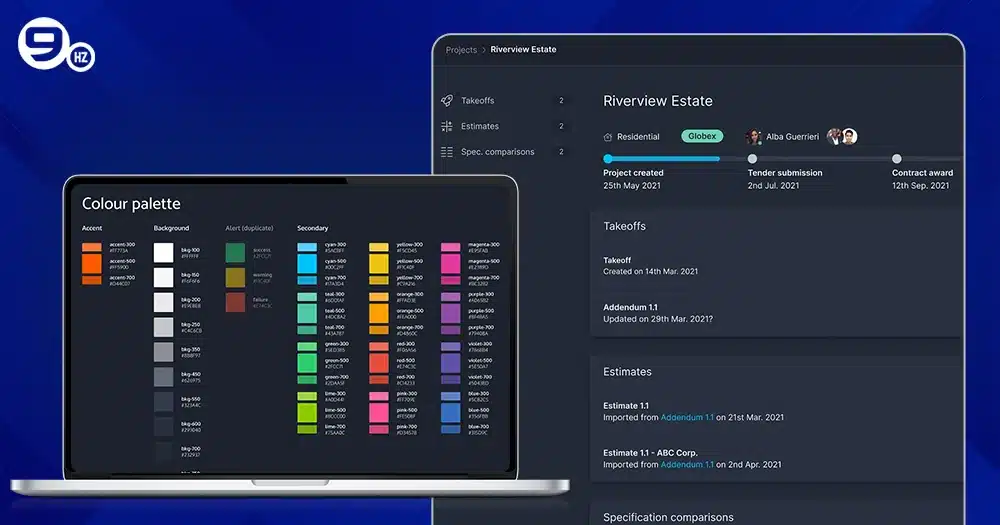
One of the most popular types of construction software is estimating software, which helps contractors prepare clear bids without guesswork. It uses cost databases, digital takeoffs, material pricing, and automated calculations to obtain reliable estimates. Contractors can quickly compare scenarios, change quantities, and change prices before submitting proposals.
The biggest pro is accuracy. Contractors can avoid underbidding or overpricing, thereby increasing profits and win rates. Faster estimating means more opportunities and less workload.
| Key Features | Pros |
|---|---|
| Digital quantity calculations | Saves time during bidding |
| Material and labor cost databases | Reduces costly estimating errors |
| Templates for bids and proposals | Increases bid accuracy and profitability |
| Cost and margin comparison and analysis | Gives teams access to more competitive projects |
| Integration with accounting and management tools |
Who Is This For?
This software is useful for estimators, contractors, and construction firms that routinely bid on construction projects and need fast, accurate cost estimates.
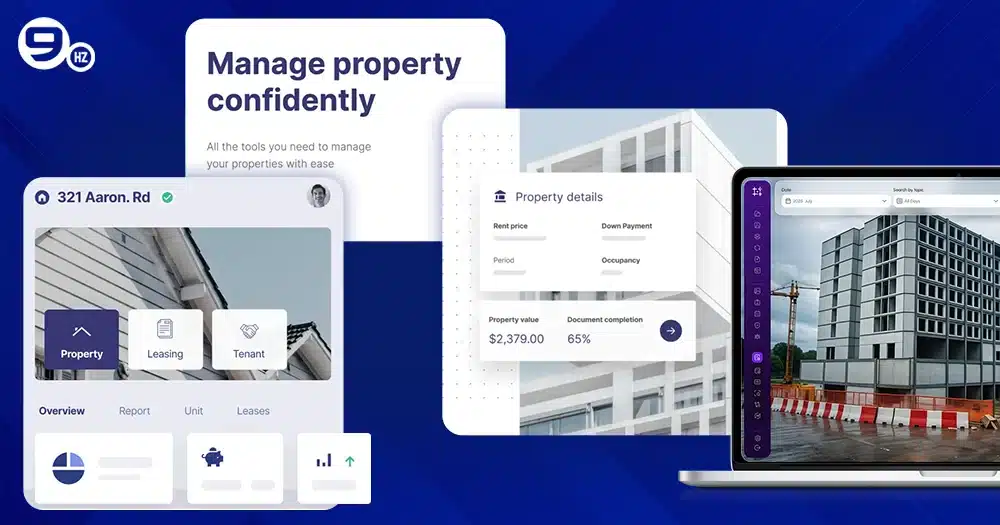
Service management software is counted among the types of construction software that facilitate field work in service-based construction. It allows firms to place orders, dispatch technicians to sites, track orders, and respond to customer requests. Mobile access permits field workers to check on job status, take photos and gather signatures on site. The main benefit is efficiency. Teams complete more jobs per day, cut paperwork and improve response times. Remember that better scheduling also means happier customers and fewer missed appointments.
| Key Features | Pros |
|---|---|
| Work order creating and scheduling | Speeds up service request response |
| Handy access for field technicians | Boosts technicians’ productivity |
| Customer and asset management | Ensures customer satisfaction |
| Processing of invoices and payments | Eliminates maintenance cycle costs |
| Maintenance history management |
Who Is This For?
This software is most appropriate for service contractors, maintenance teams, and construction businesses that provide repair, inspection, or post-construction services.
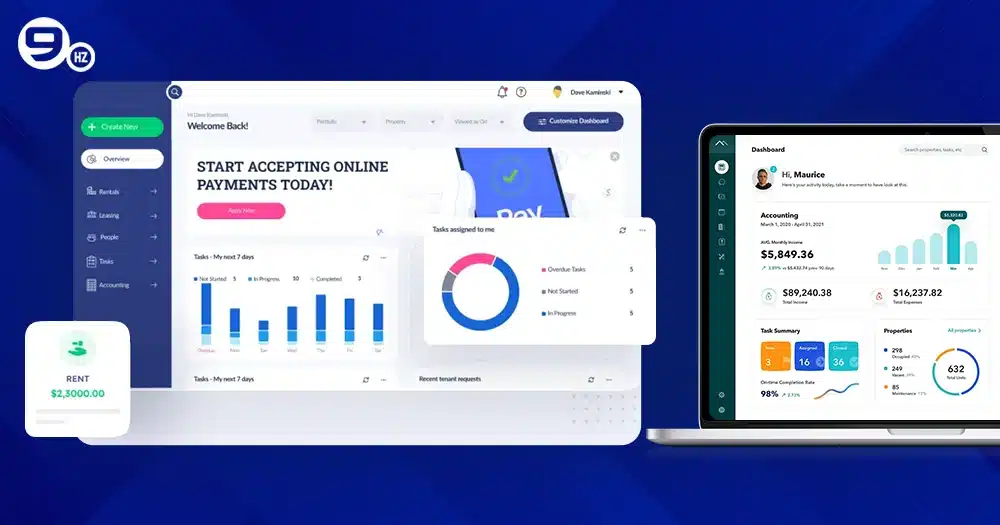
Sales management software is listed among the widely-used type of construction software that provide tools to help construction firms identify leads, follow up with prospects, and take proposals from first contact to contract signing. It monitors communications, automates reminders, and provides sales performance information. Consistency is one of the biggest benefits, as salespeople never lose sales leads or skip follow-ups. The visibility of the pipeline also helps firms anticipate revenue and growth.
| Key Features | Pros |
|---|---|
| Lead tracking and opportunity management | Increases lead follow-up and conversion rates |
| CRM tools for customer communication | Enhances client connection |
| Proposal and contracting | Speeds deal-making for teams |
| Forecasting and performance analysis of sales | Improves visibility and accountability of sales |
| Integration with estimating and accounting software |
Who Is This For?
Businesses with dedicated sales staff or business development plans can use this software to generate additional revenue and build trust with their clients.
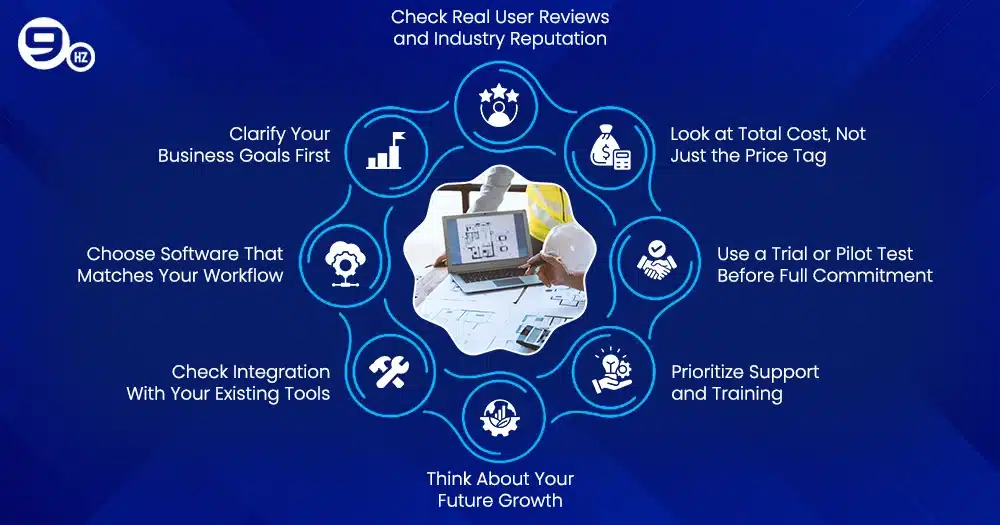
The ideal construction ERP software development can change the way your team works. The right tool boosts productivity, improves communication, and eliminates costly mistakes. It is also more competitive in a marketplace where digital tools are increasingly prevalent; for example, cloud-based management systems now account for a significant share of construction technology, and mobile tools are used daily on over 90% of job sites. Keep these tips in mind when choosing the ideal construction software for your business.
Start writing down exactly what problems you want the software to solve. Do you struggle most with budgeting, task outlines, cost estimates, or sharing documents between the office and the field? Knowing your priorities helps you focus only on tools that address those fundamental needs. If, for example, communication is slow and your timelines are ruined, get a mobile-friendly tool that offers real-time updates. Choosing features that work for you means not paying for tools you won’t use, making the software more usable and easier to deploy.
Each team is different. Some teams spend most of their time on-site, whereas others work primarily from an office. Choose software that aligns with your team’s actual performance. Look for graphical interfaces, simple navigation, and features your staff will use every day. Built-in project planning, task tracking, notifications, and mobile access make it easy for field workers to report updates and for office teams to react immediately.
Most construction firms use accounting software, design packages, or document management systems. Your new construction software should connect to those tools so data can flow smoothly and without repetition. If it isn’t integrated, your team will spend hours entering the same data in several places, leading to errors and delays. Before you choose from different types of construction software, check if there are built-in links to accounting, CRM, or scheduling tools. Integrated design reduces downtime and improves reliability for every project.
Choose a tool that solves your problems today and beyond. Think of where your business will be in one to three years. Will you need more users, more projects, or more reports? Pick an easy-to-use tool that scales without requiring you to switch systems later. When you plan for growth, you protect your investment and maintain smooth operation while you expand. Scalable software also lets you add new features or teams without ever starting from scratch, saving you money in the long run.
Training and support are optional, but they will affect how quickly your staff actually starts using the software. Ask about onboarding, tutorials, and customer service. When you choose from the popular types of construction software, consider proper support and training. Strong support software simplifies onboarding and reduces downtime, ensuring your employees stay productive during the transition.
Before you choose ready-made construction software, conduct a test for a small number of users. Let your project managers, supervisors and field staff work with the software on real tasks. It tells you whether this tool is actually improving workflow or creating new challenges. Pilots write tests and give you honest feedback before you commit company-wide.
There are different types of construction software tools that are cost-efficient, but can quickly add up value in the process. Some services require additional charges for onboarding, adding users, premium features, or customer service. Before you make a decision, consider the pricing structure and what you get at each level. Think about the long-run value, not the short-run savings. For instance, a slightly higher monthly fee would mean less manual labor each week and lower labor costs over time. When the software tool is efficient and error-free, it can often be worth the months- or even years-long investment.
Marketing pages always show the best side of a product, but real users tell the whole story. Read reviews from contractors, project managers, and construction firms similar to yours. Furthermore, always pay attention to feedback on ease of use, reliability, customer support, and real-world performance. You can also ask your peers for recommendations on which tools they trust. Software with a good reputation in the construction industry tends to understand real problems on the job and continues to improve based on user feedback.
The right construction software development partner is just as important as the right software. Construction businesses need real-world solutions to on-site problems and not cheap tools that look good on paper but fail in practice. That’s why choosing modern, secure, feature-rich, and scalable types of construction software for your business is important. This is where the best construction software development company, i.e., The NineHertz, comes in! We work with an experienced team to produce scalable and user-friendly software that supports everything from project planning and cost reporting to field operations and real-time reporting. The NineHertz enables businesses to tailor software that fits and improves processes step by step, rather than forcing them to adjust their workflows.
What truly sets The NineHertz apart is its commitment to long-term value. The company combines technical expertise, clear communication, reliable support, and results-driven approaches. Transparent development cycles, high data security, and future-ready systems that grow with their business benefit diverse clients in the construction industry. The NineHertz provides different types of construction software solutions that improve efficiency, reduce errors, and deliver real results, whether it is a simple management tool or a full construction platform. Furthermore, the company remains a trusted and proven partner for construction firms looking to build technology purposefully and precisely.
The key to choosing the right construction software is ultimately finding one that does everything you do in your everyday life, adapts to your workflow, and grows with your business. The right technology is needed to enhance collaboration, decrease errors, reduce costs, and complete projects on time. When software is built to meet real-world construction needs, it’s not a tool but an asset that makes a difference in the long run for projects, teams, and clients.
To reach this level of impact, you need more than a development vendor; you need a proven technology partner. The NineHertz, established in 2013, has years of hands-on experience, 800+ successful projects, and a 92% client success rate. These numbers reflect trust, consistency, and real results. The NineHertz builds and helps you choose from different types of construction software that drive efficiency, accelerate growth, and deliver measurable business value with a keen eye on quality, scalability, and long-term collaboration.
Construction management software consolidates schedules, tasks, documents, and updates. Project managers can easily plan and track work, and field teams report on progress from the job site. This enables everyone to be on the same page, and this reduces confusion and delays.
Yes, construction software is worth the price because it saves time and eliminates mistakes. It improves scheduling, controls the budget and allows teams to work more effectively. The software pays for itself in the long run, often through more efficiency and fewer costly errors.

Key Takeaways India's tech sector is set to cross $300 billion in FY2026, growing 5.1% from $282.6 billion the year…

It’s shocking that one malformed payload could have leaked customer data through an API edge case. It happens when there…

Any enterprise managing 500+ operations at times across the globe to cover supply chain, production lines, customer service centres, and…