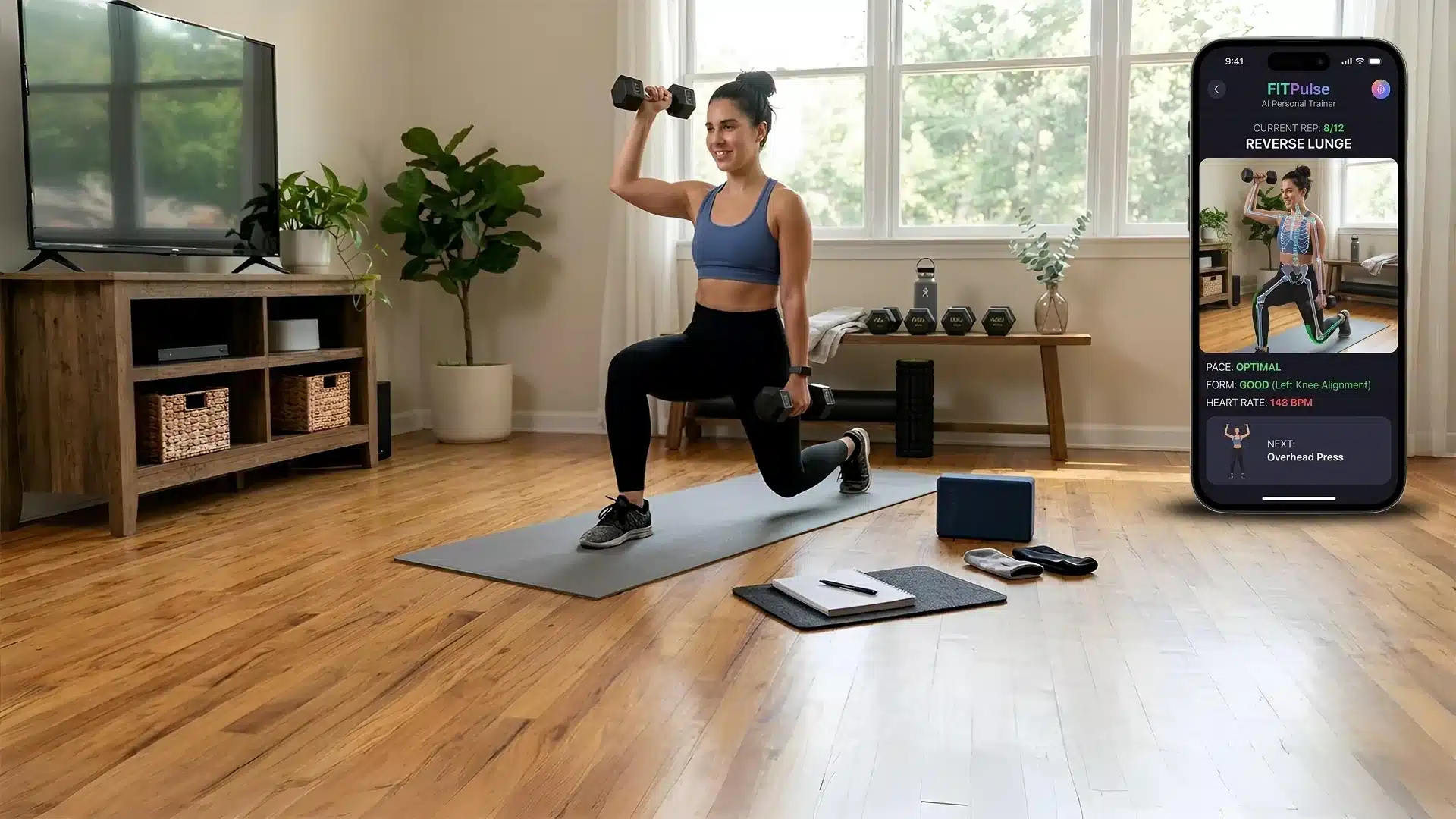
Let’s be honest!
Most of us are very motivated to download a fitness app. We keep the workouts for a few days, maybe a week, and then slowly stop using them.
The answer is simple: most of the traditional fitness apps offer generic plans that aren’t really tailored to our bodies, schedules, or goals.
But that’s beginning to change with the rise of AI-powered personal trainers.
Fitness apps have moved away from simple tracking apps to intelligent coaching platforms in the modern world. AI personal trainer apps allow users to create personalized workout plans based on behavior, activity level, and health status.
The fitness app market is expected to reach $30.28 billion by 2032, demonstrating how rapidly AI-based solutions are transforming digital fitness.
This rising demand drives businesses to build personal trainer apps.
Companies are now using AI workout apps rather than simple tracking systems to provide a personal trainer with reports, workout suggestions, and advice towards better results.
In this blog, we’ll discuss what these AI apps are doing to the fitness industry and why they are the future of fitness technology.
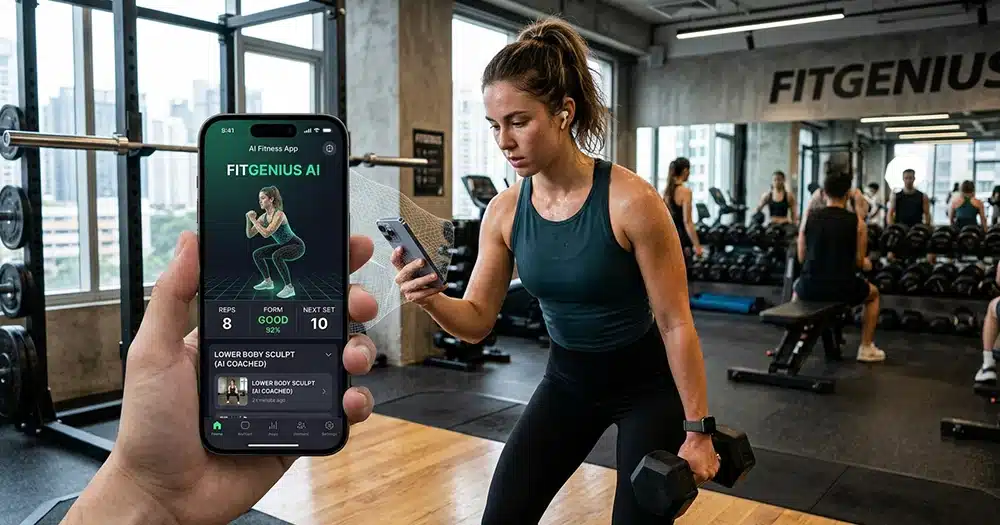
Fitness apps are replacing the traditional gym industry in ways other than being pedometers and calorie counters. AI personal trainer apps are reinventing our concept of health and fitness and making it a smarter and more personalized experience. Workout apps can now be used not only for generic plans, but for analyzing data and automatically adjusting training plans.
The algorithms employ human-readable input to learn user data, such as age, weight, fitness level, and exercise intensity, to create personalized training plans. Thus, it allows custom fitness apps to provide workouts that evolve as users progress.
Modern workout apps can track and respond to user movements during the exercise. Some apps make use of computer vision to spot injury-like exercises.
Fitness apps can be integrated with smartwatches and fitness tracking devices. AI tracks data like heart rate, sleep, and calories burned to make better smart fitness coaching recommendations.
Unlike traditional apps with static routines, AI learns from users continually. AI Personal Trainer App Development can then implement systems that automatically adjust intensity, duration, and recovery periods.
The AI-powered analytics can be used to gain a better picture of fitness levels as well. This information will aid firms in taking advantage of the AI fitness app development market.
An AI personal trainer is a digital fitness coach who helps create workout plans, logs, and improves the way that a user does an exercise. While regular fitness apps show static training days, AI trainer apps dynamically configure training plans based on the user’s data. Users thus get advice that sounds a lot more like a real personal trainer.
These intelligent systems use machine learning, data analysis, and computer vision to understand the behavior and fitness of users. AI can use workout history, activity levels, heart rate, and fitness goals to create customized workout programs that can be refined over time.
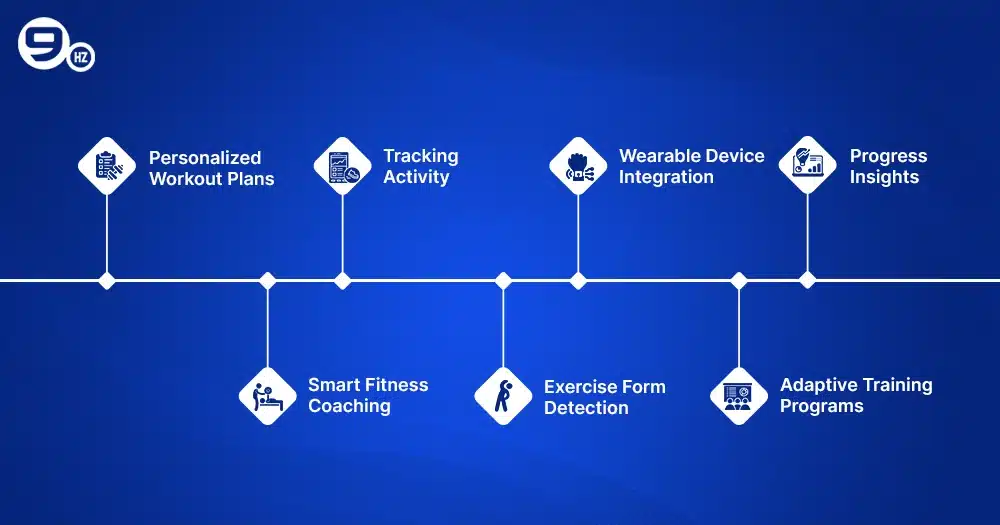
AI is converting old fitness systems into smart coaching systems. Some key features of effective AI-powered personal trainer apps include the following:
A stunning AI workout app can predict workouts for users based on fitness level, body type, goals, and workout history. One of the most powerful features of the fitness app solutions is the ability to customize programs based on capacity and progress.
AI apps can help you determine exercise preferences, recovery time, and even personalized diets to keep you engaged.
Computer systems record repetitions, calories burned, exercise duration, and intensity. This includes visibility of performance as well as reporting of performance improvement over time.
The computer vision technology can be employed by many AI fitness app developers to understand posture while working out. It can spot the wrong movement and provide feedback in real time to improve the form of exercise or minimize injury risk.
It also records health metrics such as heart rate, sleep cycles, and steps in a day, via the AI Personal Trainer App and powerful smartwatches and fitness trackers. The information is then used to suggest exercises.
The AI checks how users respond to and perform. This improves the effectiveness of the training experience and automatically adapts the program to progress, fitness level or activity level.
The use of AI to help analyze data offers really informative insights into someone’s fitness level. There are performance trends, goal tracking, and improvement reports, all critical features in modern Personal Trainer App Development.
A contrast to fitness apps, which create the basis for a single workout plan for all users, the AI-powered apps use a range of data points to customize workout plans.
People open an account and type in age, weight, fitness level, health condition, and goals in the AI app. Once this information is filled in, AI will develop a customized training schedule.
AI records real-life happenings, such as exercises performed, repetitions, length of workout, calories burned, etc. It analyzes the data to identify patterns and assists in personalizing the subsequent training sessions according to these patterns.
Most AI fitness applications work with any smartwatch or fitness tracker. These monitors are designed to tell you how much your heart rate, sleeping patterns, and activity level are changing at the moment.
AI-enabled systems can easily alter workouts based on performance in real time. If a user has trouble with one of the exercises, the app can suggest another movement.
AI algorithms harness user habits and preferences. It then customizes the workout to the fitness path of the user, injecting new challenges and fitness goals. This will be even more positive for smart fitness coaching and retention of users.
AI workout apps can provide intelligent data analytics, data sets, and feedback to help users achieve their fitness goals in real time. Here are the benefits of AI personal trainers in fitness apps.
Machine learning analyzes user information such as activity, fitness level, goals, and health of a user in order to create individual workout plans.
The in-person trainer is only available during a session, but the smart fitness backing on AI apps is available anytime with online fitness coaches. Users can also choose general workout ideas and training tips, as well as receive feedback on their performance at all times.
These workout apps all contain engagement-enhancing features such as performance statistics, reminders, and tracking of progress that incentivize the user. AI helps users to get on track and stay on track by guiding them towards a sense of results and realistic expectations about their fitness routines.
During the development of a fitness app, the AI is used for motion-tracing and posture tracing to give real-time feedback on exercise form. It assists the users in doing the workouts and not getting injured.
The AI automatically and dynamically adjusts the suggested level of exercise intensity, duration, and difficulty to each user according to their performance. A significant advantage of today’s Personal Trainer App Development is that it allows you to have programming that fits and supports your goals and your constantly changing fitness levels.
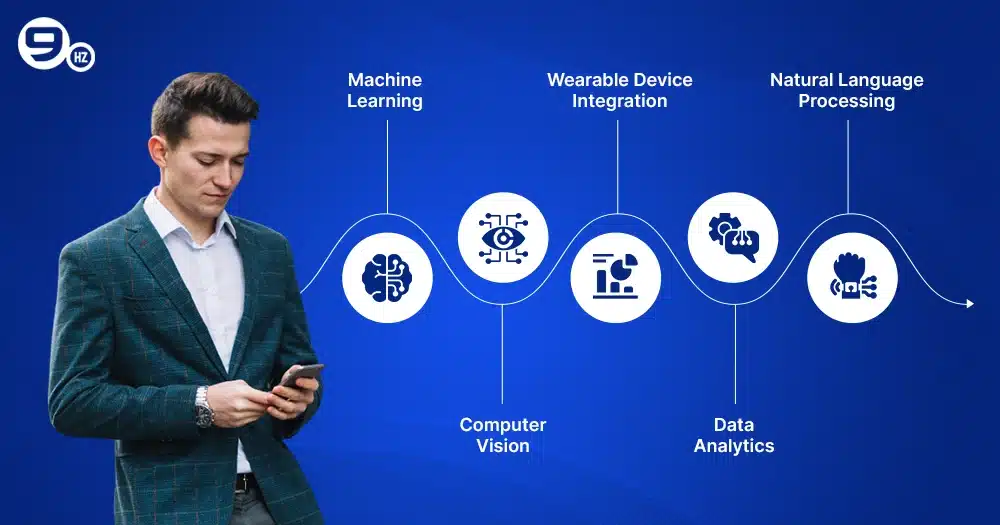
Personal trainer apps represent the convergence of several existing technologies to deliver more intelligent, personalized workout plans. Under AI Personal Trainer App Development, multiple sources of AI tools that analyze the user’s behavior and performance and iteratively improve training suggestions are integrated. These technologies enable smart fitness coaching and are the basis of current AI fitness app development.
Workout apps gain access to “big data” on large numbers of users’ workout history, activity, and performance data, which they apply using machine learning. This information is subsequently used to self-train and improve on suggested workouts in order to provide more personal training experiences over time.
These fitness applications can view the physical movement through a smartphone camera using computer vision. This technology can be used to track posture, count repetitions, and report on the movement patterns of the user as the exerciser moves. Most of these AI apps use computer vision to enable users to safely and correctly perform their workouts.
AI fitness apps are often built in tandem with smartwatches and fitness trackers. These devices receive heart rate, calories burned, sleep, and activity levels. AI runs the data through algorithms and suggests workouts as well as recovery times and other personalized fitness goals.
Data analytics allows for the interpretation of the user’s performance and provides accurate feedback to improve performance. They can even alert you to potential problems and suggest exercises to avoid. It also helps users to improve their training patterns and ultimately reach their long-term goals in fitness.
Natural Language Processing is used for users to interact with the application verbally and to be coached through chat. Some AI apps include virtual assistants who respond to fitness questions, provide training tips, and help the user work out.
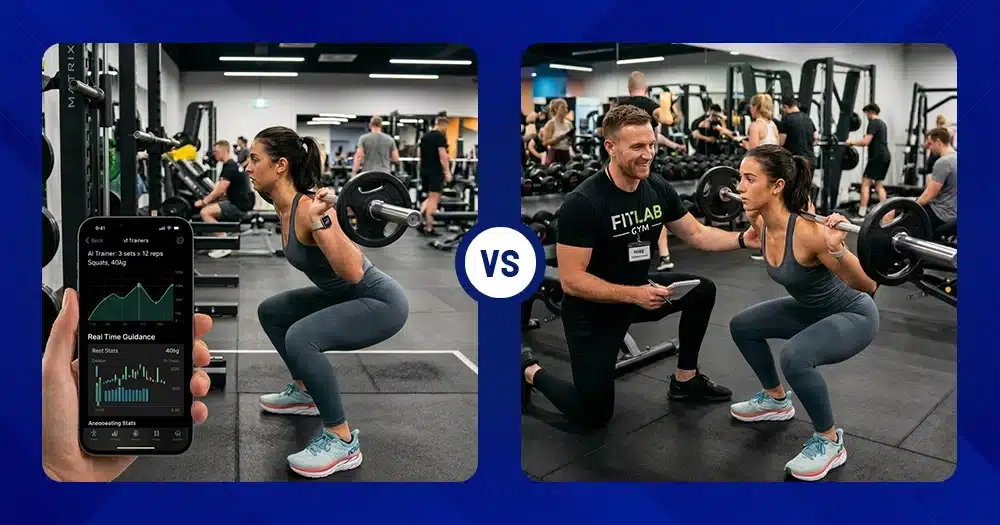
AI personal trainers and human trainers help people meet their fitness goals, but they do so in different ways. With the boom of AI Personal Trainer App Development, smart fitness platforms integrated AI applications to provide smart coaching. AI solutions focus on access, data, and scale rather than human trainers offering in-person contact and hands-on guidance.
| Aspect | AI Personal Trainers | Human Trainers |
|---|---|---|
| Availability | AI Personal Trainer App available 24h/24, allowing users to train anywhere. | Accessible only at the scheduled time or during working hours. |
| Cost | Generally cheaper than the cost per unit in AI workout apps and is charged monthly or annually.. | Fees are often hourly or sessionary and are extremely expensive. |
| Personalization | Personalized Fitness Apps utilizes data, machine learning, and analytics to offer highly personalized workouts. | Customizes exercises based on experience, observation, and talking to the client. |
| Data Tracking | AI Fitness App Development tracks steps, heart rate, calories burned, and workouts. | Tracks progress either manually or with a small number of digital devices. |
| Real-Time Feedback | Some have AI-based posture detection and auto-tune during workouts. | Provides feedback and correction in person during the training. |
| Motivation & Interaction | Provides clues, information on progress and gamification for smart fitness coaching. | Provides emotional support and cues, human attention, and personal accountability. |
| Scalability | One workout app can serve thousands of users at once. | Trainers can physically train only a handful of clients at a time. |
The market for personalized intelligent digital fitness is exploding. So many fitness companies and startups are taking advantage of the potential to develop AI apps and other delivery platforms that can help you provide advanced coaching and personalized workout delivery. Here are six steps businesses can take to build powerful AI-powered fitness apps:
Identify your end users before you begin Personal Trainer App Development. Choose whether you want to build the app for beginners, pro athletes, weight loss, home workouts, or gym workouts.
A successful market for AI apps relies on the user experience. These core functions could include exercise planning, performative analytics, integration with wearables, AI for workout recommendation, and smart coaching for fitness.
AI personalizes the individual workout experience. During AI Fitness App Development, designers and engineers implement machine learning models that interpret user data such as behavior, workout performance, and health data. The application records information about the fitness level and goal of the user in order to customise training.
Many of the workout apps being designed today also link to smartwatches and other wearable fitness technology to track real-time information like calories burned, sleep, and heart rate. This integration will help the application to give better advice during workouts and will enhance the usefulness of applications.
Retention requires an interface that is simplistic and intuitive. For businesses, there should also be a clean dashboard, easy typing navigation through the workout, and a way to gamify the user/user engagement, through reminders, reports of their progress, and so on. This is part of a general experience of intelligent fitness coaching.
These limitations are one area where companies looking into AI Personal Trainer App Development will need to focus in order to build good and trustworthy fitness applications. Here are the challenges and limitations of AI in fitness apps include the following:
AI fitness apps aggregate vast amounts of data, including health statistics, exercise patterns/trends, and information on activity/pathways. That knowledge must be protected. Fitness app development is based on strong data security and compliance with data privacy legislation.
If the AI in an AI app receives incorrect information, or the dataset is large enough, then workout recommendations can also be wrong.
The biggest downfall of the AI workout apps is that they lack human connection. AI can be an athletic coach, but it does not have the emotional support or motivation of a human trainer.
While some of the fitness apps may be accessed without a smartphone or a device and do not require an internet connection, many of them do. Additional technical and device-related complications influence the user experience of the workout.
The systems, as well as the complex capabilities of AI, also need to be maintained and improved over time. This makes it more complicated and therefore, much more expensive to develop an AI app compared to developing a traditional Personal Trainer App.
The NineHertz is a healthcare app development company that helps to improve concepts of fitness and to turn them into robust software platforms through personal trainer app development services. We have more than 10 years of experience developing AI fitness mobile apps that create personalized workout plans, provide live performance monitoring, and work with wearable technology.
The NineHertz provides complete wellness App Development services, from Strategy and UI/UX design to AI integration and deployment. They also use machine learning, data analytics, and cloud integration to create very reactive Personal Fitness Apps to specific business goals. We help you be the best if your startup or your business is to be the leading fitness platform provider, as there is an increasing need for smart, data-rich solutions.
AI is already being used to personalize the fitness industry. Now with the advent of AI apps, users are able to receive personalized exercise plans, feedback on their workouts, and smart suggestions to reach their fitness targets more effectively. AI apps will become a popular means to experience smart fitness coaching, as technologies such as machine learning, computer vision, or wearables continue to develop.
Want to create your own AI app? Get in touch with The NineHertz and build a scalable, intuitive, and AI-powered fitness app to change how people train and achieve their fitness goals.
Some of the factors determining the cost to develop an AI app are its features, type of AI capabilities, wearable device integration, platform, i.e., iOS/Android or both, and development complexity. One simple workout app costs $10,000 – $200,000, while an expensive, smarter app with computer vision, real-time analytics, and AI coaching features can be exorbitant.
AI fitness app development can take several months to a year. A simple Personal Fitness App with basic features may take 3 to 4 months to develop, while a more complex one that provides AI-powered workout suggestions, integrations with wearables, and analytics could take 6 to 9 months or longer.
Yes. An AI app would adjust workouts according to the fitness level of the user. On top of that, Personalized Fitness Apps can target users at any fitness level, as novice people could be assigned simple and easy workouts, or more advanced training programs could be deployed for expert users.
A react native app development company in India can help escalate your business to the next level via a high-performing…
Key Takeaways OTT platforms now face monthly subscriber churn rates of 5.5%, nearly triple the 2% recorded in 2019, and…
Key Takeaways AI transforms traditional broadcasting platforms into intelligent, interactive environments by providing automated methods for engaging audiences with real-time…