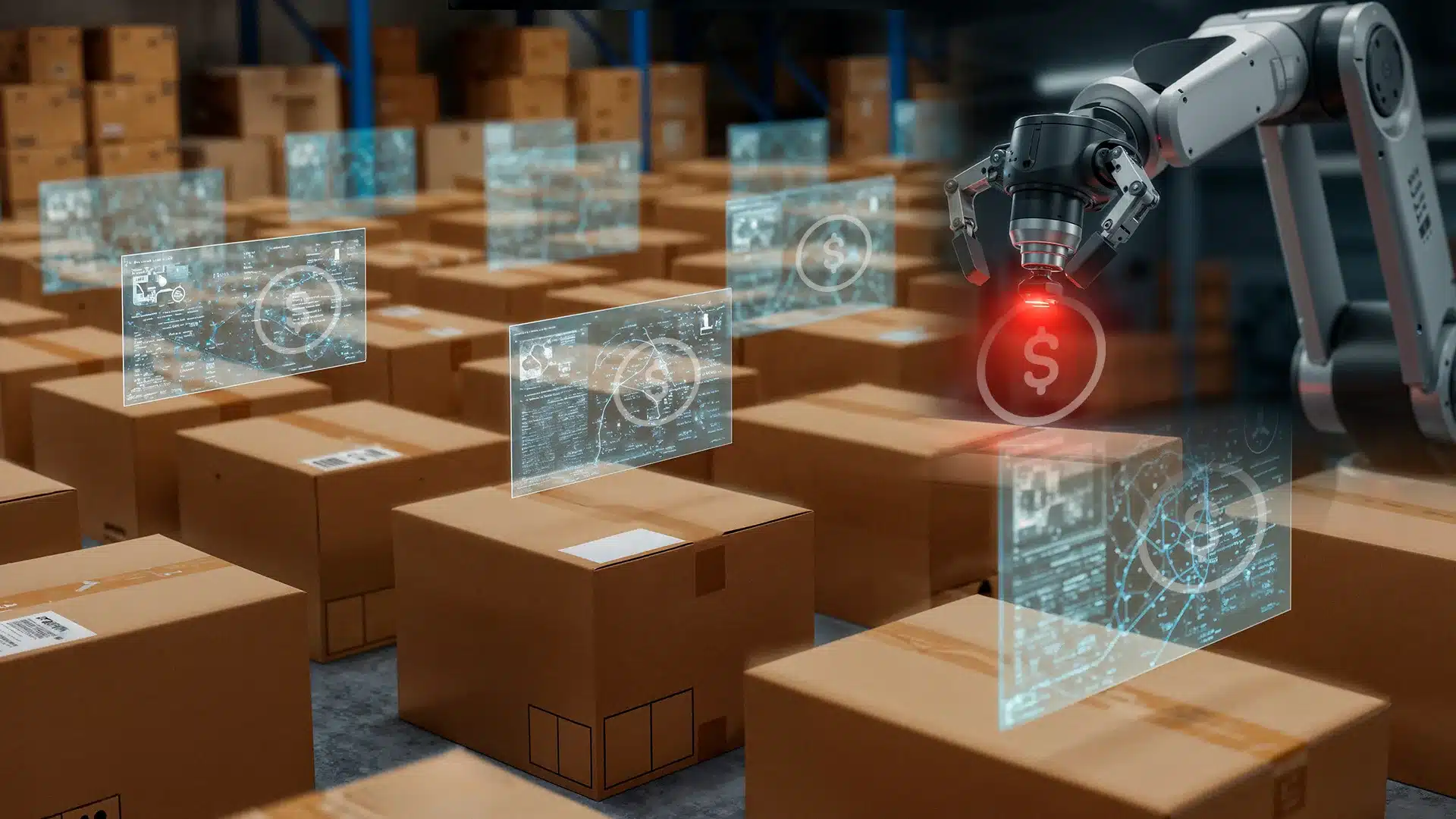
Detention costs in supply chain operations don’t get much attention in the boardroom, but they quietly take billions from U.S. logistics networks every year. The American Transportation Research Institute says that detention costs $3.6 billion in direct costs and $11.5 billion in lost productivity in 2023. Even though 94.5 percent of fleets charge for detention, less than half of those bills are ever paid, which means that the delay is a permanent loss.
This issue is too familiar for leaders in logistics. Margins shrink when free time is missed. Manual tracking hides delays until penalties come up. As traffic jams, labor shortages, and poor visibility make daily decisions more difficult, scaling operations becomes harder. The American Transportation Research Institute (ATRI) reports that detention not only costs money but also leads to high-speed driving behaviors, causing a greater risk to safety. This is where AI makes a difference.
The NineHertz, a supply chain software development company, makes this volatility visible by using predictive AI. Instead of reactive tracking, we use automated facility risk scoring and real-time scheduling changes. This change in strategy goes beyond just keeping an eye on things to actively stopping costs.
This blog explains what really causes detention costs in supply chain operations, the hidden costs and effects on operations, and how AI lowers the risk.
Detention costs in supply chains are fines levied by carriers on shippers or consignees for holding equipment, such as containers, trailers, or chassis, beyond the permitted “free time” for loading or unloading. Depending on the type of equipment, the terms of the contract, and the location, these fees usually range from $50 to $150 per hour or day.
This problem is getting worse because of a number of market forces. As e-commerce grows, more packages are shipped through the same physical infrastructure. In 2024, the global logistics market was worth about $5.7 trillion. This shows how much freight is moving around the world and how many possible delays there are.
One thing that most teams don’t see is that yard congestion is right in front of them. Client audits often show that 20–30% of total detention costs are caused by trailers waiting in private yards instead of public ports. Nobody bills for those hours directly, so finance teams don’t pay attention to them until margins start to drop.
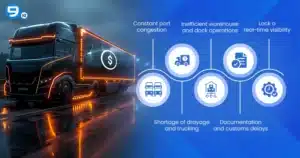
When equipment isn’t being used, it has a negative effect on your bottom line. Here are the main reasons why these costs have gone up recently:
At major ports, the amount of imports continues to be more than the terminal can handle. When ships can’t unload their cargo on time or containers can’t leave the gate as planned, the consignee has control over the boxes for longer. Every extra day adds to the cost of detention periods for shipments, even before they start moving inland.
There aren’t enough drayage drivers, which slows down both picking up containers and returning empty ones. After the cargo leaves the port, containers often sit around waiting for a ride. If you miss a return window, you will quickly have to pay detention costs in supply chain operations, especially if the depots have limited hours or require appointments.
Delays often start at the destination facilities. Understaffed docks, broken equipment, and bad appointment discipline all make unloading take longer. When warehouses can’t quickly turn containers, equipment stays tied up longer than expected. This means detention exposure lasts longer than just at the port and extends into inland operations.
Incomplete or wrong paperwork stops containers from moving at ports, rail ramps, or inland terminals. Customs stops unloading and keeps empty equipment from returning. These delays in administration can make detention more expensive than physical congestion, especially for shipments that traverse borders or transit between nations.
Many shippers can’t see live updates on the status, availability, and remaining free days of their containers. When teams don’t have real-time data, they manage reactively instead of proactively. Detention invoices come as a surprise, giving little time to act before penalties start to add up.
Detention penalties hurt financial accounts, operations, and business relationships that spread.
Detention costs in supply chain operations go up quickly, usually starting at $50 to $100 or more each hour or day and going up more in steps the longer the equipment is out. When returns are missed, follow-on delays happen, which can add up to thousands of dollars per container. As detention looks like a sudden challan instead of a scheduled freight cost, finance teams sometimes only find out about it after they get the bills, which messes up budgets and margins.
Talk to our Experts
Request A Free Quote
Another impact of detention on the complete operational process includes that the container unloading process takes longer, dock scheduling is not coordinated properly, or the number of employees working at any time is insufficient. Detention also breaks the flow of the product and affects stock levels because there are areas of shortage and some excess. The idle vessel becomes unusable while at the terminal and becomes a factor in the overall issue with the supply of containers and chassis.
Repeated issues associated with detention make it difficult for carriers and suppliers to work together. When shippers repeatedly violate the rules, they may fall into the highest rate category for violations, get placed lower on the service priority guidelines, and become marked as “difficult to serve.” This situation could create chargebacks, loss of contracts, and severe stigma associated with their company’s brand image. In very extreme cases of cargo exposure owing to long-term detention costs in the supply chain, companies have been forced into bankruptcy, and many have had to close their businesses.
Estimates from across the industry indicate that drivers incur wage losses between $1.1 and $1.3 billion annually as a result of detention, waiting longer than expected. When drivers experience extended delays, they often rush to meet their delivery deadlines, which further adds to driver fatigue and may increase the probability of accidents on our roadways.
The supply chain process falls apart when raw material supply is stagnated and held up in shipping containers. The assembly lines experience slowdowns or even total stoppage, costing many manufacturers a significant amount of revenue. This also leads to a lack of ability to plan work schedules for employees, fulfill customer commitments, and provide the product for contracts further down the supply chain. Detention at the logistics level not only affects logistics’ efficiency and effectiveness, but it also results in operational failures at every stage in the manufacturing process.
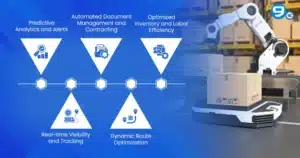
AI-powered solutions assist logistics firms in predicting and eliminating detention before it occurs in the supply chain process.
The AI model analyzes the incoming data from IoT sensors, past dwell times at locations, and trend data for weather, port congestion, and traffic conditions. Using this data, AI predictive models can also help forecast likely delays before the end of free time. This allows for alerts notifying teams to adjust dock appointments, reroute vehicles, and prioritize container returns, preventing detention fees in supply chain operations before they are incurred.
AI-enabled platforms allow real-time status tracking of containers and vehicles at all times across ports, yards, and inland facilities. This real-time visibility helps logistics personnel to identify problems immediately instead of having to wait for delays to get worse before acting. Decisions are made more quickly and based on the data rather than relying on manual checks and guesses. The result is a reduction in the time containers are idle and in missed window return timings.
Generative AI automates the creation, validation, and reconciliation processes for shipping documents. Consequently, the number of administrative errors that typically cause delays in unloading containers has decreased exponentially. These systems reduce the documentation delays by upwards of 60% and provide alerts for at-risk clauses in contracts, like reduced free days or increasing penalty structures prior to shipments leaving from origin.
Through the use of AI, the technology determines the optimal route in real time based on traffic, port conditions, and delivery constraints. The system also dynamically adjusts pickup and delivery schedules in response to traffic issues or other obstacles that may arise. This flexibility allows for reduced downtime of equipment and facilitates timely return of containers, particularly in high-volume or congested areas.
Through the use of AI, repetitive manual tasks within the supply chain decrease, which increases worker productivity by as much as 20%. Accurate forecasting of inventory and proper planning of docks prevent receiving facilities from becoming overcrowded and unnecessarily busy, which ensures that containers are received quickly and returned in a timely manner rather than being in detention for an extended period of time.
Talk to our Experts
Request A Free Quote
AI has transitioned the management of detention from a reactive to a proactive approach using automation and real-time data.
The majority of supply chains are using slow, fragmented, and unreliable manual processes for managing detention and demurrage costs.
AI enables a shift from reactive firefighting to proactive planning through timely, data-driven insights.
| Feature | Manual Process | AI-Driven Process |
|---|---|---|
| Visibility | Fragmented, reactive | Real-time, 360-degree view |
| Response | Delayed (after penalties accrue) | Proactive (predicts delays) |
| Data Usage | Spreadsheets, email | Predictive modeling, IoT |
| Documentation | Time-consuming, error-prone | Automated, ~90% accuracy |
| Dispute Handling | High-volume, manual negotiation | Automated verification, faster resolution |
| Cost Saving | Low, with high hidden costs | Up to 90% reduction |
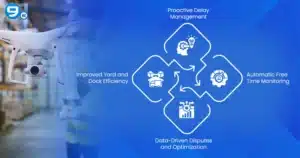
Real-time visibility (RTV) is very important for lowering detention costs in supply chain operations since it replaces reactive, manual tracking with proactive, data-driven alarms.
RTV technologies give shippers and carriers real-time ETAs and notifications so they can find problems before they happen. Instead of waiting for a driver to say there is a delay, teams can detect traffic, port, or yard congestion and change their plans, reroute, or let receiving teams know to prevent detention.
RTV tools give you a “digital twin” or live map of the yard, so you don’t have to check manually. Instead, you get real-time location data for trailers and containers. This makes it possible to schedule dock and gate access faster, more accurately, and automatically, which cuts down on the time vehicles spend waiting for a slot or idling.
RTV solutions such as Portcast and FourKites offer users the ability to track when their containers are being unloaded and match that to the free time limit that has been agreed upon. By providing proactive insights regarding when container free time may be exceeded, these companies can help their clients minimize and avoid detention costs in supply chain, allowing clients to prioritize their pickup activities.
By providing shippers with reliable, time-stamped, objective data, RTV enables them to dispute detention fees that they feel have been assessed incorrectly. Additionally, with the use of historical data representing former dwell times within each facility, companies can identify underperforming routes and sites and negotiate improved contract terms or modify delivery schedules in order to reduce future detention fees.
Poor dock and yard management results in an increase in detention costs in supply chain when drivers are delayed while waiting to pick up their load.
Inefficient scheduling of dock appointments causes vehicles to wait for access to a dock and creates a backup. Multiple shipments arriving at the same time without a coordinated dock schedule create long lines of trucks waiting for access and increase the chances of trucks being delayed while waiting to unload or move cargo.
Labor inefficiencies result from having too few employees assigned to work at the docks, having inadequate shift scheduling, and merchandise not being put in the proper order. Even with trailers available for unloading, labor shortages produce gaps in labor productivity that increase the amount of time it takes to unload a trailer, creating the possibility for an increase in detention.
Yards that are over-saturated with cargo and are not designed properly create challenges for yard jockeys and traffic flow. Traffic congests quickly in such yards, making it difficult to position trailers for arrival and causing excessive delays in the overall flow of cargo moving into and out of the yard.

Before you can handle detention costs in supply chain, you need to find out how it will affect your finances and operations. If you only look at costs, you miss the real problem.
The total amount of money paid in detention penalties over a certain amount of time. This indicator sets a baseline for exposure and helps finance teams figure out how much margin detention is losing over time.
By breaking down detention costs in supply chain networks by unit, you may see which lanes, customers, facilities, or carriers always cause extra costs. This attitude helps put corrective action ahead of treating incarceration as a general cost.
The average amount of time that a trailer or container stays at each facility. A long dwell time is generally a sign of dock congestion, a lack of workers, poor appointment discipline, or slow unloading.
The time to unload a container and return it empty to the port or terminal. Longer return cycles make it more likely that equipment may be detained and make it less available across the network.
The ratio of wait time to free time is an indicator that shows how restrictive contracts are compared to the real situation. This number makes it easier to have carrier discussions based on data and request changes in free time.
In 2024, Maersk added more AI-powered predictive visibility capabilities to help them manage the instability of global supply chains that kept getting worse. The use of the technology reduced detention costs in supply chain operations by 42% for pilot participants, thus saving them over 10 million dollars a year.
The project was about a new normal of doing things, which had been brought about by geopolitical problems after 2023. At the end of 2023, rerouting and congestion brought about a 60% increase in unanticipated port delays. Containers were left for a longer time, land schedules got disrupted, and detention fees increased rapidly. Teams had to figure out a way as penalty charges kept increasing because manual tracking systems did not change fast enough.
Maersk established a single platform that incorporated AI and IoT data. Predictive analytics based on past and present vessel data can forecast ETAs, which makes interior trip planning possible. With more IoT sensors, they achieve real-time data on location and condition. Automated decisioning foretold high-risk delays at an early stage, enabling Similar solutions generally begin with the identification of data “leakage points” as a result of manual processes. The most recent audits indicate that digitizing these touchpoints has reduced operational friction by approximately 35%. The rollouts, as a general rule, commence with high-volume ports, while AI models are continually being fine-tuned based on the difference between actual and expected arrival time.

Through the collaborative use of machine learning, IoT, and real-time data, organizations will be able to forecast delays before they happen as well as automate decision-making and enhance facility turnaround times.
AI models will analyze past dwell times and assess historical weather, transportation patterns, and performance metrics in order to forecast the likelihood of detention before it takes place. Through the use of advanced projections, teams will be able to modify the timing of appointments or the order of returns to minimize any lost free time.
Also have a look – Understanding the Supply Chain Risk Management Process
The integration of GPS and IoT devices will provide visibility into the location of containers, yard movements, and gate activity. Real-time alerts will allow management to take immediate action in response to delays rather than waiting for the accumulation of detention costs in supply chain.
AI-powered systems will deliver services to the correct location at the time scheduled based on driver availability, dock availability, and weather in the yard. Also, automated scheduling can change arrival windows; therefore, less time is spent with no work, avoiding overcrowding of docks and reducing wait time on site.
AI-generated performance data will replace anecdotal data for each party. The data from crowdsourced driver ratings and metrics generated from facilities will allow for an accurate and non-biased negotiation of contracts, along with providing a penalty for any facility with a consistent history of late deliveries.
AI will continuously monitor contract terms, free-time thresholds, and penalty structures. As free time approaches expiration, systems will recommend corrective actions, helping teams mitigate costs instead of discovering penalties after invoices arrive.
AI-driven detention management is a clear change from responding to punishments to stopping them from happening in the first place. As supply chains become more unstable, forecasting, prediction, and automation have become crucial.
The NineHertz offers advanced software development services for supply chains that help logistics teams create custom AI systems that can predict delays, improve dock and yard operations, and save millions of dollars in detention costs in supply chain operations that could have been avoided. The result is not only less detention but also better control, more reliability, and a long-lasting competitive edge.
Key Takeaways Traditional SCRMs are ineffective for modern supply chain enterprises, because they fail to detect risks in time, offer…
Key Takeaways AI supply chain risk monitoring uses real-time data and predictive models to flag disruptions before they escalate into…
Key Takeaways Supply chain disruptions, one of the major concerns for businesses, are costing them an average of $184 billion…