The global market for mental health app development is expected to reach $32.05 billion by the year 2034 at an annual growth rate of 18%.
Mental health apps reduce the stigma around seeking help for mental well-being. Millennials and Gen Z don’t hesitate to talk about mental health.
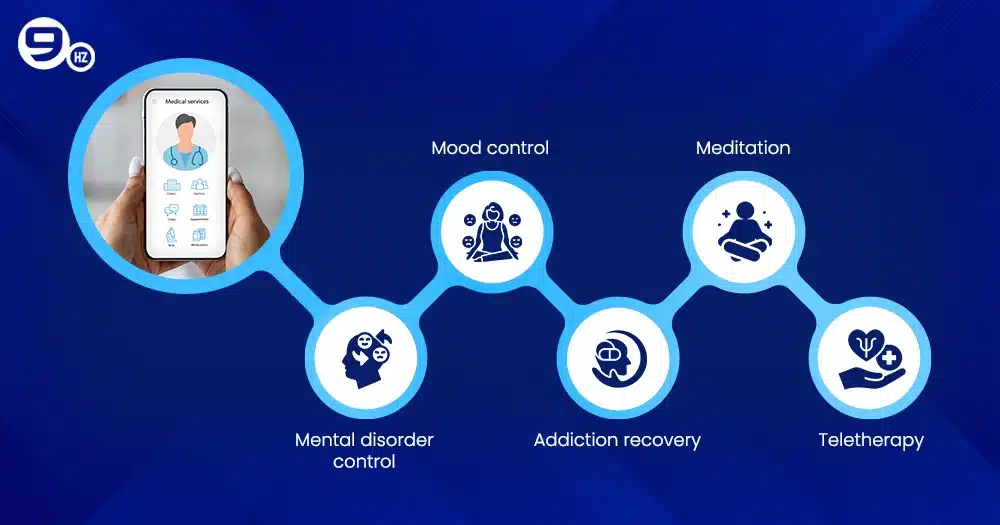
Different types of mental health apps are mental disorder control apps, teletherapy apps, and addiction recovery apps.
Mental health apps are more affordable than traditional therapies and are useful for early-stage intervention and care.
These apps have features like user onboarding, progress tracking, and support communities. The cost of a mental health app development lies between $25000 to $300,000.
Mental health app development is one of the emerging trends in digital healthcare. There is growth in the global mental health app market because of various factors, such as rising global awareness, increasing smartphone usage, and rising customer expectations for continuous access to medical support, regardless of time and location.
Mobile mental health apps fill gaps in traditional healthcare systems that struggle with long waiting lists and cost barriers. They offer an alternate path to patients using tools such as guided meditation and journaling without having to wait for continuous support from physicians. This blog will help you get a detailed idea about mental health app development, along with market research and key strategies to monetize the app.
Market Overview and Future Trends in Mental Health Mobile App Development
The demand for mental health development is increasing day by day as people are realizing the importance of self-care and mental well-being. According to the WHO, nearly 1 billion people struggle with disorders like anxiety and depression. Yet 3/4th of them don’t receive treatment due to stigma around mental health and cost constraints.
The global market for mental health app development is expected to reach $32.05 billion by the year 2034 at an annual growth rate of 18%.
Isolation during the pandemic and quarantine increased concern among people about mental health improvement. Mental health apps became a lifesaver for many patients and a personal toolkit for their well-being.
Even though 70% of people live in areas where mental health organizations are nearby in the U.S, only 27.7% of them seek medical help. That’s why mental health app development is a trending topic in 2026.
With features like personalized care and real-time mood tracking, mental health apps allow you to scale and provide your services globally.
There is a market growth for mental health apps in countries like the U.S, Germany, India, Canada, France, and Italy. North America has the highest growth rate of 33% when compared to other regions. Similarly, the Android segment led the mental health app market when compared to iOS and other platforms.
There are different kinds of mental health needs, and each app category can address people with various disorders and issues. If you are planning to develop a mental health app, you can consider these app ideas.
Mental disorder control apps
These apps are specifically designed for people with serious disorders like OCD or severe anxiety. Mental disorder control apps can help detect symptoms early and use therapy methods that are scientifically validated.
Cognitive Behavioural Therapy helps change negative thoughts. The app helps users accept their emotions and leads them to take the next steps through Acceptance and Commitment Therapy. Positive psychology techniques in the mental health app help users build a positive mindset. These apps are also useful for anger management issues, as they suggest exercises to control anger.
Mood control apps
Anxiety, stress, and depression have become very common among people from all countries. When you build a mental health app that addresses these symptoms, it will help manage patients’ stress and stabilize their mood.
You can develop a mental health app with features that enable video consultations with therapists and self-assessment modules to check for symptoms.
These apps will help patients get support from the comfort of their homes by connecting with licensed therapists.
Addiction recovery apps
Excessive usage of alcohol, cigarettes, or even social media can result in addiction. Apps for addiction recovery can help users break a habit using a structured plan. It also gives goal-oriented activities to users and encourages them to build healthy habits without relapse.
For example, users can drop their nail-biting habit or work on their negative thought patterns using the Addiction Recovery app. The addiction recovery process becomes manageable when you provide live support to the users and encourage them with motivational content.
Meditation apps
If you’re wondering how to build a mental health app that will reach a global audience, then meditation apps are something you should begin with. Amidst chaos, people are looking for solutions that will help them to be mindful and calm.
Meditation apps encourage users to practice silence at least for a few minutes every day and guide them with steps to do meditation. These apps have features like breathing exercises and soothing sounds to relax a patient’s mind, helping them build a mindful lifestyle.
Teletherapy apps
These types of mental health apps allow users to have audio or video consultations with therapists. They have to follow a simple process.
Users have to take a quick questionnaire about the reasons for the therapy and the goals they’re trying to achieve after the therapy. Then they can schedule a session with matched therapists after browsing through their profiles.
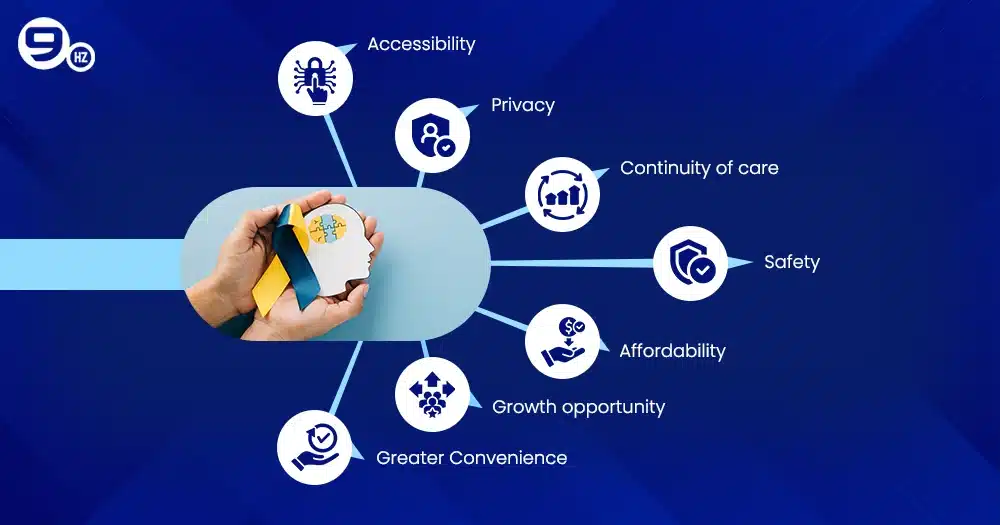
Key Benefits of Investing in Mental Health App Development
Wellness brands or health tech founders can make a real impact by investing in wellness app development. When you build a mental health app, it can bring many benefits to the users, improving their loyalty towards your brand.
Accessibility and Convenience: In the U.S, patients have to wait an average of 67 days for a face-to-face meeting with a psychiatrist. The telehealth feature in the mental health apps can reduce the wait time by 43 days. In the meantime, patients can receive guided exercises and community support without having to manage challenges alone. They can also get access to clinically approved stress-coping tools until they get help from professionals.
Privacy: Many patients feel overwhelmed when they want to meet a therapist in person. They may have questions like, “What if someone sees me, or what others may think if I am seeking help for mental health?” Mental health apps can reduce this barrier by helping patients get support from their homes, making them feel safe. This is highly important during early-stage care.
Continuity of care: Imagine what will happen to patients if they do not get immediate help during an emergency. The app’s features, like an AI chatbot and emergency coping modules, can fill the gap until they get guidance from professionals. Mental health apps can help users track their moods and manage their triggers.
Safety and efficiency: Users may have speculations about whether the apps will be beneficial and provide real support to them. According to the Michigan Medicine study, patients who used mental health apps had reduced symptoms of depression and anxiety.
Affordability: People often feel that therapies are expensive, especially if they have to meet the therapist in person. Mental health apps provide low subscription fees and guided programs with community access. Users can get consistent support at less cost.
Growth opportunity: Clinics or individual therapists can provide their services without physical office limitations. When you build a mental health app, you can offer support to users from different regions and states. This is a great benefit to both users and providers in remote areas. Apps also enable providers to offer help 24/7.
Greater Convenience: An average person checks their phone at least 150 times a day. Mental health apps allow you to check the progress of your mental health on a mobile phone. They also enable you to schedule therapy based on your time and convenience.
Essential Features to Include in a Mental Health App
There’s an increasing demand for mental health apps. Today, people expect support anywhere, anytime they need it. That’s why it’s important to include features that help manage wellbeing of users during mental health app development.
Identify your target audience and understand their needs. Researching apps already available in the market will give you an idea about areas for improvement. In the design, ensure that interfaces are simple and engaging for the users. The development team has to ensure that the features are properly integrated.
Let us look into the key features that are required to build a mental health app that is genuinely useful to your audience.
Self-help and mental health management: This feature will help users understand their mental health on a day-to-day basis. Lifestyle tracking, journaling, and mood logs allow users to record their daily emotions. When you combine guided meditation and mindfulness practices along with this feature, it will gradually help users to move towards a better mental state.
Telehealth: A telehealth feature in mental health app development allows users to schedule an online consultation with professionals. Patients can talk to psychiatrists through video calls. This feature is helpful for users who live in remote areas.
Progress tracking and goal-setting: To build a mental health app that helps users stay motivated, a goal-setting feature is very important. The progress tracking feature allows patients to see their sleep improvement or their consistency in daily journaling. Goal setting feature also allows them to set specific milestones.
Patient reminders: If you’re wondering how to develop a mental health app that enables users to follow a therapy plan consistently, consider including features like push notifications and reminders. These features can send reminders to patients to fill the daily mood log and suggest that they meditate after a stressful day. You can send notifications to them about upcoming appointments.
Crisis intervention: Mental health app development with crisis intervention allows you to provide care during emergencies. It includes a panic button and an instant crisis hotline call to help patients during high-stress situations.
Gamified activities: Consistency is the biggest problem in mental health apps. Gamification can solve this challenge. When users earn badges and activity streaks for showing up, they will open the app even during stressful situations just to feel better.
Sleep improvement tools: Poor sleep quality affects a person’s mental well-being. But just analyzing a person’s sleep quality is not going to help them. The mental health app can help users wind down and have quality sleep with features like white noise and bedtime stories.
Payment and Billing: If the app has convenient payment options, it is likely to increase user retention. The user should have the flexibility to pay through debit cards or mobile wallets. This feature will reduce drop-offs and encourage them to book therapies through the app.
Advanced Features to Differentiate Your Mental Health Mobile App
If you want to stand out from your competitors, include the advanced features listed below while building a mental health app.
Enhanced Security: Data protection helps you maintain trust and ensure compliance. Including features like multi-factor authentication and end-to-end data encryption makes your app more reliable. It allows patients to stay anonymous if they wish and seek treatment without fear of judgment.
Analytics and advanced functionality: This feature will help professionals monitor the condition of patients over time and provide treatment based on data patterns. Predictive analytics help predict issues before they escalate and send alerts to therapists and patients.
Support Communities: Connecting users with others facing similar challenges can help them feel supported. Group therapy sessions under professional guidance and live group meditation sessions allow users to cope with their situation in a better manner.
Personalized dashboards: Using AI to analyze a user’s journal entries helps identify emotional intensity in writing. If their emotions of the day are anger and frustration, the recommendation engine of the app can offer a breathing exercise. When you build a mental health app with these features, you can offer personalized advice to users instead of generic tips.
AI Chatbot: Mental health apps with AI chatbots support a patient even when professional support isn’t available. Chatbots can engage with patients and help them recognize their emotions using various methods. They can also offer coping strategies based on their state of mind.
Wearable Integration: Remote Patient Monitoring adds a new dimension to mental health apps. You can monitor a patient’s health metrics like heart rate and sleep patterns by integrating the app with wearable devices. When the apps are interoperable with EHRs and other apps, they provide a complete overview of a patient’s well-being.
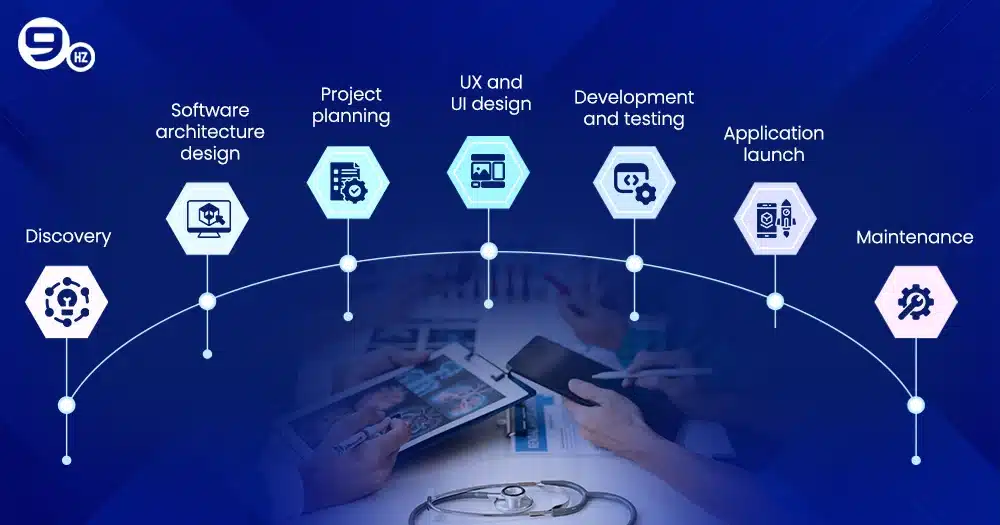
Though the development of mental health apps changes with your target audience requirements and your business goals, it is still possible to define steps that are common, along with sample timelines.
You can use this roadmap to understand how to build a mental health app and ideas to finish the project on time.
Discovery
The first step is to define the goals and conceptualize your apps. You can begin by analyzing your competitors in the relevant niche and listing the app features you need.
Identify compliance requirements for the mental health app and decide what kind of personal data you are going to collect and transfer through the app. For example, if you are planning to share patient information with healthcare providers or insurance companies, then the app must comply with HIPAA.
You can identify privacy issues by creating Data Flow Diagrams and finding suitable standards for interoperability. You may take 3 to 4 weeks to complete this step.
Software architecture design
Before you begin with mental health app development, you have to decide the functional and non-functional requirements for the application.
For example, you have to define what your app has to do. You need to decide whether a user login should occur before using the app or if the app allows users to consult through video calls. Then have to define how your app has to perform, like securing the data or its ability to scale.
Choose a technology stack that will help you meet all requirements. Mental health apps use sensitive data and have to comply with policies like HIPAA. This process may take 4 to 5 weeks.
Project planning
You can choose from different project management approaches, like Scrum and Kanban. In this phase of mental health app development, you need to determine your budget, timelines to finish the project, and resources you need to build the app. You can set KPIs like daily active users and session length to assess the progress.
Evaluate the project’s needs and come up with a risk mitigation plan. You can hire a development team to fulfill your IT requirements. You may need 2 weeks to finish this process.
UX and UI design
In this step of custom mobile app development, you can create user personas and visualize functions of your app via UI prototyping.
This step also involves building UX wireframes and testing. You can create consent forms and privacy policies that are easy to understand.
Development and testing
In this step, design a secure infrastructure that is compliant with HIPAA or GDPR. Start with front-end and back-end development of the app and safely integrate it with third-party apps. Test the app before rolling it out to find if there are any vulnerabilities.
Application launch
In this phase of mental health app development, you can check if the app is HIPAA compliant and take steps to get approval from the FDA. After preparing an incident response plan, you can roll out the pilot version of the app to get feedback from the focus group. Improve the app based on the review before launching it to the public.
Maintenance
In this step, you have to make sure that the app is compatible with new versions of the operating system and perform security audits. You can adjust UI and UX to add new features to your mental health app.
Compliance, Security, and Data Privacy in Mental Health App Development
Information in mental health data apps is highly sensitive data, such as mood logs, journal entries, and the history of patients’ addiction. That’s why these platforms require strong protection and regulatory compliance.
The app must comply with laws such as HIPAA, a health data protection law in the U.S and GDPR, a data privacy law in Europe. Adhering to these regulations will help maintain user trust and avoid legal issues.
For a health-related product or platform, security is not an additional feature. That’s why it’s essential to build a mental health app with data security as the foundation.
For encryption in transit, you have to follow a TLS 1.2 or higher communication standard.
For data encryption at rest, you can use a method like AES-256. The mental health app has to include two-factor authentication to prevent data breaches.
The app must provided managed-access based on their roles to enhance internal security. For example, therapists can have complete access to patient details, while support staff can have limited access.
Users need to have a clear idea of how their data will be used and what data will be shared with healthcare providers or insurance companies.
Regular security audits will be conducted by third-party security apps, such as penetrative testing. In mental health app development, the privacy policy should be in 8th to 9th grade level to ensure that readers clearly understand how their information is being used.
AI and Emerging Technologies in Mental Health Mobile App Development
If you’re wondering how to build a mental health app that is highly personalized and effective, then it’s time to integrate your app with AI and ML.
You can provide customized exercises and recommendations based on individual needs using AI algorithms.
Therapists can predict when a patient’s mental health is about to deteriorate and allow them to intervene at the right time by identifying patterns using machine learning models.
Advanced NLP models enable chatbots to have natural conversations with users and analyze their journal entries to identify their emotions.
Cost Breakdown to Build a Mental Health App in 2026
The cost to develop a mental health app depends on the complexity of the app. Mental health apps with mood trackers or meditation libraries are easy to develop when compared to cognitive behavioural tools.
Integrating AI and ML may increase the cost of an app due to factors like prompt engineering and hallucination prevention.
The budget of a minimal viable product with features like onboarding and journaling ranges from $25,000 to $60,000.
Costs of mid-sized mental health apps with gamification and personalization fall between $250,000 to $500,000 in countries like the U.S or Europe.
Enterprise mental health apps with features like clinician dashboards or insurance integration cost between $300,000 to $1 million.
Monetization Strategies for Mental Health App Development
The right monetization strategy is crucial for a mental health app to be sustainable. You can monetize your mental health app by choosing a strategy mentioned here.
In subscription models, users have to pay recurring fees and are best suited for apps with teletherapy features.
Basic features are free in a freemium plan, while user has to pay a fee to use premium features.
Enterprise licensing strategy is used for selling licenses to educational institutions or healthcare providers who offer access to their members
How to Choose the Right Development Partner for Mental Health App Development?
You might have the outline ready for your mental health development, but to ensure that the app lives up to your expectations, you can partner with an experienced healthcare app development company.
If you’re clueless about whom to choose as your partner, look for the following qualities:
They should have a grasp of your target audience and their specific needs.
Your app development partner has to understand what you’re trying to achieve with your mental health app to develop features that align with your goals.
Hire a team that can maintain regulatory compliance, such as HIPAA and DISHA, to ensure user privacy.
Conclusion
The potential for a growing opportunity to build a mental health app is stronger now than it’s ever been. The ability to provide personalized health insights and virtual emotional support creates a whole new dynamic in mental health app development. This is where you can count on TheNineHertz.
We help businesses build scalable digital products while balancing the mobile app development cost. Through our 15+ years of industry experience, transparent processes, and a talented team of 250+ app developers, the firm helps start-ups and enterprises realize their dream of developing innovative mobile applications that can compete in today‘s market.
FAQ’s
1. How Much Does it Cost to Build a Mental Health App?
The budget to develop a mental health app can be anywhere between $25,000 to $300,000. The costs may go up to $1 million for advanced enterprise solutions.
2. How Much Time is Required to Develop a Mental Health App?
The duration required to build a mental health app is 4 to 8 months. The timeline for app development changes according to the app features and complexity.
3. What are the Different Types of Mental Health Apps?
There are different kinds of mental health apps such as teletherapy apps, meditation and mindfulness apps, addiction recovery apps and CBT apps. Each app is built to serve different audiences and different purposes.
As the Chief Growth Officer at The NineHertz, I specialize in curating personalized strategies that help enterprises and brands globally to scale through AI, app development, and IT services. I have worked with companies across construction, insurance, logistics, supply chain, entertainment and healthcare for more than 15 years, understanding their operational realities and translating them into meaningful technology outcomes.
Latest Blogs
20 Top React Native App Development Companies in India (2026)
A react native app development company in India can help escalate your business to the next level via a high-performing…
Key Takeaways AI is changing the landscape of fitness apps, providing more sophisticated personalized workouts from machine learning, computer vision,…