
The insurance industry is going through a massive digital transformation. Customers now expect everything to happen instantly on their smartphones, from policy purchase to claim settlement.
The shift to mobile and digital health care will help grow the digital health market from $483 billion in 2026 to over $1.17 trillion in 2035. Engagement, policy-making, and claim processing are done via mobile apps, but insurers are no longer the intermediaries for customers.
A well-designed app can boost policy access, process instant claims, update health records, and enhance customer experience.
Therefore, many insurance providers are investing heavily in health insurance mobile app development.
In this guide, we describe the changes in the insurance landscape that health Insurance Mobile Apps are making, their advantages to insurers and policyholders, the features that a health insurance mobile app needs to include, and the estimated health Insurance mobile app development cost in 2026.
Health insurance mobile app development is the process of creating mobile apps connecting insurance companies, health plans and policyholders on the same digital platform. These apps let the user log in to their smartphone and manage insurance policy, claim processing, approvals, digital health records, and health care.
For insurers, mobile apps simplify operations and improve customer experience. Policyholders can see details of coverage, find network hospitals, schedule an appointment, and submit claims without visiting a branch or completing long forms. This convenience is why many insurers partner with an experienced health insurance mobile app development company to develop secure, scalable, and user-friendly applications that meet industry regulations and customer expectations.
A well-developed health insurance mobile app bridges insurers, hospitals, and customers. Hospitals can verify insurance coverage in no time, insurers can process claims quickly, and patients can access healthcare services in minimal time. This connected ecosystem helps employees manage paperwork, processes claims faster, and makes health care better for everyone involved.
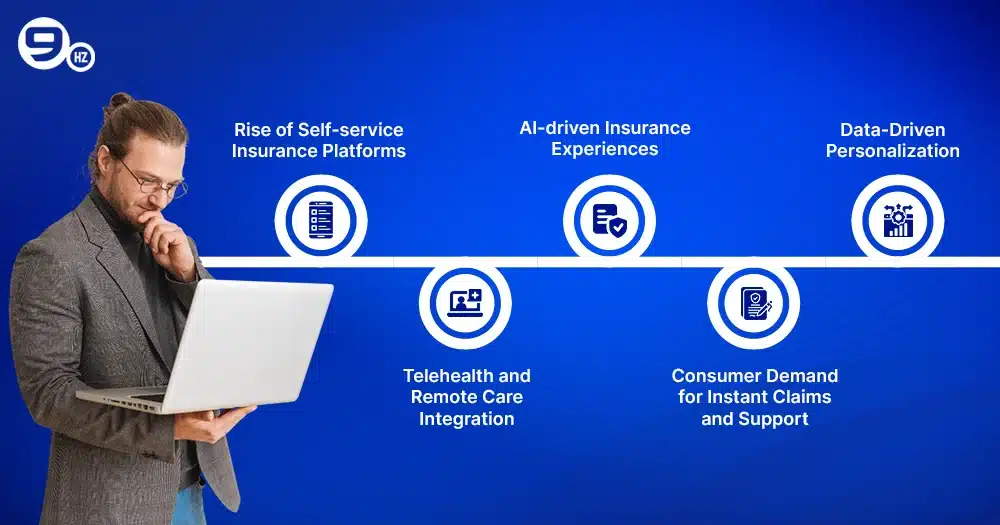
In 2026, insurance companies can lead the development and marketing of mobile apps by adopting a variety of market factors.
Customers can now choose their policies on the Internet. With mobile apps that enable policyholders to check coverage, update information, and file claims themselves, self-serve is the new norm.
With telemedicine, health insurance apps offer virtual consultations, prescription management, and remote health monitoring.
The insurance companies are shifting to artificial intelligence. AI improves efficiency and provides smarter, more responsive apps that make personalized policy recommendations, process claims, and detect fraud.
Mobile apps that track claims, provide notifications, and support customers 24 hours a day are available to meet the growing demand and increase user satisfaction.
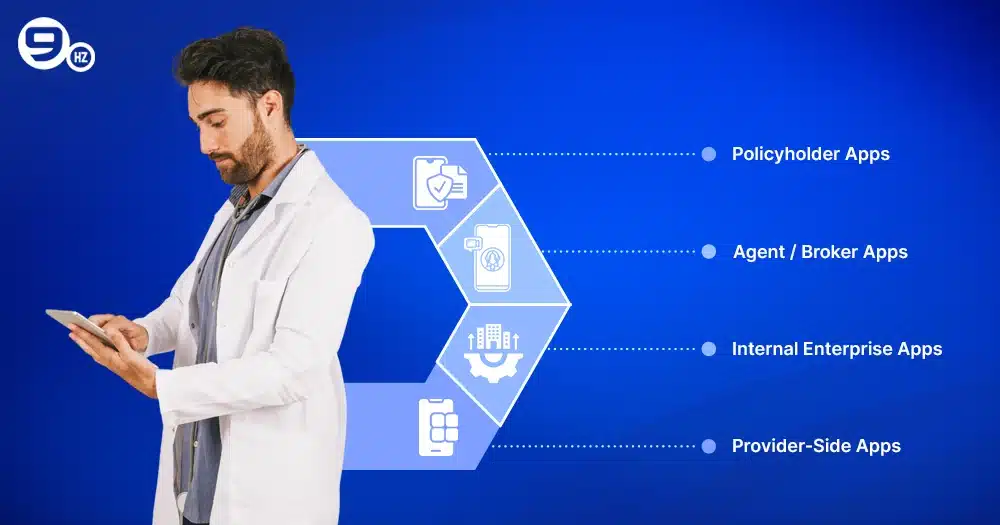
Health insurance apps target multiple players in the insurance space. Understanding the types of health insurance mobile apps is critical to insurers’ ability to plan for the best possible development of their mobile apps, and ensures each of these users receives the right features.
These apps allow customers to control their health insurance from their smartphones. Policyholders can check coverage information, file and track claims, access digital health cards, and receive policy alerts. Insurance firms often look to a development company to create a secure and user-friendly insurance mobile app for protecting sensitive health and insurance data.
These apps let agents and brokers manage clients, request quotes, stay on top of policy renewals, and stay up to date with news about new products. They simplify workflows and help communication with insurers and policyholders, making policy sales and service delivery easier.
Internal apps are designed to help insurance companies in better claim processing and risk assessment. These apps improve the efficiency of work, reduce labor manual errors, and provide reporting and analytics in real-time across departments.
These apps link hospitals, clinics, and other healthcare providers to insurance agencies. Providers can also monitor coverage for patients, file claims and get approvals on the spot. Integrating the provider-side functionality into a health insurance ecosystem is transparent, accelerates reimbursements, and fosters patient-insurer collaboration.
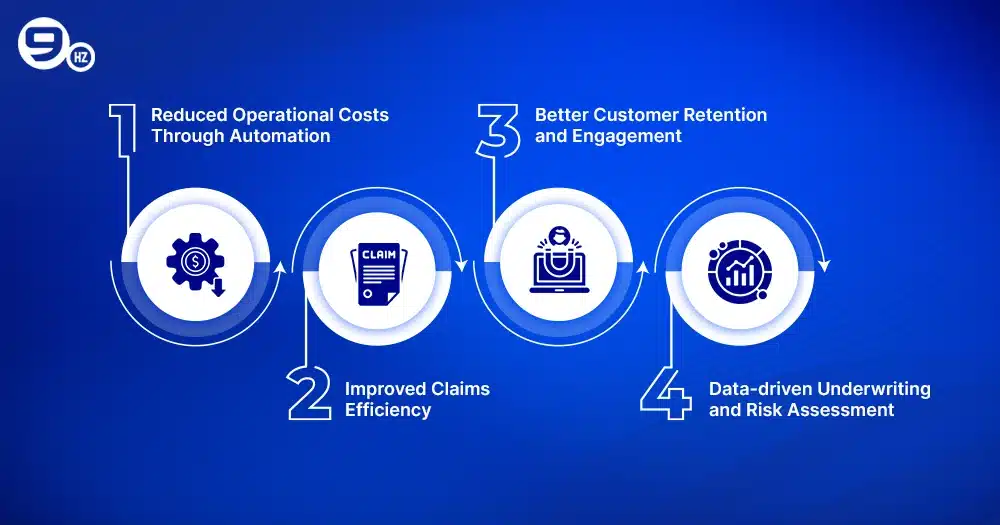
Health insurance mobile apps are one of the best tools insurers can use to improve efficiency, lower costs, and provide better customer service.
Manual processes such as the process of putting up policies, checking documents and reminding premium payers of their payments are tedious and inefficient. Health insurance apps automate these processes, reducing the time and expenses. Digitizing routine tasks allows insurers to focus on strategic growth and improved services rather than paperwork.
The hardest and most frustrating task for customers is filing and processing claims. The apps allow policyholders to submit claims in real-time, complete with digital docs. Agents can automate verification, cross-checking for coverage, and approval of claims.
Modern policyholders want convenience and transparency. Health insurance apps can also be used to alert you on coverage status, remind you of premium payments, provide health tips, and offer live chat. These features also engage customers, making them more loyal and less churning. One of the strong selling points in an insurance market is an app that offers a seamless customer experience.
Mobile apps collect a huge amount of data, including user behavior, health history, claims, and lifestyle data. Insurance companies can use this information for better underwriting decisions, more accurate risk predictions, and personalized policy recommendations.
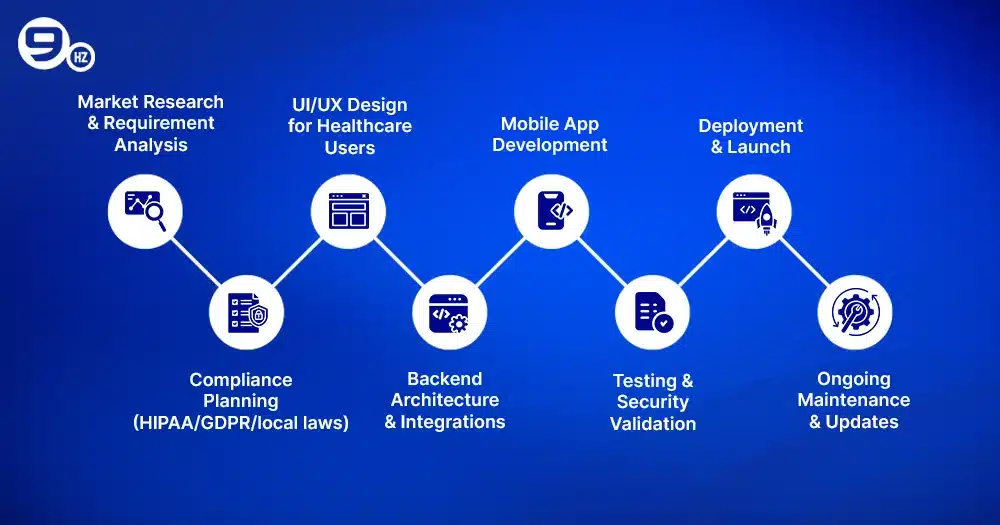
Here is a detailed step-by-step guide to health insurance mobile app development
You, as a business, should know your pain points, expectations, and desired features for the app. This study informs the work, functions, and behavior of the app. Custom health insurance mobile app development also helps ensure the final product truly meets market needs and is different from the competition.
Personal and medical information is sensitive to health insurance apps. Then there are not any lock-ins with HIPAA, GDPR or local privacy laws. Early compliance planning secures the storage of data, encrypts communication and provides adequate consent, avoiding legal and financial risk to insurer and users.
The design should be intuitive so that it be easy for policyholders, agents and providers to navigate claims, tracking policies, and claim management. UX/UI is the cornerstone of getting users to navigate the app as quickly as possible, leading to more engagement and retention.
Any health insurance app needs a strong backend first. It should have sufficient storage capacity to store a large volume of sensitive data, serve multiple users, and be integrated with hospital management systems, payment gateways, wearables, and third-party health systems.
The front-end and back-end are built for both iOS and Android devices. Developers provide both the core and advanced features, such as policy dashboards, claim tracking, AI chatbots, and telemedicine. Performance, security and scalability are the keys to a seamless user experience.
Before launch, it is necessary to do thorough testing. Conduct functional, performance and usability testing for a smooth operation. Validation of security includes penetration testing, encryption, and compliance verification for sensitive health and insurance data. This protects the network against a flaw and ensures that users are safe on the go.
Once the testing is done, deploy the app on the app stores. It includes assisting the end users to embrace all the features, along with collecting feedback for further improvements. Planning ahead of time helps cut down on downtime and increase the speed of the app’s distribution to the target user base.
Over the course of months, a patch is needed to fix bugs, improve performance, and add new features based on feedback from users. Maintenance also ensures that the app is free of bugs, errors, and possible crashes.
When planning health insurance mobile app development, choosing the right technology stack is crucial for building a secure, scalable, and efficient application.
| Layer | Technologies/Tools |
|---|---|
| Front-End |
|
| Back-End |
|
| Database |
|
| Cloud & Hosting |
|
| APIs & Integrations |
|
| Security & Encryption |
|
| Analytics & AI |
|
| Testing & QA |
|
Security and compliance concerns are also addressed by health insurance mobile app development, as well as concerns about the security of highly sensitive personal and medical data. Respecting regulations can lead to fines, data leaks, and loss of trust with the customer. Here are a few things to remember:
Industry norms apply to health insurance apps such as HIPAA in the US, GDPR in Europe and local data protection laws elsewhere. PHI is collected, stored and shared securely in order to comply. To avoid legal complications, such regulations should always be included in the initial design stage by the health insurance mobile app development company.
Sensitive information must be encrypted in strong protocols such as AES-256, SSL/TLS, or RSA during transit or rest. Encryption makes accessing the data difficult and protects the private and medical information of the user from attacks from cyberspace.
Only authorized users can sign in to the app through Sicher authentication, MFA, OAuth 2.0, or biometric authentication. Role-based access control also locks away sensitive areas of the system, such as claims processing or policy management dashboards.
Cloud services such as AWS, Google Cloud, or Azure should always be properly configured, backed up, and secured. PHI is stored in a secure and scalable cloud environment to protect personal data, be accessible, and scale.
Regular penetration testing, vulnerability monitoring, and security audits to detect and correct vulnerabilities prior to deployment. Every day, the app is monitored to ensure there are no new threats and the data is always secure.
The cost of development of a health insurance mobile app depends on the complexity, platform, features, integrations, and compliance requirements. For 2026, estimated costs and development timelines are listed here.
| Component | Estimated Cost Range | Estimated Development Time Duration |
|---|---|---|
| Basic System | $20,000 – $40,000 | 2 – 3 months |
| Mid-Level Platform | $50,000 – $80,000 | 4 – 6 months |
| Enterprise Solution | $100,000 – $200,000+ | 8–12 months |
| Mobile Apps (iOS & Android) | $50,000 – $100,000 | 3–5 months |
| AI & Analytics Modules | $20,000 – $60,000 | 2–4 months |
| Integration & Compliance | $15,000 – $40,000 | 1–2 months |
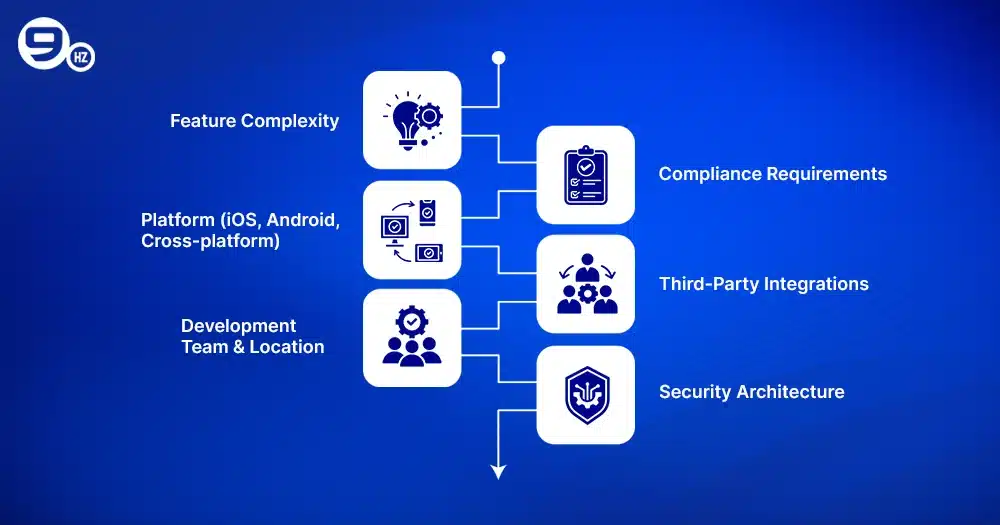
There is a cost to developing a health insurance mobile app based on the complexity of the app and regulatory compliance. Here are factors that influence the app development cost.
The more expensive your design is, the more advanced features you have, like AI-driven claims, telemedicine integration, wearable device syncing and personalized policy recommendations. A single policy management app costs far less than an enterprise-ready solution.
It is typically more expensive to create separate native apps for iOS and Android than to build them on a platform-spanning framework like Flutter or React Native. Platform choice may affect the time frames, testing, and maintenance costs.
Custom UX/UI for policyholders, agents and providers is more complicated and takes more time and skill and comes at a higher cost. However, it is a more intuitive, clean design that engages and retains users.
It is often easier to overpay for development of robust backend systems that work for multiple users, real-time data processing and integrations with third-party services such as hospitals, telehealth platforms, and wearable devices.
HIPAA, GDPR, and local laws require additional security features, encryption protocols, and secure data storage. Ensure that all regulations are followed increases the cost and effort involved in developing a product.
You should choose a health insurance mobile app development company with experience in creating insurance apps, one that will be more expensive at first, but will provide reliable and flexible solutions, ultimately saving you money on delays or regulatory issues following the launch.
There are likely multiple challenges to health insurance app development in the future. Here are some of our biggest problems with our method.
Health insurance apps should be compliant with HIPAA, GDPR and local data protection laws. We enforce our own security and privacy policies by invoking strict consent procedures and ensuring the protection of sensitive data.
Many insurance companies have older backend systems that do not work in real-time. Our developers seamlessly integrate the mobile app with the traditional insurance companies and hospital systems for smooth operation.
One major concern with the security of sensitive medical and personal data is the security. We have advanced encryption, secured authentication, role-based controls, and continuous monitoring to ensure the security of our clients’ user data.
Apps have to cope with growing traffic and not slow down as the numbers increase. Custom health insurance mobile app development offers cloud-based hosting and flexible design, so that your app grows with your business.
We create user-friendly interfaces and process management software that we believe engage all parties faster and simplify claim processing.
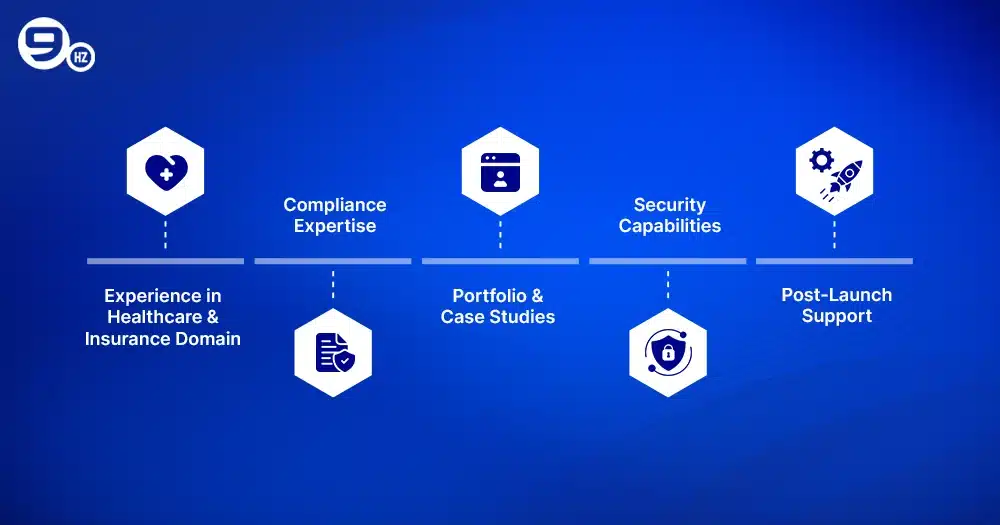
Choosing the right partner for your project is a big decision. The right company can secure, make it compliant, and usable while ensuring your budget is kept in mind.
Choose an experienced insurance development partner that understands insurance policy and claim processes and workflow involving many stakeholders and departments to help reduce the development life cycle and avoid costly errors.
Insurance companies face lots of regulatory requirements. A reliable software development company will know how to navigate HIPAA, GDPR and other local data protection laws to ensure your application is compiled correctly, secure, and free of potential legal problems.
Identify the company’s experience with projects and case studies. A portfolio that has a high degree of reliability and sophistication with a range of designs, innovative features, and flexibility indicates the level of competency in providing premium, custom health insurance mobile app development services.
Verify the use of encryption, multi-factor authentication, role-based access, and regular security audits to protect sensitive medical and policy information.
Choose a partner to handle the maintenance, changes, bug fixes, and features to keep your app safe, compliant, and current with new OS versions.
Health insurance apps are changing as insurers move toward new technologies that improve efficiency, transparency, and user experience. As health insurance mobile app development progresses, several emerging trends are shaping the landscape.
As artificial intelligence takes advantage of large amounts of customer data and quickly and accurately analyzes the underwriting process, it is changing the way in which the underwriting process is conducted. AI algorithms can look at health history, lifestyle, and claim history to determine levels of risk and choose the best policy for you. This strategy allows insurers to make quicker decisions and provide more personalized coverage plans to their customers.
Predictive analytics allow insurers to anticipate possible health risks and claim patterns through historical and real-time data. Advanced models of data help insurers manage risk early, design better pricing and reduce claim fraud. This capability is essential to improving decision-making in today’s Health Insurance App Development.
Future health insurance apps will concentrate more on preventive healthcare rather than on claim management. With the integration with wearable devices, fitness apps and wellness programs, insurers can also see how their users are doing and encourage healthier behavior.
Blockchain provides a transparent way to store insurance claims and transactions. All claims records are held in an entirely centralised ledger to enable insurers, hospitals, and policyholders to see the information in real time. This reduces fraud, simplifies claim processing and makes the insurance ecosystem more trusting.
Voice-enabled insurance services allow users to check details of policies, file claims or receive support with a few voice commands. The integration of voice assistants within custom health insurance mobile app development increases accessibility and ease of use.
Choosing the right development partner is essential to the success of any health insurance mobile app development project. The NineHertz has over 13 years of experience in health insurance app development, assisting insurers with developing secure, flexible mobile solutions for policyholders, agents, and health care providers. Their designs are intuitive, the architecture is solid, and they integrate advanced features like intelligence from AI, telemedicine integration, and automated claims management.
The NineHertz focuses on quality and innovation with custom health insurance mobile app development solutions that address industry regulations and changing customer expectations. They follow a holistic approach that helps firms to build compelling apps and to control their health insurance mobile app development cost.
With insurance and healthcare organizations continuing their digital transformation, health insurance mobile app development is becoming increasingly vital to providing rapid service and support, enhancing client interaction, and optimizing operations. Mobile applications are revolutionizing how health insurers work with customers and physicians, offering on-the-go policy administration, automated claims processing, predictive analytics, and even personalized healthcare advice. Picking the right approach, tools and experienced developers is important to developing a robust, secure, and compliant solution. Working with a reputable health insurance mobile app development Company provides health insurers with the flexibility to develop an innovative and effective digital experience while controlling the cost of health insurance mobile app development.
Health insurance mobile app development refers to the development of mobile apps that allow insurers, policyholders, agents, and healthcare providers to communicate online.
The cost of an insurance mobile app in 2026 is a range of $10,000 to $200,000, depending on the size, features, integrations, and compliance of the app.
Health insurance apps should include secure authentication of users, policy management dashboards, digital insurance ID cards, premium payment gateways, claims submission and tracking, hospital locators, and notifications. There are also AI chatbots, telemedicine, health tracking and fraud detection systems.
The project duration ranges from 3 months to 12 months, depending on the scope of the project. A simple app should take 3-4 months, and a more complex app up to a year.
Yes, health insurance apps are 100% secure and regulated because they follow HIPAA, GDPR, and other local data protection laws.
The development of insurance mobile applications involves first market research and analysis, compliance strategy development, user interface design, backend programming, and integration with external services. It goes through a rigorous performance and security test before being released post-development.
The health insurance app links insurers with health care providers, including hospitals, via secure APIs and integrated healthcare systems. This allows hospitals to check a patient’s insurance coverage immediately, send digital claims, and get approval or reimbursement in as little as 24 hours.
Insurance apps are simple, self-serve systems that allow users to take care of insurance, file claims, get a digital ID, and ask for help at any time.

Key Takeaways Insurance mobile apps are the digital interface designed for policyholders where they can track, manage, and file a…

Key Takeaways Insurance claims management software is a must rather than just a mere option in environments where the volume…

Key Takeaways Insurance chatbots are AI tools that help insurers automate workflows such as queries, claims, policy services, and sales.…