AI-native ISVs are under pressure to ship faster, control engineering costs, and keep AI product roadmaps moving without losing product quality. Local hiring alone is not always enough, especially when the product requires AI engineers, MLOps specialists, cloud teams, QA automation, DevOps, product security, and domain expertise to work together.
This is why ISVs are building AI Offshore Development Centers in India. But the real value is not just lower cost. A modern AI ODC works as a dedicated product engineering system that supports roadmap execution, AI feature delivery, platform modernization, and secure scaling.
With the rising demand for AI-led infrastructure, by 2030, the expected investment for India’s built data centre is US$23 billion, and the capacity will increase from 1.6 GW (2025) to 5 GW. Experts predict that India’s AI market will be of $27.7 billion in 2032. The driving forces are high AI adoption and government initiatives. This all makes India a perfect place to set up an ODC for global AI-native firms.
This article explains why India has become a preferred AI ODC destination, how the architecture works, and what ISVs should check before choosing the right partner.
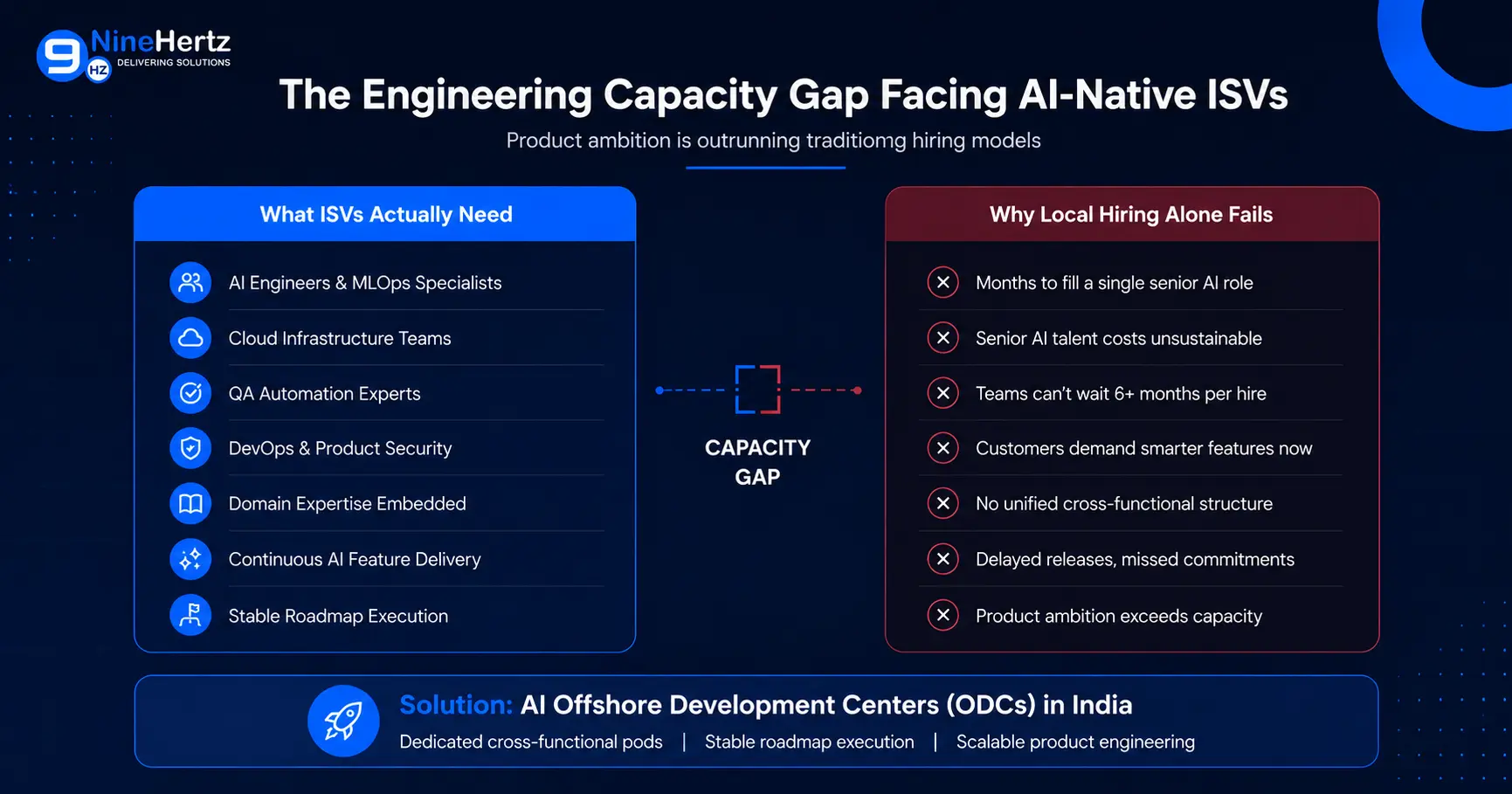 CTOs and product leaders from AI-native ISVs are facing delayed roadmaps, slower releases, and missed customer commitments. Shipping features and updates used to be enough. Products need AI workflows, model integrations, data pipelines, cloud reliability, security controls, and faster release cycles, and that reshapes how engineering teams come together.
For ISVs, the old hiring model can’t keep pace. Local hiring takes months, senior AI talent costs more, and teams can’t wait six months to fill a single role. Meanwhile, customers want smarter features, cleaner UX, better automation, and fewer delays.
Product ambition is outrunning engineering capacity.
Finding more developers won’t fix this. ISVs need a team structure built for continuous AI product development: engineers who understand backend systems, cloud infrastructure, data workflows, AI model behavior, QA automation, DevOps, and product security, working as one team instead of in separate corners.
ISVs are rethinking their engineering model now. Instead of scattered local hires or short-term outsourcing teams, they’re building dedicated AI offshore development centers in India. Cost savings matter less here than building a stable engineering base that supports roadmap execution, feature scaling, platform modernization, and long-term growth.
Speed matters for AI-native ISVs, but losing control of the build matters more. A poorly structured offshore team creates delays instead of solving them. A well-built AI ODC gives ISVs a dedicated engineering system: the right people, clear governance, secure workflows, and room to scale as the product grows.
AI-native ISVs need a practical product engineering base, dedicated teams for AI feature engineering, automation, and a reliable roadmap.
Regional ODCs elsewhere often still run on the old outsourcing or staff-augmentation framework. They lack a unified mindset, and closing tickets in JIRA doesn’t move the product forward. Fragmented ownership and late architecture issues stretch timelines and increase cost.
The Indian economy is still on the growth trajectory, and the AI Global Capability Centers in the country are on the rise. As a fact, Indian AI ODCs have moved to strategic work, including product engineering services, digital transformation, and global product innovation. The teams work as unified engineering systems and execute the roadmap with precision. A key reason behind this evolution is the emergence of strong engineering ecosystems beyond the metros, as explained in our guide on Tier-2 vs Tier-1 cities in India for AI-native ODCs, where organizations can balance talent availability, retention, and operational costs.
With the growing AI-native landscape, Indian AI ODCs are prioritizing platform-enabled transparency, following enterprise-grade data protocols, ISO certifications, SOC 2 compliance, and zero-trust security architectures. This makes India a safe engineering base for global AI-native ISVs.
Engineering burn is not an issue; the Indian AI ODCs balance cost-efficiency with high technical capability, thus AI-native startups and enterprises can run extended AI engineering operations with minimal delay and at a sustainable burn rate.
Indian ODCs give AI-native ISVs engineering capacity that can grow with the product roadmap. The value is not only lower cost. The bigger gain is a stable product engineering unit that can support feature development, AI workflow integration, testing, release management, platform improvements, and long-term modernization under one structure.
A dedicated ODC gives CTOs and product leaders a team that understands the product, architecture, backlog, and release rhythm. This reduces the stop-start delays that often come with scattered hiring or short-term vendor teams.
When the same team works across sprints, releases, bugs, and customer feedback, it builds product memory. That context is hard to replace and becomes more useful with time.
ISVs can build a multidisciplinary team at a lower burn rate than hiring the same mix of AI, cloud, QA, DevOps, and product roles locally.
Forward-deployed engineers keep AI work connected to product use cases, customer workflows, and business needs, not just model deployment.
Instead of hiring only when the backlog is already overloaded, ISVs can build pods around roadmap needs. This works as one pod focuses on AI feature engineering, while another handles cloud, QA, automation, or platform modernization.
If ISVs need more delivery depth, better continuity, and stronger control over product execution, moving to an Indian ODC is the right approach.
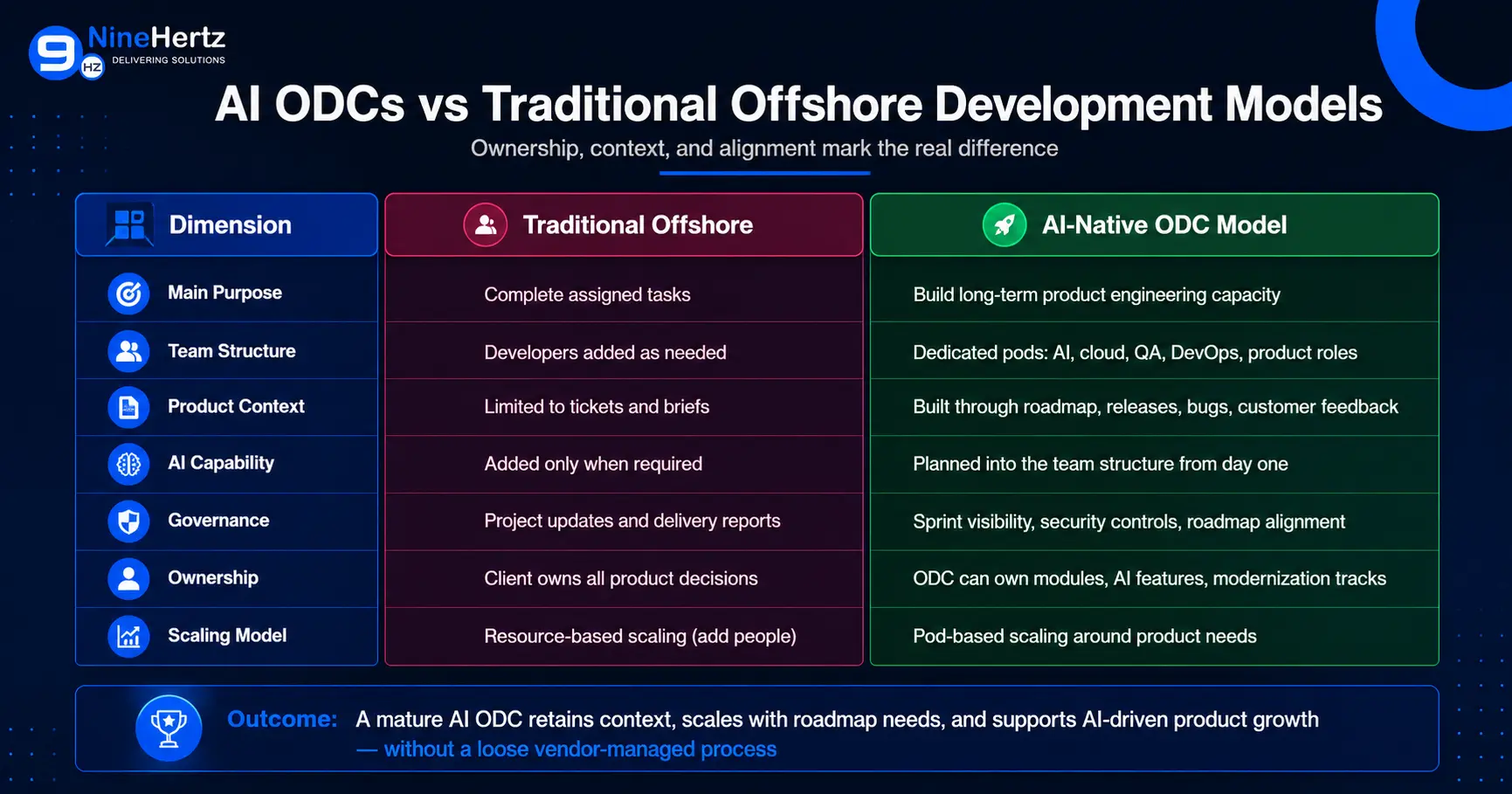
The traditional offshore development models have long been a go-to strategy for businesses looking to build their products. However, with evolving engineering requirements, practices are fading and becoming ineffective.
With traditional outsourcing, an enterprise hands the project to an external vendor and steps back. An AI ODC works as an extension of the in-house team: dedicated, collaborative, aligned with long-term strategy instead of a single deliverable. AI-augmented workflows add engineering capacity and support for stronger control over roadmap execution.
Ownership marks the difference: who holds product context, who stays connected to the roadmap, and who answers for outcomes.
| Area | Traditional Offshore Development | AI-Native ODC Model |
|---|---|---|
| Main purpose | Complete assigned tasks | Build long-term product engineering capacity |
| Team structure | Developers added as needed | Dedicated pods with AI, cloud, QA, DevOps, and product roles |
| Product context | Limited to tickets and briefs | Built through roadmap, releases, bugs, and customer feedback |
| AI capability | Added when required | Planned into the team from the start |
| Governance | Project updates and delivery reports | Sprint visibility, security controls, and roadmap alignment |
| Ownership | The client owns most of the product decisions | ODC can own modules, AI features, and modernization tracks |
| Scaling model | Resource-based scaling | Pod-based scaling around product needs |
| Best fit | Short-term work or task overflow | AI-native ISVs needing stable product delivery |
Outcome: A mature AI ODC gives them a product engineering base that can retain context, scale with roadmap needs, and support AI-driven product growth without turning development into a loose vendor-managed process.
Most ISVs fail when they treat AI ODC as a traditional outsourcing shop or hiring lane. Adding developers, throwing data scientists and engineers at a JIRA board doesn’t work. The traditional model works for simple delivery but becomes ineffective when the product needs AI workflows, cloud reliability, data movement, QA automation, and secure releases at the same time.
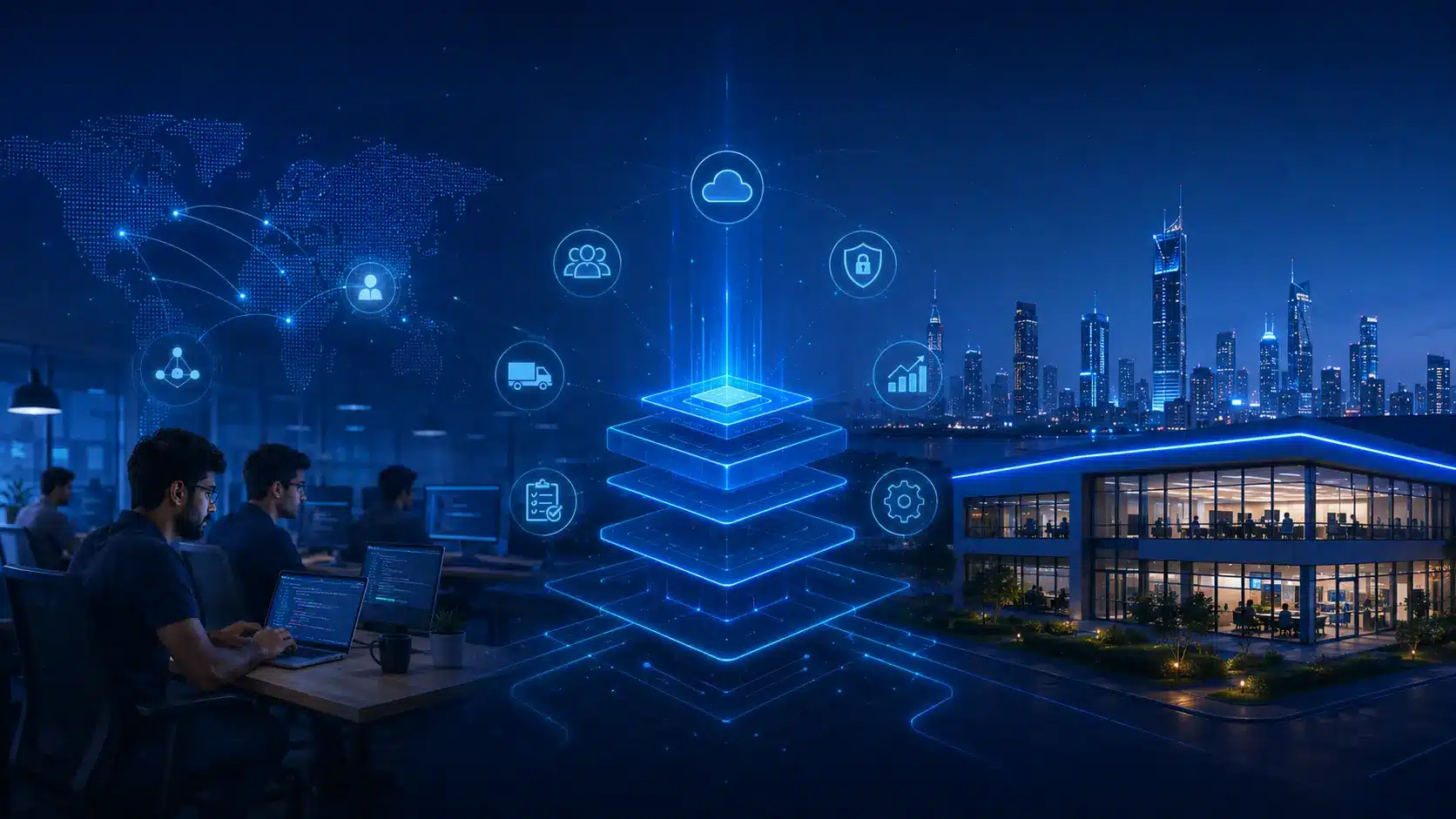
A modern AI ODC needs to work as a product engineering system. This is where the AI-Native ODC Product Engineering Stack becomes useful. It shows the three layers an ISV needs before an offshore team can support the roadmap with real control. These three layers work only when they are supported by product governance, secure access controls, sprint visibility, and clear ownership across the roadmap.
This pod may include ML engineers, MLOps specialists, data strategists, and prompt architects who make AI features reliable, deployable, and useful inside the product.
Most of the ISVs think they need to hire AI developers, but the actual need is for skilled AI product engineers. They understand AI behavior, retrieval flows, and evaluation challenges.
This layer handles:
This layer adds context and consists of:
A modern AI ODC cannot run on talent alone. It needs the right operating components around the team, or the model slowly turns into regular outsourcing with better job titles.
The first component is a dedicated product pod. The team should include AI, backend, QA, DevOps, and product-facing roles, and it should not change every few sprints.
The second critical component is clear product governance; CTOs and product leaders need visibility into sprint health, release quality, technical debt, blockers, and ownership. Without this, the ODC may ship tasks but still miss the larger product direction.
AI-native ISVs need controlled code access, protected data environments, documentation discipline, IP ownership clarity, and compliance workflows from day one. Therefore, the third component is secure engineering access.
The fourth component is delivery intelligence to track velocity, defects, release readiness, model performance, and QA coverage. This keeps delivery measurable instead of opinion-based.
The fifth component is continuity. The same team should stay close to releases, bugs, customer feedback, and platform improvements. That is how the ODC builds product memory and becomes more valuable with time.
Without these components, an AI ODC is only a staffing setup. With them, it becomes a scalable product engineering unit.
Rather than starting with hiring, standing up an AI ODC in India should start with an operating model. The ODC can quickly turn into another offshore vendor setup if team, tools, ownership, and delivery rhythm are not clear from day one.
Thus, the operational framework is like:
Based on it, the simple flow is like:
Build (Set the Base) -> Run (Make Delivery Stable) -> Evolve (Scale and Improve)
Based on this operating model, ContinuumAI™ acts as the engineering acceleration layer that supports faster development cycles, better delivery visibility, and stronger operational transparency across the engineering lifecycle.
Pro-Tip: AI-native ISVs should not scale the team before the operating model is stable. Build the foundation first, run it with discipline, then evolve it into a product engineering system that can grow with the roadmap.
Yes, the enterprises also fall into the trap, and with unclear information, instead of collaborating with the trusted AI ODC partner, they collaborate with a staffing vendor wearing an ODC label. The true partner manages outcomes and risks. Therefore, a trusted and genuine AI Offshore Development Center (ODC) provides a dedicated, governed operational unit aligned with your business goals, rather than headcount under its own rebranding.
The fundamental difference between a high-performance ODC partner vs. a rebranded ODC, aka staffing vendor, is as follows:
| Criteria | Rebranded Staffing Vendor | High-Performance AI ODC Partner |
|---|---|---|
| Team Structure | Rented professionals | Bundled cross-functional skilled AI teams |
| Management | Task and code reviews | Handles operations, risks, compliance, and ethics |
| Strategic Alignment | Minimal | Operates as an extension |
| AI Maturity | Below average | High |
| AI Governance | No | Implements secure frameworks and complete adherence |
| Strategic Implementation | Transactional execution | Yes (AI architecture and robust tech stacks) |
| IP & Knowledge Retention | No | Maintains documentation and model registries |
| Data Security | Low and remains the client’s responsibility | Highly secure infrastructure |
| Pricing | Time and material | Fixed monthly retainers or outcome-based |
The warning sign is simple. If the partner talks only about resumes, hourly rates, and how quickly it can add developers, it is still operating like a staffing vendor. If it talks about roadmap ownership, pod design, secure delivery, AI engineering maturity, and long-term product continuity, it is closer to a real AI ODC partner.
The top reasons that make AI offshore development centers break are fragmented team silos, knowledge loss in data fine-tuning, and disconnected ML pipelines. Other reasons are scaling the team faster than the operating models, weak ownership, and unclear documentation.
Most of the AI ODCs break down when:
Pro-Tip: Scale pods only after ownership, security, documentation, and delivery visibility are stable.
AI-native ODCs in India are becoming product intelligence centers for global ISVs. The next phase brings AI-assisted development, automated testing, stronger MLOps workflows, secure data environments, and pods that own bigger slices of the roadmap.
The key trends involve:
For ISVs, the shift is clear. India will not only help them hire faster. It will help them build stable, AI-ready engineering systems that can support product growth, platform modernization, and long-term innovation.
For AI-native ISVs, building an ODC in India is no longer only a cost decision. It is an engineering capacity decision. When local hiring slows roadmap execution, product teams need a model that gives them stable talent, product context, AI delivery maturity, security control, and long-term continuity.
A well-built AI ODC helps ISVs move from scattered hiring to a governed product engineering system. The real value comes from dedicated pods, clear ownership, secure workflows, and a delivery model that grows with the roadmap.
With the right partner, AI-native ISVs can build, run, and evolve their product engineering capacity without losing control of the product.
An AI ODC works as a dedicated product engineering unit and an extended arm with AI capability. It also includes roadmap ownership and long-term delivery continuity. Compared to ODC, traditional outsourcing focuses on assigned tasks.
The cost to set up an AI product engineering ODC in India depends on key factors such as team size, skill mix, security needs, engagement model, and project scope. The small AI pod costs less than larger ones or than building the same team locally.
In the context of building an AI ODC in India, most ISVs can start the first sprint in 4 to 8 weeks if the roadmap, team roles, access controls, and governance model are clear early.
The best team structure brings together AI engineers, backend developers, MLOps experts, QA automation, DevOps, product-facing leads, and delivery managers.
The best practice is to use clear MSAs, employment contracts, role-based access, secure repositories, audit trails, documentation rules, and IP ownership clauses to protect the IP when the product engineering team is based in India.
It depends on the project’s needs. Choose a dedicated ODC for long-term product work, BOT for future ownership transfer, and team augmentation only when you need short-term skill support.
Delayed releases, rising hiring costs, overloaded local teams, AI talent gaps, weak sprint continuity, and growing backlog pressure all point in the same direction: build an ODC in India instead of hiring locally.

Are you looking for the top AI development company in the USA? Guess what, you’ve come to the right destination.…
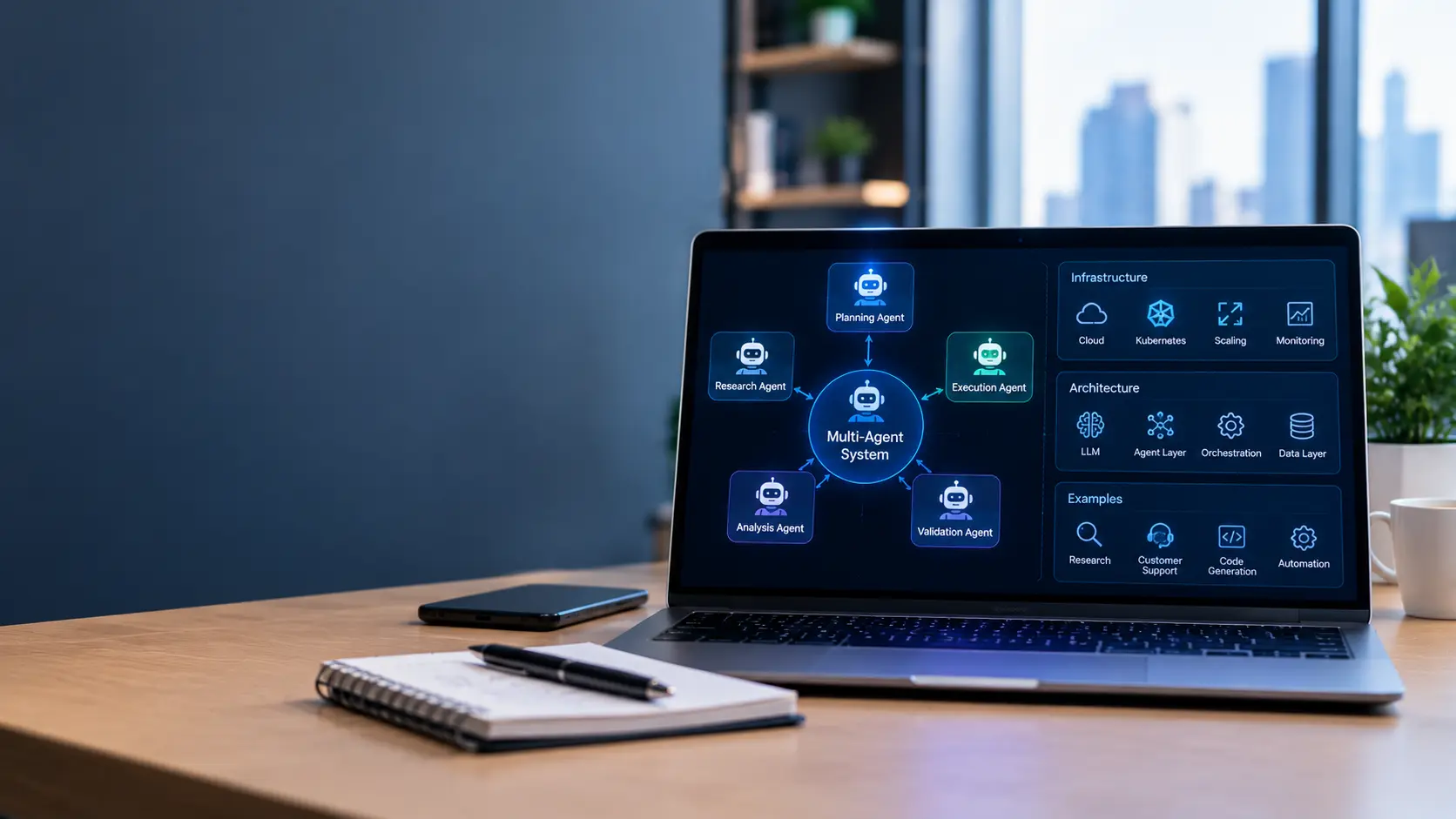
Key Takeaways Multi-agent systems can improve task specialization, coordination, and scalability by distributing complex workflows to specialized AI agents. Sequential,…
Key Takeaways AI supply chain risk monitoring uses real-time data and predictive models to flag disruptions before they escalate into…