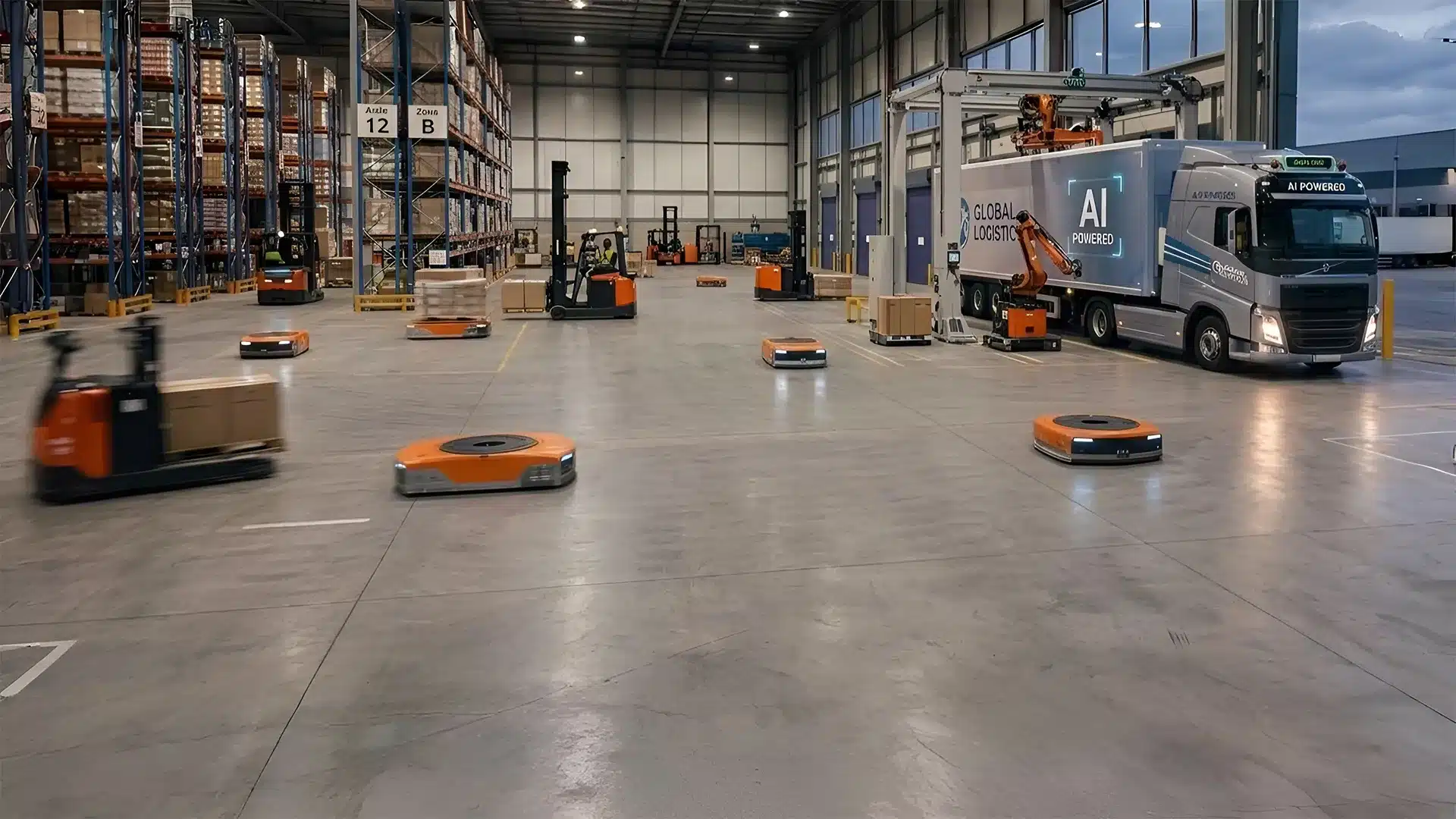
Supply chain delays are today one of the biggest challenges facing businesses. Manufacturing, construction, and industrial firms both struggle to break into once-existent structures. Faulty components can slow down production, increase costs, and mislead customers.
Recent data show that the problem is now so serious.
Did you know that 75% of construction projects experience delays associated with issues in the supply chain, leading to overruns in schedules and increased budgets?
As companies across sectors argue, the common causes of supply chain delays in the industrial sectors in the USA are not limited to poor coordination and lack of visibility, making disruptions harder to predict and manage.
This is especially true in construction, where supply chain delays are now the chief concern for construction teams in order to keep projects on track, even when material is not available. Businesses are increasingly aware that they need to move away from reactive problem-solving toward proactive planning.
That’s why organizations are embracing AI, better visibility of data, and automation to slow the supply chain down before it escalates. Today, firms, rather than making guesses about when problems will occur, can spot dangers early, react faster, and construct smarter, stronger, more resilient supply chains ready for disruption.
Without further ado, let’s dive in!

Below are some of the most frequent factors contributing to delays across industries, including the common causes of supply chain delays in industrial sectors in the USA.
Most businesses still operate on disconnected systems, making it difficult to keep track of materials and shipments in real time.
If too many suppliers are used, they are vulnerable in the event of disruption.
Shipping problems are still among several reasons for delays around the world.
Manual procedures are more difficult to make decisions and are more likely to be error-prone.
Several industries are particularly sensitive to such types of risks and require special approaches and strategies for managing supply chain delays in construction.
Today, businesses have to move away from the reactive side and focus on better and more technological solutions in order to win. AI and automation can be used to predict risks, better coordinate, and mitigate supply chain delays so that they don’t disrupt operations.
Talk to our Experts
Get a Free Consultation
AI identifies historical data, demand patterns, and market changes in order for companies to better plan for inventory and procurement. Instead of guessing, teams make decisions based on data that prevents shortages and overstocking, two of the common causes of supply chain delays in the industrial sectors of the USA. Better forecasting of closers’ production to actual demand minimizes unexpected disruptions.
AI-powered real-time visibility enables businesses to monitor virtual cargoes, stocks, and suppliers. It assists teams in easily detecting the bottlenecks and taking necessary steps before they extend further. Such transparency is useful in facilitating coordination, and it is among the most appropriate mechanisms of minimizing the delays in the supply chain in construction, where timing influences the cost of a project. Hire the right tech partner that can assist you in lowering the software development cost to support your supply chain.
Procurement systems can be automated and speed up the approval process, send buy orders, and automate supplier performance processing, without manual effort. Quickening workflows minimizes administrative waste and is timely. Businesses can easily create a supply chain of quick fixes for all their operations.
To avoid disruption, AI continuously monitors logistics information, supplier activity, and external risks. During the process, businesses are notified and can then make proactive changes in the supply chain or transport. This form of prediction addresses some of the underlying causes of delays in the supply chain for the US industries and improves risk reduction for businesses.
Automation tools are used to automate inventory handling, warehouse operations, and delivery routes to increase speed and accuracy. Companies reduce errors, shorten fulfillment cycles, and maintain constant material flow.
These improvements could help firms to reduce supply chain delay in construction by reducing supply chain delays but will also allow firms to be safe in the face of fluctuating demand.

In the United States, supply chain delays are a common cause of operational and financial difficulties for many industries. In spite of the fact that most firms, from plants to construction sites, are still affected by common causes of supply chain delays within the industrial sectors of the USA, it is important to understand how supply chain delays affect performance and growth, as well as create strategies for managing supply chain delays in construction.
Manufacturers count on a reliable supply of material to efficiently operate the lines. Late shipment means factories stop, reduce output, and do not meet demand estimates. These disruptions force businesses to look beyond planning and invest in better systems to minimize disruption to the supply chain ahead of production.
The disruption in supply forces firms to pay more for urgent sourcing, expedited shipping, and alternative suppliers. These unanticipated costs quickly balloon operating budgets and decrease profitability. Businesses that do not solve these common problems often struggle to control costs and maintain a stable financial plan.
If materials or equipment are late to arrive, this can have a very negative impact on construction firms. Project schedules are affected by delayed time, labor failure occurs, and stakeholder relations are damaged by delayed time. Firms therefore adopt increasingly sophisticated management practices to maintain efficiency and efficiency in their construction supply chain, thus reducing disruption to workflow and project risk.
Longer supply chain delays result in a lack of supply and demand. Companies stock up on inventory as a safety buffer, or suffer shortages that end their businesses. The USA is a pioneer in solutions to common causes of supply chain delays that support organizations in their pursuit of accurate inventory planning and improving supply chain delays with better visibility.
Late deliveries affect customer satisfaction and brand credibility directly. Timely deliveries put businesses at risk of losing contracts and long-term customers. Companies now invest in AI-driven tools and automation to overcome the common causes of supply chain delays in industrial sectors in the USA, in order to improve reliability and uniformly reduce supply chain delays across industries.
Talk to our Experts
Get a Free Consultation
AI is revolutionizing the way businesses deal with supply chain delays, predicting disruptions sooner and slowing down the system. The goal is now to make decisions, and for better planning, visibility, and decision-making throughout supply chains, rather than to solve problems.
In the presence of artificial intelligence, it can spot patterns of disruption based on the performance of past clients, suppliers, logistics, and other variables. In the USA, businesses are aware of the risk of common causes of supply chain delays and can act early to avoid costly last-minute adjustments to minimize downtime.
Artificial intelligence allows firms to better predict variations in demand. Given the fact that material availability is also a factor in project timelines, this balance of real-time information about procurement and production is essential to developing appropriate strategies to overcome supply chain delays in construction.
AI-powered platforms can monitor shipments, inventories, and suppliers over time. The teams can see delays immediately and then respond quickly by routing deliveries or modifying schedules. It helps organizations avoid supply chain delays and keep operations running.
AI runs order processing, stock updates, and supplier communication throughout the day. In addition to eliminating manual errors and responding faster, quicker workflows reduce supply chain delays and improve overall efficiency.
AI systems are sensitive to change and slowly adapt to their recommendations. These data are then more exact, firms can prevent problems that will again occur, and develop supply chains that can be quickly adjusted to changing market conditions.

In today’s competitive environment, visibility is the only way to avoid supply chain delays. In real time, visibility into what’s happening across suppliers, warehouses, and transportation networks makes better decisions, thereby reducing disruption before it affects operations faster.
Real-time platforms of data help businesses to continuously monitor their shipments, inventory, and supplier performance. Teams also gain instant feedback on delays or disruptions rather than updating manually. This visibility enables organizations to quickly address issues related to the common causes of supply chain delays in industrial sectors in the USA, improving coordination across partners.
All of procurement, logistics, operations, and suppliers are united on one platform that ensures least miscommunication and time loss when making decisions since all users will be shown live data. Cooperation is also required to identify key factors causing supply chain delays in construction.
Live analytics can alert the user in real-time when the orders slow down, there is an inventory decrease, or in case of supplier risk. The teams are able to move, reschedule, or order new parts promptly. The steps will ensure that firms reduce any impacts on the supply chain before it affects the progress of a project or production.
The availability of live inventory helps firms to keep stock levels optimal throughout the warehouses and distribution centers. Firms can avoid stockouts and overstocking by responding quickly to a change in demand. Accurate inventory is important to avoid disruptions in the supply chain and ensure uninterrupted delivery.
Talk to our Experts
Get a Free Consultation
Real-time data solves not just immediate problems, but also helps plan for future development. Companies monitor performance, supplier reliability, and logistics efficiency to improve operations in the future. It improves the resilience of the supply chain, reducing the impact of repeating events over time and increasing transparency.
By removing human dependency on routine workflows, organizations can reduce supply chain delays and develop more efficient, flexible operations.

Demand Forecasting is very important for the prevention of disruptions to operations and supply chain delays. AI-powered forecasting automatically updates the information and forecasts for quick results so businesses can make informed decisions now, rather than react to disruption.
AI can track sales history, seasonal demand, customer sentiment, and external market data to better predict sales. Businesses become more aware of what needs to be done in the future and can avoid sudden shortages or stock surpluses. This proactive planning addresses some of the common causes of supply chain delays for the US industrial sectors, where forecasts are often inaccurate and cause production and delivery disruptions.
The AI-based insights allow firms to connect procurement, manufacturing, and logistics to expected demand. Resource management can be used by teams to identify resources faster, more accurately schedule suppliers, and more effectively allocate resources. The collaboration further develops management strategies in the face of material supply chain delays in order to prevent material delays that would otherwise cost more.
AI systems exploit new information to improve forecasts based on weather change. When demand moves or there are supplier risks, the advice businesses get is helping them to make better decisions. This flexibility also protects firms from supply chain disruption, stable stock levels, and an always successful operation even in erratic markets.
Real-time logistics analytics enable businesses to react quickly, to lessen uncertainty, and to reduce supply chain delays by turning data from real-time operations into actionable insights.
Real-time tracking allows easy access to the destination and delivery locations of shippers. It gives visibility and empowers businesses to act on-demand in the face of disruption and to reduce supply chain delays through information and communication.
Automated systems inform teams in case of route delays or logistical risk. Managers can respond to alerts faster and correct errors as soon as possible, so that no incident can become a failure.
Logistics analytics provide recommendations for the best route to deliver by analyzing traffic, weather, and carrier performance. Smarter routing reduces transit time, costs, and reliability of delivery over large supply networks.
The AI-driven analysis can deliver very quickly, in real time. Exact ETAs are important to better coordinate warehouse schedules, workforce management, and customer expectations for better supply chain efficacy.
Controlling inventory is essential to the successful running of a business and to preventing loss. Intelligent systems and insights into real-time can help businesses avoid supply chain delays by ensuring the right materials and products are available at the right time.
Also Read – How Retail Supply Chain Management Software Improves Inventory Accuracy Across Locations?

Companies need to combine smart technology with proactive operational strategies in order to operate a resilient supply chain. AI, visibility, and automation help businesses mitigate risk, adapt faster, and prevent supply chain delays in an increasingly unpredictable environment.
AI senses and anticipates unexpected events using operational and external information. In the USA, businesses can then address the risks that are often the root of the common causes of supply chain delays, and adjust sourcing, inventory, and logistics plans to ensure stability of operation.
Visibility tools in real-time provide a complete view of the shipments, suppliers, and stock across the supply chain. Transparency is important because it ensures better coordination and response for making informed decisions and reduces supply chain delays.
Automation reduces manual bottlenecks and errors by automating procurement, inventory, and logistics. These gains allow for better practices to eschew delay in the supply chain of construction and maintain consistent performance even when demand or supply drops.
There is no longer a shortage of supply chain delays, but an effective solution that businesses can recognize, deal with, and prevent with the right technology and strategy. Through the use of artificial intelligence, real-time visibility, intelligent inventory management, and automation, organizations go beyond reactive crisis management and move to proactive supply chain optimization. These companies that have overcome common causes of supply chain delays in the industrial sectors of the USA and successfully manage supply chain delays are better at controlling operations, less expensive, and have more satisfied customers.
Talk to our Experts
Get a Free Consultation
This is where The NineHertz helps businesses accelerate their digital transformation journey. The NineHertz, a logistics software development company, has extensive experience in the areas of AI systems, automation platforms, and custom supply chain software development for firms that want to reduce their supply chain delays by generating timely, flexible, and actionable software that responds to the input of data. Whether you’re looking for better visibility, predictive analytics, or end-to-end automation, the supply chain software development services you’re seeking can help you build a robust and future-ready supply chain that thrives even in uncertain market conditions.
Supply chain delays occur when goods, materials, or products do not proceed through the supply chain as planned. These can occur in the process of procuring, manufacturing, shipping, or delivering, often resulting in delays, increased costs, and reduced productivity.
These most frequently occur as supplier shortages, transportation bottlenecks, poor demand forecasting, limited supply chain visibility, and manual operation processes. Simulated data flows and a lack of real-time coordination between stakeholders slow many industrial firms down.
Currently, the supply chain is confronted with global material shortages, rising logistics costs, congestion in the port, labor shortages, demand volatility, and geopolitical uncertainties. Companies are also a bit too opaque and have outdated systems, making disruptions harder to predict and manage.
AI helps to minimize supply chain delays by anticipating demand changes, identifying risks early, automating procurement and logistics processes, and allowing visibility in real-time across functions. With AI-driven insights, businesses can make better decisions, improve inventory, and minimize disruptions before they impact delivery times.
Key Takeaways AI supply chain risk monitoring uses real-time data and predictive models to flag disruptions before they escalate into…

The global supply chain covers a complex network of manufacturers, suppliers, distributors, wholesalers, retailers, and customers. So, how does a…

Maintaining a healthy relationship with suppliers is pivotal for businesses to ensure their long-term sustainability in a competitive market. For…