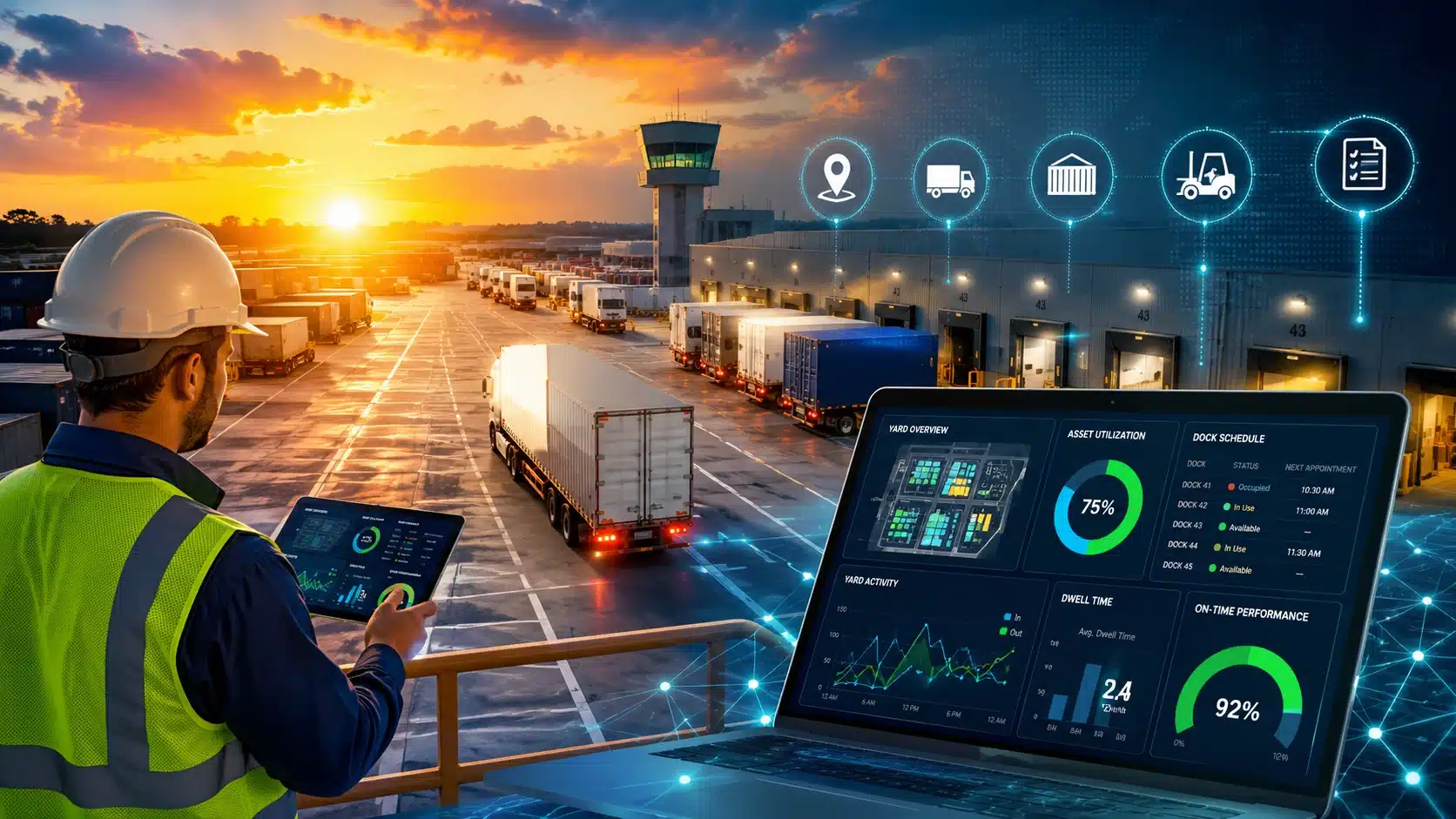
How much visibility do you really have if your team is still using spreadsheets, phone calls, or radio updates to manage yard activities? Can you find every trailer in an instant, assign the right dock, and stave off expensive delays before they affect deliveries?
So you have the answer in your mind!
Without any real-time visibility, even minor inefficiencies tend to add up. Trailers sit useless, docks sit idle, and drivers idle more than they drive. These delays increase operating costs, affect workflows in warehouses and impact customer satisfaction.
Did you know?
The push for more intelligent yard operations is growing. The overall dock and yard management system market size is valued at $4.6 billion in 2025 and growing to $7.28 billion in 2029 because of the growing automation of warehouses and a need for visibility into operations.
That is where a modern yard management system software solution comes in!
It provides logistics teams with visibility into trailers, docks, gates and yard assets. It speeds truck turnaround and reduces detention, helps better plan resources, and has cost savings in quantifiable ways.
In this post, we will define what a yard management system is, cover the top benefits of a yard management system implementation and explain how digitizing your yard will provide measurable ROI by 2026.
A yard management system (YMS) is software that allows businesses to track and improve the movement of trailers, trucks, containers and other assets in a warehouse yard or distribution center. It is the link between transport and warehousing that ensures all vehicles arrive at the correct place and time.
A typical yard management system supports functions such as:
On top of that, most YMS platforms integrate and work alongside Warehouse Management Systems (WMS), Transportation Management Systems (TMS), ERP platforms as well as IoT devices. The technology links warehouses to available data from other parts of the supply chain, improving efficiency and helping in decision-making while reducing manual input.
You modernize dockyard management processes to enhance visibility and workflow, enabling warehouses to serve customers with speed and accuracy. Here are some of the advantages of a yard management system.
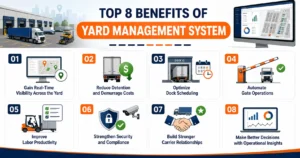
The manual validation of trailer loads is a slow process that impedes operations. A YMS also provides real-time visibility of trailers, containers, equipment and yard inventory with which users can locate assets in seconds. This location information is often updated through various systems that use GPS, RFID, Internet of Things (IoT) sensors, or barcode scanning.
Waiting for trucks often costs extra. A YMS automates making appointments, alerts when a delay might occur, and helps keep trailers moving through the yard. Detention fees are avoided in the supply chain and truck turn times can be optimized.
Delivering the right trailer to the right dock, at the right time, helps prevent backups and increases throughput. A YMS will synchronize carrier appointments with the availability of dock doors, eliminate idle dock doors and decrease load/unload times.
Long queues and data entry errors are common when users manually check in at their gates. A YMS will automate the recording of arrivals, departures, driver and trailer information at the gate. This expedites entries and exits, while being entirely accurate.
Yard drivers and warehouse teams have no clearly defined tasks and therefore wait and/or move equipment without purpose. A YMS assigns trailer moves based on operational priorities and helps employees do more work by minimizing unnecessary trips.
Knowing better who comes into the yard, where trailers are placed and how cargo is moving leads to better control. Digital access records, computer logs and video surveillance all help firms achieve compliance with regulations and protect valuable and sensitive shipments.
Carriers also like facilities that reduce lag time and keep appointments on schedule. Better dock time, assigned docks, and faster gate processing add up to a better driver experience, which causes carriers to want to schedule their shipments through your facility during busy shipping seasons.
A YMS tracks trailer dwell time, dock utilization, vehicle movement, and processing time, among other things. These insights, together with a logistics analytics dashboard, help managers to plan better for seasonal demand and to have a better sense of bottlenecks and resource planning.
Buying yard management system software is more than just adding technology. It helps businesses cut operating costs, yard efficiency and throughput without expanding their facilities. These processes can also give measurable returns in logistics through automating repetitive tasks as well as increasing visibility.
Longer trailer dwell times result in avoidable fines to the carrier. A YMS tracks trailer movements in real time, alerts teams to possible delays and helps trucks move through the yard faster. The ability to decrease detention costs by 40–80% is perhaps the most immediate and obvious benefit of a yard management system since these are industry benchmarks.
Every minute a truck waits is lost productivity and transportation cost. Drones and automated gate check-in, digital documents, and dock optimization keep congestion down and vehicles moving. Under YMS practices, many companies experience a 15% to 35% reduction in processing time within the gates and truck turnaround time.
Coordination is done through spreadsheets, phone calls and radio communications, which leads to slow operations. With a YMS, trailer moves are auto-assigned, yard tasks are prioritized, and all teams have access to the same real-time information. This reduces manual company coordination by 35 to 45% and increases labor force efficiency by 25 to 30%.
The labor-intensive process of finding trailers is also time-intensive and results in unused dock doors. A YMS provides live maps of the yard and accurate trailer locations, which help teams more efficiently assign docks and reduce idle time. Most facilities are getting dock throughput 20% to 40% higher and reducing trailer search time by 90%.
A key benefit to the adoption of a yard management system, for example, is that more shipments can be processed with the same existing infrastructure. Quicker moves with trailers and better use of the docks eliminate bottlenecks, so that warehouses are able to handle more tonnage without increasing yard space.
Carriers prefer facilities that avoid delays and keep appointments on time. Improved driver experience comes from faster processing at gates, predictable dock assignments and shorter time on turnaround. These enhancements will help make your facility a preferred shipping partner, particularly during times of limited carrier capacity.
Today’s yard management system software can interface with a warehouse management system, a transportation management system and enterprise resource planning systems. This creates a connected operation where warehouse, transportation and yard teams have access to the same information in real time, improving coordination and minimizing communication gaps.
Each trailer movement and dock assignment is a form of operational intelligence. Along with a logistics analytics dashboard, this data represents an important tool for managers, facilitating performance monitoring, bottleneck identification, resource allocation and capacity planning decisions that help improve the logistical operations in the long run.
Yard operations have become a key component of maximum supply chain performance. Manual processes simply cannot keep up in an environment where transportation costs are increasing, and delivery windows are closing. Digitizing your yard provides you and your team with visibility and control to operate faster, at a lower cost.
Rising Freight Costs Demand Greater Efficiency
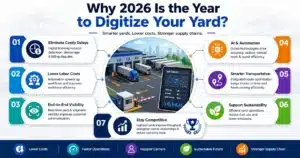
Every idled trailer, delayed truck and underused dock is overhead. A digital YMS has the ability to improve scheduling, trailer tracking and yard movements so that companies can better use existing resources rather than having to build new infrastructure.
Overstuffed supply chains allow no margin for human error. Each gate in, trailer movement, and dock event is documented in a YMS with a digital time stamp. These records help businesses with billing disputes, reduce detention and demurrage charges, and some with avoiding shipping fines that can run as high as $2,478 a container.
The manual coordination is slowing down operations and keeping employees glued to repetitive tasks. Automation in the form of digital trailer assignment, workflow management and self-service carrier portals reduces wait time for drivers and enhances the productivity of the workforce. Organizations digitizing yard operations have already seen 31% faster trailer dwell times and more than 28% labor efficiency.
Customers expect reliable tracking and delivery promises. Similarly, a YMS that is coupled with supply chain visibility tracking software enables real-time tracking of shipments not just in the warehouse but also in the yard and in the transportation network. This minimizes response time to delays and improves communication with the customer.
AI and automation are reshaping logistics. These technologies are just a few of the technologies used in many modern distribution centers. Other technologies include artificial intelligence, IoT sensors, RFID tracking, and automated gate systems. The integration of these technologies in a YMS helps companies to automate repetitive tasks, enhance operational accuracy, and minimize the need for manual operations.
Initiatives in the yard increase the “smarter” in transportation. There is nothing that an optimized delivery route can do to overcome loading and dispatch delays. Combined with logistics route optimization software, YMS can help companies adhere to schedules, leaving trucks on time and providing more reliable transport planning and optimal use of the fleet.
Reducing the need for unnecessary movements of trailers is also good for the environment. Trailers are placed efficiently and the turnaround time of trucks is reduced, as well as the unnecessary equipment moving around and unnecessary idling, which all combine to lower the use of fuel and carbon emissions.
Most companies have automated areas, including warehousing and transportation, but yard management tends to be one of the more manual processes. Businesses that update their yards in 2026 can increase throughput, enhance carrier relations and operating costs and create a more nimble logistics network.
The right YMS for you will depend on your own operations, your warehouse size, need for integration and how you plan to grow going forward. Some are off-the-shelf software from a vendor, and others are custom systems designed for a given logistics workflow. These are a few of the yard management system software providers to check out for 2026.
If you are in business and you are looking for custom tech solutions for specific business problems, The NineHertz is the right choice for you. They are a logistics software development company that develops custom yard management software that integrates with WMS, TMS, ERP systems, GPS, RFID and IoT devices.
Its solutions help businesses automate gate operations, dock scheduling, live trailer tracking and operational visibility in the yard. Considered for organizations with changing logistics needs, the company promises comprehensive software development, integration, and ongoing support.
The Oracle YMS is part of the Oracle Supply Chain Management software suite. It has real-time yard visibility, dock scheduling, trailer management and integration with Oracle warehouse and transportation processes, making it suitable for large enterprises.
SAP EWM has powerful yard management functionality for companies already utilizing other SAP applications. It allows for gate processing, dock appointments, vehicle tracking, and warehouse integration all on one platform.
Blue Yonder integrates yard management with supply chain planning, warehouse and transportation management. Their AI solutions help companies with trailer visibility, automating workflows and resource management.
Manhattan Associates offers advanced yard management capabilities geared toward a high volume of DC activity. They provide real-time tracking of trailers, scheduling of docks, coordination of labor and analytics to improve warehouse efficiency overall.
Körber also offers flexible yard management solutions to improve trailer movement, gate control and dock management, all integrated with operations in the warehouse. Its platform can be deployed in the cloud or on-premises.
Descartes offers cloud-based yard management software that focuses on enhancing carrier collaboration, appointment setting, and yard visibility. This software also has capabilities of integration with other transportation management systems for complete logistics planning purposes.
Yard Management Systems (YMS) are not all the same, and picking one is more than just comparing lists of features. You want a solution that works for you now and will grow with you and your business. Think about these things before you decide.
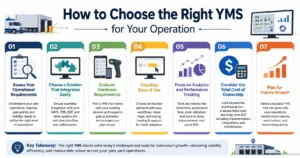
Evaluate the functioning of your yard to begin with.
Consider:
Your answers will set the stage for the level of automation and visibility you need.
If misplaced trailers are a recurring issue, look for features such as GPS, RFID, geofencing, or Real-Time Location Systems (RTLS). Automated gate processing and dock scheduling are critical in high-volume facilities and firms with multiple DCs require centralized, multi-site visibility.
If you have yard jockeys, look for a system that enables real-time dispatching and mobile tasks.
YMS should integrate with your existing technology, not replace it.
Seek software that works well with your:
API-based integrations reduce double data entry and provide warehouse, transport, and yard personnel with access to the same live data.
Not all YMS require expensive upgrades to infrastructure.
Be sure to check if a platform is compatible with your current mobile devices, tablets, scanners and operating systems before making a selection. The fact that solutions are agnostic to hardware lowers the costs of implementing them, as well as their deployment.
If you intend to automate gate operations, find out what technology the system supports for things like OCR cameras, self-service kiosks, RFID readers, mobile check-in, etc.
Even advanced software is of little use if employees don’t know how to use it.
Check for an intuitive interface with drag-and-drop yard maps, visual trailer tracking and simple workflows. Assess the vendor’s onboarding and employee training and ongoing technical support as well, to quicken adoption.
A good YMS will help you to track where you are improving operations and not just assume automating processes. Select a platform that facilitates tracking of metrics, including:
Such understanding uncovers where the bottlenecks are, where planning can improve, and more importantly, how the system is paying back in investment.
The purchase price is one component of the overall investment. Look at implementation, subscription, integrations, customization, training and ongoing maintenance costs before deciding.
SaaS, cloud-based solutions have significantly lower upfront costs than on-prem solutions and are more scalable. When evaluating vendors, do not just consider the upfront logistics software development cost but instead look at long-term ROI and business value.
Your logistics operation will change as your shipment volumes grow and customer expectations change. Choose a YMS that has the ability to grow with you; more capacity, more transactions, more automations and new integrations without having to replace the entire YMS.
The decision to select a Yard Management System is more than just software. Just as important as the technology itself is finding a technology partner that understands your logistics workflows and can build or customize a solution around your business needs. A good dev partner can ensure tight integrations, scalability, and speed to value.
If you want a YMS customized according to the operational requirements of your business, The NineHertz is the solution for you. Being a logistics software development company, The NineHertz provides customized yard management solutions that can integrate with Warehouse Management Systems (WMS), Transportation Management Systems (TMS), ERP software, GPS, RFID, and IoT devices.
These solutions help companies automate gate operations, dock scheduling, real-time trailer tracking and visibility within the yard. From custom development and consulting to integration and support after implementation, The NineHertz enables logistics companies to make their yards more sustainable, scalable and productive in order to achieve tangible ROI.
The primary benefit of a yard management system is real-time visibility into what is happening in the yard. This helps companies with trailer tracking, automated gates and docks, reduced dwell and better resource allocation. More visibility leads to faster decision-making and a more efficient supply chain overall.
The cost of yard management systems depends on the following factors: the number of facilities, features needed, integrations, customizations, and deployment model. Typically, the cloud service is sold on a monthly or annual subscription model and enterprise editions are costly. Your business should also take into account everything that comes with it, from implementation, training, maintenance, and support.
A YMS provides ROI in the form of reduced detention and demurrage fees, greater labor productivity, better dock utilization and reduction in truck turnaround time. It enables companies to move more shipments through their facilities without necessarily having to expand, and they are able to recoup their investment through savings in their operations over the long haul.
A Yard Management System (YMS) is software that manages all activities that are outside of the warehouse, including tracking of trailers, gate operations, movements in the yard, and scheduling of dock appointments. A Warehouse Management System (WMS) manages the inventory, order fulfillment, storage, and picking inside the warehouse. Combined, these systems provide a continuous movement of merchandise from yard to warehouse.
Yes. Even small warehouses, such as those that use multiple trailers, regularly have to deal with truck drivers or a hectic loading dock, and can greatly benefit from yard management software. A YMS reduces the need to do manual work, enhances scheduling and allows small businesses to become more efficient without having to hire more staff.
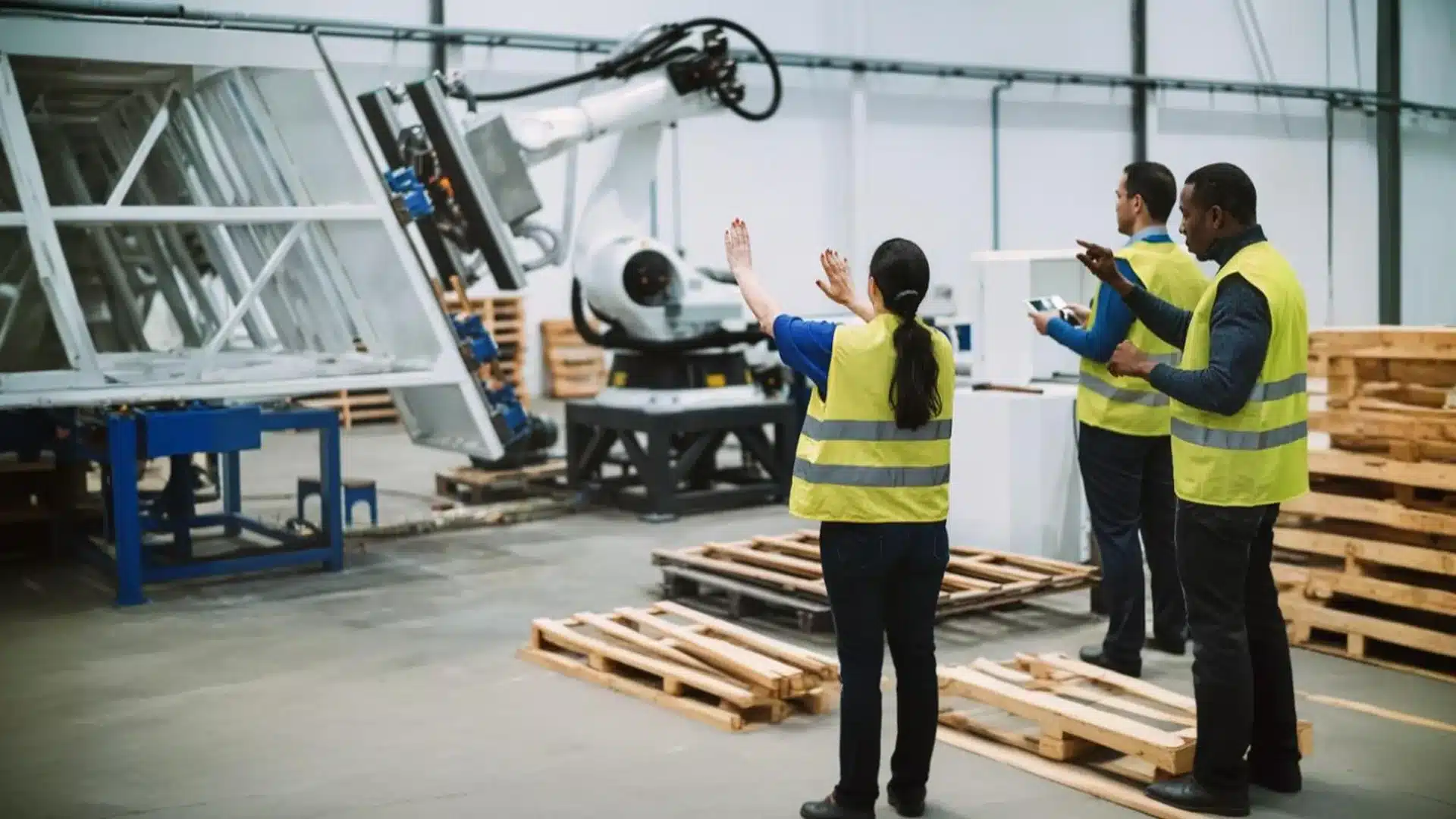
It is impressive that C.H. Robinson is using AI for logistics task automation. The global logistics company receives 11,000 emails…
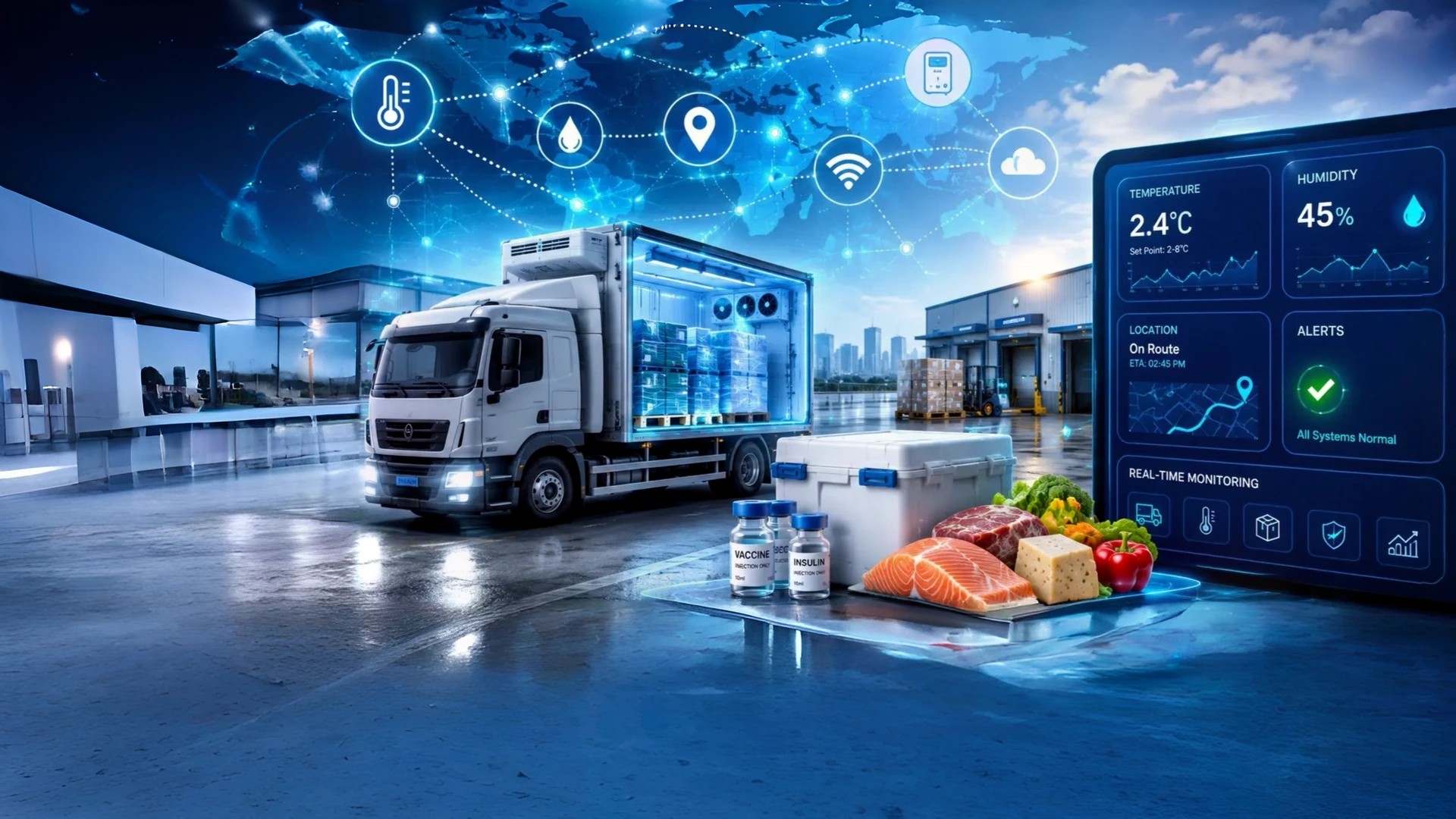
Key Takeaways Post-delivery excursion discovery is a governance architecture failure, not a process gap. Passive data loggers cannot generate corrective…
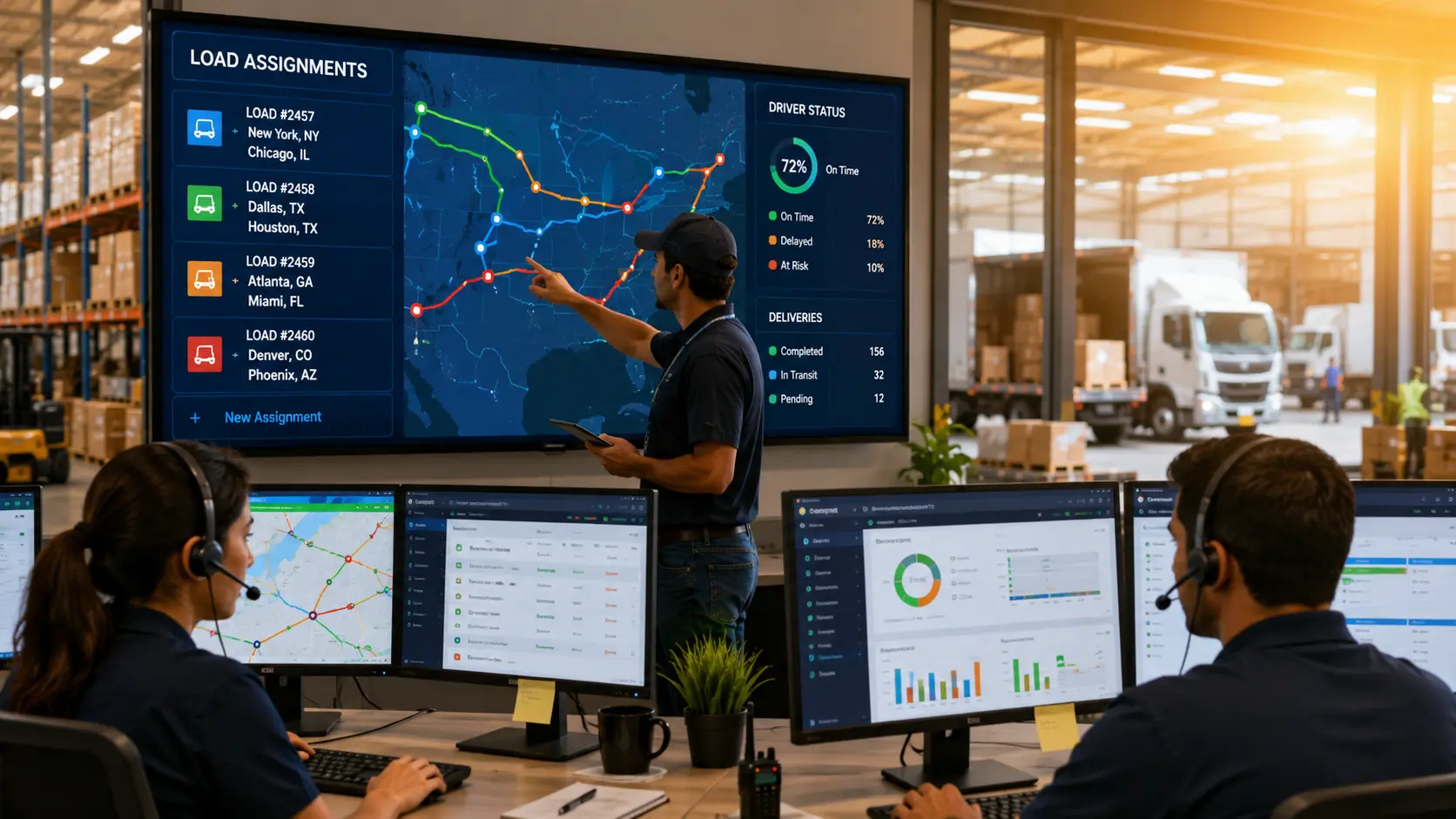
Key Takeaways Manual dispatch is an architecture failure, not a process problem. Spreadsheets and phone trees are a missing coordination…